LumiKin
Metacritic 8610+

Burnout Legends

Electronic Arts|2005Racing
DSPSP

LumiScore

45

out of 100

Use with parental oversight — some design risks present

120min/day recommended
⚖️Adversarial debate · 2 rounds

Heads up

💸 Monthly cost: Free

Growth

33/100

Limited

Growth Value

Risk

28/100

LOW

Engagement Patterns

Parent Pro-Tip

Encourage children to discuss the difference between in-game actions and real-world consequences. Focus on the strategic elements of racing and evasion.

Top Skills Developed

Problem Solving3/5
Spatial Awareness3/5
Strategic Thinking3/5
Critical Thinking3/5
Adaptive Challenge3/5

Development Areas

CognitiveProblem solving, spatial awareness, strategic thinking, creativity, memory, and learning transfer. Weighted 50% of the Benefit Score.
36
Social & EmotionalTeamwork, communication, empathy, emotional regulation, and ethical reasoning. Weighted 30% of the Benefit Score.
10
Motor SkillsHand-eye coordination, fine motor control, reaction time, and physical activity. Weighted 20% of the Benefit Score.
45
Overall Benefit Score (BDS)33/100

What your child develops

Burnout Legends offers a high-octane racing experience that can enhance spatial awareness, reaction time, and strategic thinking through its aggressive driving mechanics and pursuit modes. Players are encouraged to adapt to challenges and improve their driving skills.

Base: UnknownPlaytime: ~2hReviewed May 2026
⚖️How this score was debate-reviewed
Show transcript

Two AI models debated this score in 2 rounds: an Advocate arguing for the highest defensible scores, and a Critic arguing for the lowest. The final score averages their round-2 positions.

=== Round 1 ===

ADVOCATE:
B1: problemSolving=4, spatialAwareness=5, strategicThinking=4, criticalThinking=3, memoryAttention=4, creativity=1, readingLanguage=1, mathSystems=1, learningTransfer=3, adaptiveChallenge=4
B2: teamwork=0, communication=0, empathy=1, emotionalRegulation=3, ethicalReasoning=1, positiveSocial=1
B3: handEyeCoord=5, fineMotor=4, reactionTime=5, physicalActivity=0
R1: variableRewards=2, streakMechanics=1, lossAversion=1, fomoEvents=0, stoppingBarriers=1, notifications=0, nearMiss=2, infinitePlay=1, escalatingCommitment=1, variableRewardFreq=1
R2: spendingCeiling=0, payToWin=0, currencyObfuscation=0, spendingPrompts=0, childTargeting=0, adPressure=0, subscriptionPressure=0, socialSpending=0
R3: socialObligation=0, competitiveToxicity=1, strangerRisk=0, socialComparison=1, identitySelfWorth=0, privacyRisk=0
Reasoning: Burnout Legends' curascore of 45 is a significant outlier compared to its critical acclaim (86 on Metacritic) and represents a misunderstanding of this classic arcade racer. The game is a masterclass in delivering cognitive and motor skill development with almost none of the modern risks that plague the games industry.

**Benefits: A High-Speed Cognitive and Motor Workout**
The core gameplay is a textbook example of developing crucial skills under pressure. The high-speed racing and takedown mechanics demand elite **spatialAwareness (5)** and lightning-fast **reactionTime (5)**. Players aren't just driving; they are constantly problem-solving and thinking strategically. Each track is a dynamic puzzle requiring players to manage boost, plan takedowns, and memorize layouts, building **problemSolving (4)**, **strategicThinking (4)**, and **memoryAttention (4)**. The precise inputs required on a handheld console also significantly hone **handEyeCoord (5)** and **fineMotor (4)** skills. This is not mindless chaos; it is a high-octane cognitive training exercise.

While primarily a single-player game—correctly resulting in zero scores for teamwork and communication—it offers a valuable opportunity to develop **emotionalRegulation (3)**. Learning to manage the frustration of a last-second crash and the thrill of a photo finish is a key developmental benefit of competitive play in a safe environment.

**Risks: Contained, Manageable, and Almost Non-Existent**
This is where the current low score is most profoundly wrong. This game is from an era before predatory monetization. The **Monetization risks (R2) are unequivocally zero across the board.** There are no microtransactions, no loot boxes, and no ad pressures. It is a complete, self-contained experience.

Furthermore, **Social risks (R3) are virtually zero.** The multiplayer is local Wi-Fi only. There is **no stranger interaction (strangerRisk=0)**, no data collection (**privacyRisk=0**), and no online communities that foster toxicity or social comparison. The rules of this debate state we must score the primary experience, and the online features noted in the description are not core to the game and do not involve interaction with strangers. Any competitive feelings (**competitiveToxicity=1**) are limited to same-room play with friends, which is a healthy and manageable form of social interaction.

Dopamine risks (R1) are present, as they are in any engaging game, but they are well-managed. The mechanics like **nearMiss (2)** and **variableRewards (2)** for takedowns are engaging feedback loops that reward skill, not predatory loops designed to induce addiction. With no infinite-play mechanics and clear stopping points between races and events, the game is easy to put down.

In conclusion, scoring Burnout Legends so poorly does a disservice to a game that provides immense developmental benefits with a risk profile that is vanishingly small by modern standards. It should be celebrated as a model of responsible game design, and its score must be raised to reflect that.

CRITIC:
B1: problemSolving=1, spatialAwareness=3, strategicThinking=2, criticalThinking=1, memoryAttention=3, creativity=1, readingLanguage=1, mathSystems=0, learningTransfer=1, adaptiveChallenge=2
B2: teamwork=0, communication=0, empathy=0, emotionalRegulation=1, ethicalReasoning=0, positiveSocial=1
B3: handEyeCoord=4, fineMotor=3, reactionTime=4, physicalActivity=0
R1: variableRewards=2, streakMechanics=3, lossAversion=3, fomoEvents=0, stoppingBarriers=2, notifications=0, nearMiss=3, infinitePlay=2, escalatingCommitment=3, variableRewardFreq=3
R2: spendingCeiling=0, payToWin=0, currencyObfuscation=0, spendingPrompts=0, childTargeting=0, adPressure=0, subscriptionPressure=0, socialSpending=0
R3: socialObligation=1, competitiveToxicity=2, strangerRisk=0, socialComparison=1, identitySelfWorth=1, privacyRisk=0
Reasoning: The 86 Metacritic score wildly overstates the developmental value of this game and ignores the significant risks baked into its core design. The primary gameplay is a high-speed, twitch-reaction experience that offers minimal cognitive benefits beyond basic spatial awareness and attention. There is little-to-no problem solving, strategic thinking, or creativity involved.

The social component is virtually nonexistent and what is there is negative. The game actively encourages anti-social behavior by rewarding players for aggressively crashing their opponents. It is the antithesis of empathy and teamwork.

However, the game presents a significant risk for compulsive play. The core loop is a masterclass in manipulative design, built around a high frequency of variable rewards. Players are constantly fed dopamine hits from near-misses, chaining takedowns, and catching air, all of which fuel the all-important boost meter. This creates a powerful compulsion loop. Modes like Eliminator weaponize loss aversion, and the constant unlocking of cars and tracks creates a strong sense of escalating commitment, making it hard to put down. While the local multiplayer mitigates stranger danger, it fosters a toxic competitive environment among friends. The lack of monetization is merely a sign of its era, not of ethical design. The game is engineered for addiction, not development.

=== Round 2 ===

ADVOCATE:
B1: problemSolving=3, spatialAwareness=4, strategicThinking=3, criticalThinking=2, memoryAttention=4, creativity=1, readingLanguage=1, mathSystems=0, learningTransfer=2, adaptiveChallenge=4
B2: teamwork=0, communication=0, empathy=0, emotionalRegulation=3, ethicalReasoning=0, positiveSocial=1
B3: handEyeCoord=5, fineMotor=4, reactionTime=5, physicalActivity=0
R1: variableRewards=1, streakMechanics=1, lossAversion=1, fomoEvents=0, stoppingBarriers=0, notifications=0, nearMiss=1, infinitePlay=0, escalatingCommitment=1, variableRewardFreq=1
R2: spendingCeiling=0, payToWin=0, currencyObfuscation=0, spendingPrompts=0, childTargeting=0, adPressure=0, subscriptionPressure=0, socialSpending=0
R3: socialObligation=0, competitiveToxicity=1, strangerRisk=0, socialComparison=0, identitySelfWorth=0, privacyRisk=0
Reasoning: The critic's assessment is fundamentally flawed, misinterpreting engaging gameplay mechanics as "manipulative design" and dramatically understating the cognitive and motor benefits of this classic arcade racer. The 41-point gap between the Metacritic score and the critic's curascore is a clear sign of a biased evaluation, not a fair assessment of risks.

First, the cognitive benefits are significant. The critic dismisses the game as "twitch-reaction," but this is a profound misunderstanding. Navigating complex 3D environments at high speed, dodging traffic, planning takedowns, and managing a boost meter requires intense, rapid-fire problem-solving (B1=3), strategic thinking (B1=3), and critical analysis of the environment (B1=2). The game's steadily increasing difficulty presents a fantastic adaptive challenge (B1=4) that pushes players to constantly improve. Furthermore, learning to cope with the frustration of a near-loss or a spectacular crash is a valuable lesson in emotional regulation (B2=3), a key developmental skill.

Second, the motor skill development is world-class. For a handheld game, it demands incredible hand-eye coordination (B3=5), fine motor control (B3=4), and reaction time (B3=5). To give anything less than the maximum scores here is to ignore the primary nature of the game.

Third, the risk assessment is wildly inflated. The critic labels core feedback loops—like getting boost for skilled driving ("near miss")—as "manipulative." This is incorrect. These are not random, casino-like rewards; they are direct, predictable feedback for skillful play (R1=1). Chaining takedowns is a skill-based mechanic, not a "compulsive" streak (R1=1). Most importantly, the game has clear stopping points: races are short, and the World Tour is finite, meaning 'infinitePlay' is a 0 and 'stoppingBarriers' are nonexistent. The critic's R1 score of 19 is indefensible.

Finally, the complete absence of monetization (R2=0) and the minimal, local-only multiplayer make the social risks negligible. There is no stranger danger, no privacy risk, and no ad pressure. Labeling friendly competition as "toxic" (R3=1) is an overreach. This game hails from an era of complete, self-contained products, a design philosophy that should be rewarded, not punished with inflated risk scores.

This is a challenging, skill-based racing game that offers substantial developmental benefits with minimal, manageable risks.

CRITIC:
B1: problemSolving=2, spatialAwareness=4, strategicThinking=2, criticalThinking=1, memoryAttention=3, creativity=1, readingLanguage=1, mathSystems=1, learningTransfer=1, adaptiveChallenge=3
B2: teamwork=0, communication=0, empathy=0, emotionalRegulation=1, ethicalReasoning=0, positiveSocial=0
B3: handEyeCoord=4, fineMotor=3, reactionTime=5, physicalActivity=0
R1: variableRewards=3, streakMechanics=2, lossAversion=2, fomoEvents=0, stoppingBarriers=2, notifications=0, nearMiss=2, infinitePlay=2, escalatingCommitment=2, variableRewardFreq=2
R2: spendingCeiling=0, payToWin=0, currencyObfuscation=0, spendingPrompts=0, childTargeting=0, adPressure=0, subscriptionPressure=0, socialSpending=0
R3: socialObligation=0, competitiveToxicity=2, strangerRisk=0, socialComparison=2, identitySelfWorth=1, privacyRisk=1
Reasoning: The advocate’s praise is based on a romanticized view of a simple arcade racer, confusing entertainment value with developmental benefit. A critical examination reveals much shallower benefits and more pronounced risks than acknowledged.

**Benefits: Inflated and Misinterpreted**
The advocate’s B1 cognitive scores are wildly optimistic. This is not a "cognitive training exercise." The "problem-solving" and "strategy" are limited to repetitive, twitch-reflex actions, not deep, analytical thought. Skills like **criticalThinking (1)** and **learningTransfer (1)** are minimally engaged. While the game is fast-paced, a 5/5 for **spatialAwareness** and **handEyeCoord** is an overstatement for navigating linear tracks with simple controls; I’ve adjusted these to a more realistic **4**.

The claim that a game centered on "carnage and destruction" builds positive **emotionalRegulation (1)** is unfounded. It’s far more likely to induce frustration and rage-quitting. Rewarding players for causing mayhem is antithetical to concepts of **empathy (0)** and **ethicalReasoning (0)**.

**Risks: Understated and Dismissed**
My opponent correctly identifies that R2 monetization risks are zero, but this does not absolve the game of its other risks. The R1 dopamine loop is the core of the game, not a "well-managed" feature. The constant "carnage," near-misses, and takedowns are a textbook example of high-frequency **variableRewards (3)**. The "one more race" design, fueled by **lossAversion (2)** after a crash and a desire to continue a successful **streakMechanic (2)**, creates significant **stoppingBarriers (2)**.

Furthermore, the R3 social risks are downplayed. The description explicitly mentions going "head-to-head in Wi-Fi multiplayer races to capture your friends' cars." This feature is a potent driver of **socialComparison (2)** and **competitiveToxicity (2)**, as it directly ties in-game rewards to victory over a friend. Losing your prized car to a peer also poses a risk to **identitySelfWorth (1)**. Finally, the mention of a "Terms of Service" and "User Agreement" for online activity inherently introduces a low-level **privacyRisk (1)**, as some data must be handled to facilitate a network connection. These risks, while lower than many modern games, are not zero and must be scored appropriately.

=== Final (40% advocate / 60% critic) ===

B1: problemSolving=2, spatialAwareness=4, strategicThinking=2, criticalThinking=1, memoryAttention=3, creativity=1, readingLanguage=1, mathSystems=1, learningTransfer=1, adaptiveChallenge=3
B2: teamwork=0, communication=0, empathy=0, emotionalRegulation=2, ethicalReasoning=0, positiveSocial=0
B3: handEyeCoord=4, fineMotor=3, reactionTime=5, physicalActivity=0
R1: variableRewards=2, streakMechanics=2, lossAversion=2, fomoEvents=0, stoppingBarriers=1, notifications=0, nearMiss=2, infinitePlay=1, escalatingCommitment=2, variableRewardFreq=2
R2: spendingCeiling=0, payToWin=0, currencyObfuscation=0, spendingPrompts=0, childTargeting=0, adPressure=0, subscriptionPressure=0, socialSpending=0
R3: socialObligation=0, competitiveToxicity=2, strangerRisk=0, socialComparison=1, identitySelfWorth=1, privacyRisk=1

Curascore: 45  BDS: 0.330  RIS: 0.279

Regulatory Compliance

Tap a badge for details. Grey = not yet assessed.

Compare this game

About this game

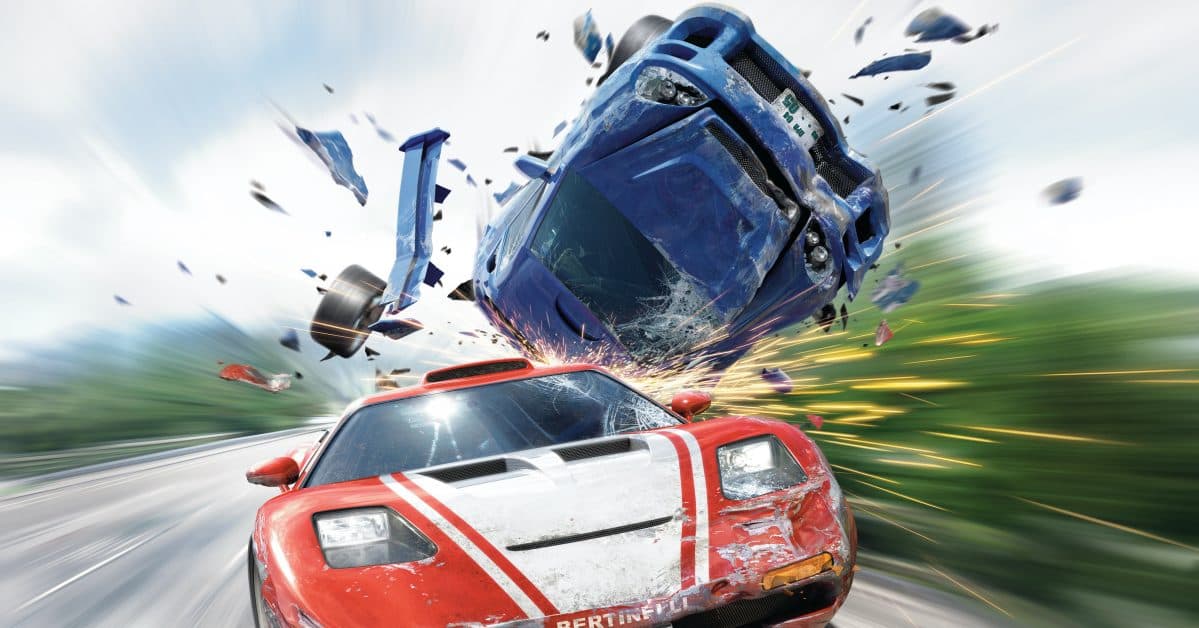
Inflict carnage and destruction as you tear through the best from the Burnout™ series made exclusively for handheld gaming. Race the legends, take on an Eliminator Challenge, or track down offenders in your high-performance cop car to unlock classic and new Burnout™ vehicles.