Review · Puzzle · Android · iOS
3 Jewels
Reviewed: 19 Apr 2026
Android · iOS
3583 Bytes · 2014
Ludograph rating
D
Caution
40 /100
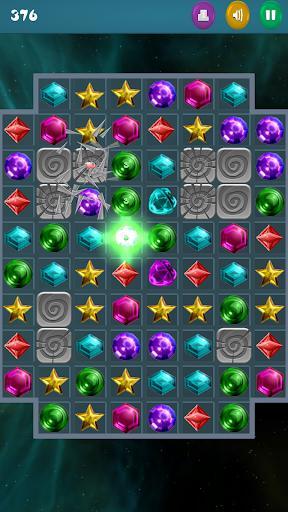
3 Jewels is a puzzle game that develops problem solving and spatial awareness, but its match-3 format can encourage compulsive play.
Growth (BDS)
27
Risk (RIS)
21
Daily limit
90min
Age guidance
10+
Developmental benefits
| B1 | Cognitive | 0.40 | |
| B2 | Social-emotional | 0.07 | |
| B3 | Motor | 0.25 | |
3 Jewels offers a gentle but genuine cognitive workout through its match-3 puzzle format. Players exercise spatial awareness as they scan the board for tile arrangements, problem-solving as they plan multi-step matches, and memory and attention as they track the board state across moves. The 100 challenge levels provide a modest progression of difficulty that encourages adaptive thinking, and the need to plan chains for bonus points introduces light strategic reasoning. The format is low-stress and accessible, making it a reasonable casual brain-engagement option for children and adults alike.
Design risks
| R1 | Compulsion-loop pressure | 0.40 | |
| R2 | Monetization | 0.00 | |
| R3 | Social risk | 0.11 | |
The primary concern is the compulsion loop inherent to the match-3 genre. Variable reward timing — the satisfying cascade of jewels clearing — is a core mechanic that can encourage longer sessions than intended. The near-miss effect (board states that seem one move away from a big combo) and the Endless Mode's lack of a natural endpoint both subtly discourage stopping. However, with no monetization whatsoever, no notifications, no streaks, and no social pressure mechanics, the manipulation profile is significantly lower than most mobile puzzle games. The leaderboard introduces mild social comparison but is unlikely to generate meaningful competitive toxicity.
Content (not in risk score)
| R4.1 | Violence Level | 0.00 | |
| R4.2 | Sexual Content | 0.00 | |
| R4.3 | Language | 0.00 | |
| R4.4 | Substance References | 0.00 | |
| R4.5 | Fear / Horror | 0.00 | |
Content risk is displayed separately and does not affect the time recommendation.
Regulatory design checks · DSA — Assessed: meets criteria·GDPR-K — Assessed: meets criteria·ODDS — Assessed: meets criteria
- DSA:What Ludograph checks: whether the game's design gives minors the transparency the EU Digital Services Act expects: plain terms, honest defaults, and clear reporting routes.: Estimated from review data. No dark pattern or child-targeting concerns found.
- GDPR-K:What Ludograph checks: whether age assurance and consent flows are designed for under-16s, in the spirit of GDPR Article 8.: Estimated from review data. No privacy or child-targeting concerns found.
- ODDS:What Ludograph checks: whether paid random-reward drop rates are disclosed, as required in China, Japan and South Korea.: Estimated from review data. No paid random-reward mechanics found, so drop-rate disclosure requirements do not apply.
These reflect Ludograph's assessment of the game's design practices against each framework's criteria, not a legal compliance determination.