Review · Casual · PC
Anarchy Arcade
Reviewed: 27 May 2026
PC
Elijah Newman-Gomez · 2014
Ludograph rating
Growth (BDS)
27
Risk (RIS)
14
Daily limit
120min
Age guidance
–
Developmental benefits
| B1 | Cognitive | 0.32 | |
| B2 | Social-emotional | 0.30 | |
| B3 | Motor | 0.10 | |
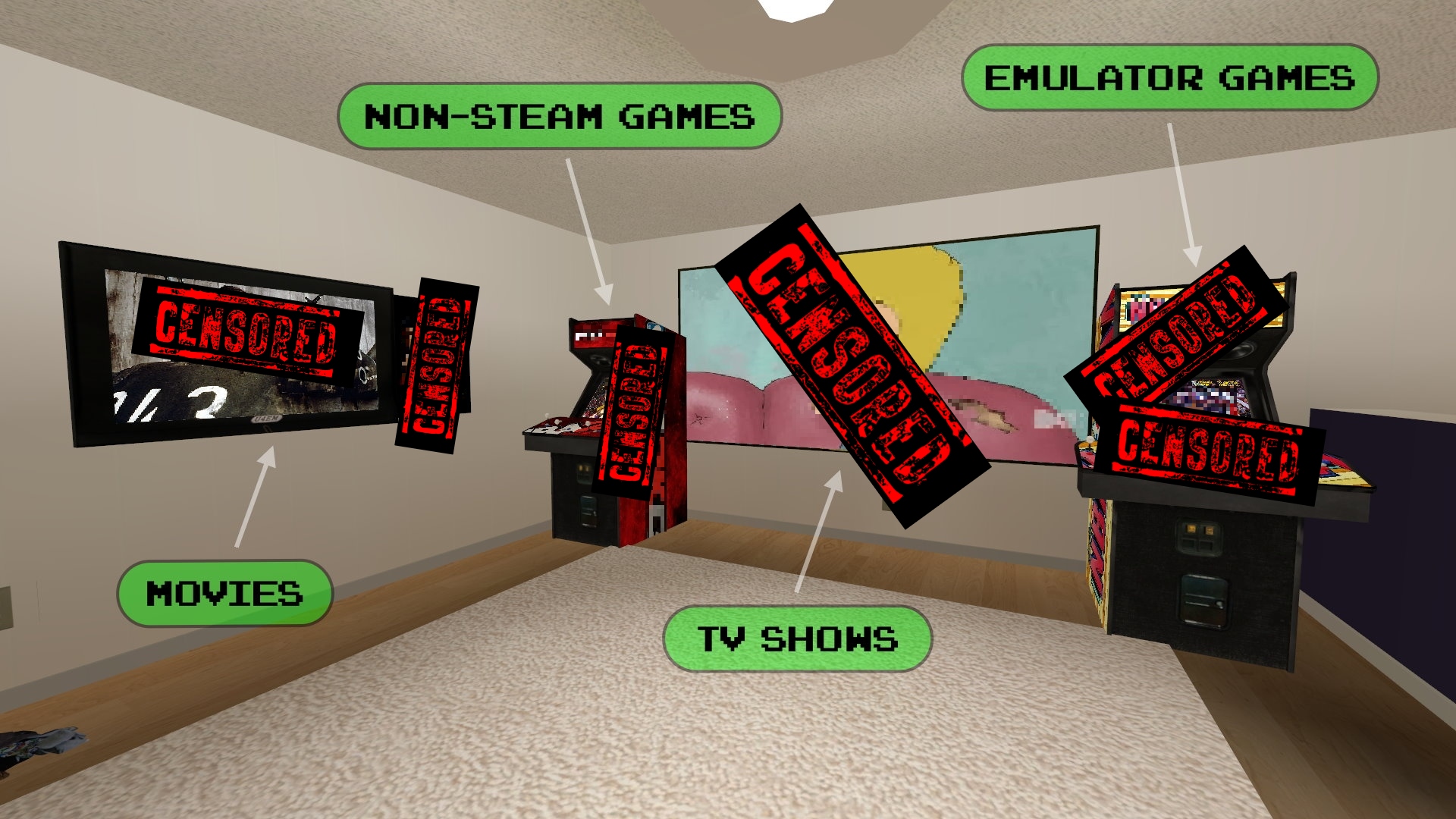
Anarchy Arcade transforms your PC into a personalized 3D metaverse, offering a unique way to organize and launch your digital content. It fosters creativity through extensive customization and building tools, allowing users to design their ideal virtual arcade. The multiplayer feature encourages positive social interaction, enabling friends to explore shared spaces and media collections together. Its 'sleep mode' ensures seamless integration with other PC activities without performance impact, and optional VR support provides an immersive experience.
Design risks
| R1 | Compulsion-loop pressure | 0.13 | |
| R2 | Monetization | 0.04 | |
| R3 | Social risk | 0.28 | |
While Anarchy Arcade is free and avoids ads, the presence of microtransactions could introduce minor spending pressure. The social features, such as comparing collections and exploring community creations, might subtly encourage social comparison or a sense of obligation to contribute. Although direct stranger chat is absent, interacting in shared online spaces with other players' creations carries a minimal social risk.
Content (not in risk score)
| R4.1 | Violence Level | 0.00 | |
| R4.2 | Sexual Content | 0.00 | |
| R4.3 | Language | 0.00 | |
| R4.4 | Substance References | 0.00 | |
| R4.5 | Fear / Horror | 0.00 | |
Content risk is displayed separately and does not affect the time recommendation.
Heads up
- Monthly spendTypical real-money spend by engaged players: $0 – $10/mo.
Regulatory design checks · DSA — Assessed: meets criteria·GDPR-K — Not yet assessed·ODDS — Assessed: meets criteria
- DSA:What Ludograph checks: whether the game's design gives minors the transparency the EU Digital Services Act expects: plain terms, honest defaults, and clear reporting routes.: Estimated from review data. No dark pattern or child-targeting concerns found.
- GDPR-K:What Ludograph checks: whether age assurance and consent flows are designed for under-16s, in the spirit of GDPR Article 8.
- ODDS:What Ludograph checks: whether paid random-reward drop rates are disclosed, as required in China, Japan and South Korea.: Estimated from review data. No paid random-reward mechanics found, so drop-rate disclosure requirements do not apply.
These reflect Ludograph's assessment of the game's design practices against each framework's criteria, not a legal compliance determination.