Review · Strategy · PC
ANIWARS: Call of the Void
Reviewed: 18 Jun 2026
PC
Breaker Interactive · 2025
Ludograph rating
Growth (BDS)
42
Risk (RIS)
5
Daily limit
120min
Age guidance
7+
Developmental benefits
| B1 | Cognitive | 0.80 | |
| B2 | Social-emotional | 0.00 | |
| B3 | Motor | 0.10 | |
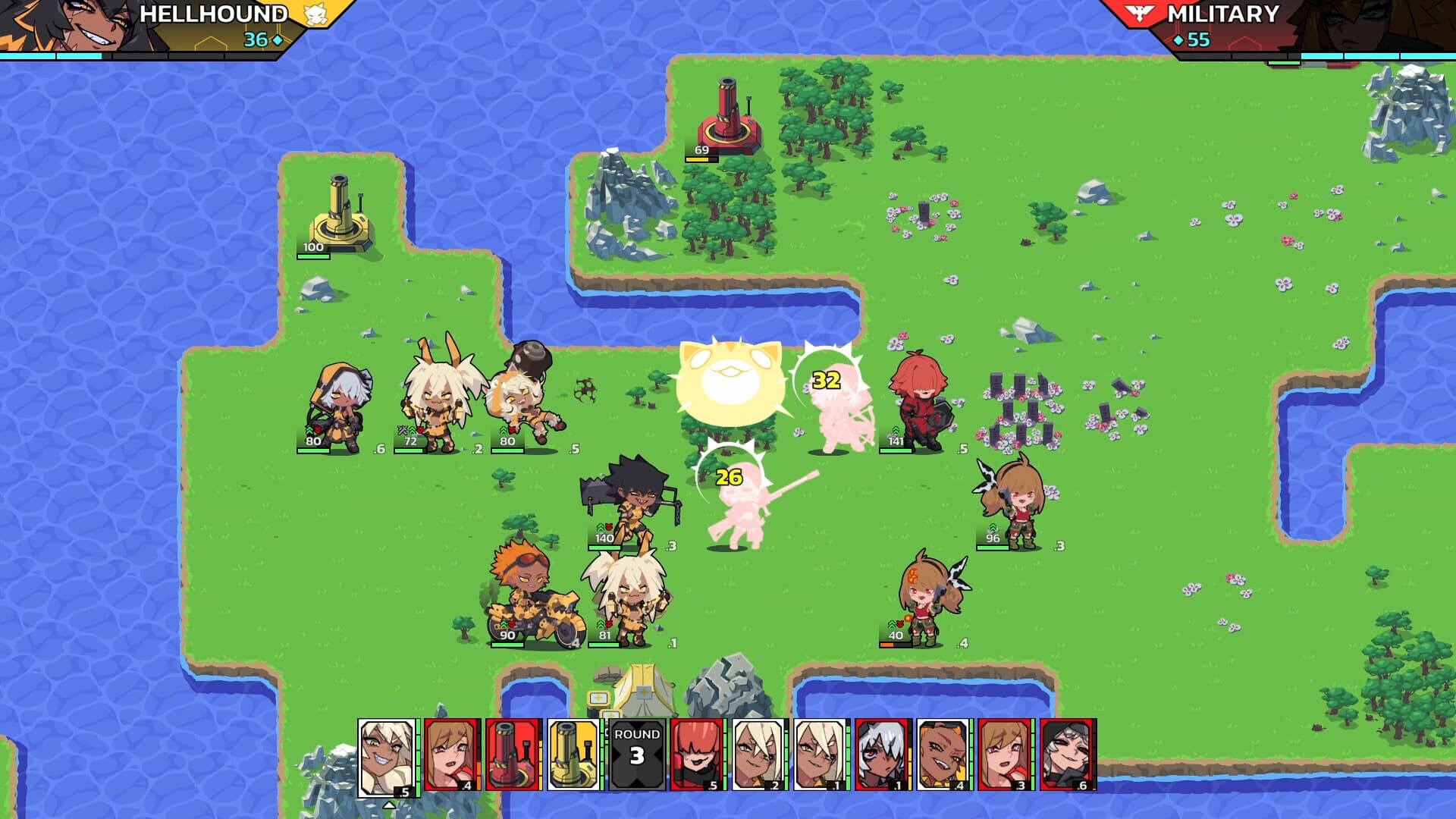
ANIWARS offers significant cognitive benefits through its strategic turn-based roguelike gameplay. Players will engage in complex problem-solving, strategic and critical thinking to overcome difficult encounters, utilize environmental advantages, and manage diverse items and abilities. The roguelike nature promotes learning transfer and adaptive challenge, as each run presents unique experiences and requires players to learn from past mistakes and adapt their strategies. Spatial awareness and mathematical systems are also moderately engaged through map conquest and combat calculations. Creativity is fostered through discovering 'wild combos' of items.
Design risks
| R1 | Compulsion-loop pressure | 0.10 | |
| R2 | Monetization | 0.00 | |
| R3 | Social risk | 0.00 | |
ANIWARS presents minimal risks. There are no microtransactions, loot boxes, or subscriptions, eliminating monetization pressure. The single-player design with no stranger chat removes social risks like competitive toxicity, social obligation, or privacy concerns. Content risks are low, with mild, abstract violence and thematic elements of a 'cataclysmic event' that do not appear to be graphic or overtly frightening. Compulsion-loop design is also minimal, with inherent roguelike variability in rewards and replayability not designed to be predatory or create artificial stopping barriers.
Content (not in risk score)
| R4.1 | Violence Level | 0.33 | |
| R4.2 | Sexual Content | 0.00 | |
| R4.3 | Language | 0.00 | |
| R4.4 | Substance References | 0.00 | |
| R4.5 | Fear / Horror | 0.33 | |
Content risk is displayed separately and does not affect the time recommendation.
Regulatory design checks · DSA — Assessed: meets criteria·GDPR-K — Assessed: meets criteria·ODDS — Assessed: meets criteria
- DSA:What Ludograph checks: whether the game's design gives minors the transparency the EU Digital Services Act expects: plain terms, honest defaults, and clear reporting routes.: Estimated from review data. No dark pattern or child-targeting concerns found.
- GDPR-K:What Ludograph checks: whether age assurance and consent flows are designed for under-16s, in the spirit of GDPR Article 8.: Estimated from review data. No privacy or child-targeting concerns found.
- ODDS:What Ludograph checks: whether paid random-reward drop rates are disclosed, as required in China, Japan and South Korea.: Estimated from review data. No paid random-reward mechanics found, so drop-rate disclosure requirements do not apply.
These reflect Ludograph's assessment of the game's design practices against each framework's criteria, not a legal compliance determination.