Review · Educational · Android
Brain Battle - Make Money Free
Reviewed: 10 May 2026
Android
WINR Games
Ludograph rating
E
Avoid
6 /100
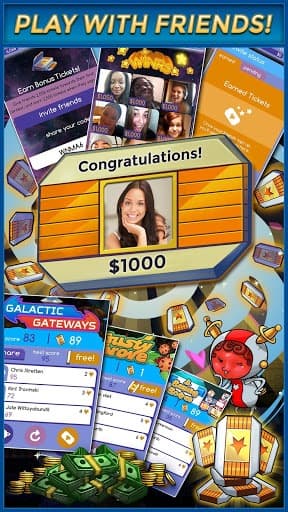
Brain Battle - Make Money Free is a puzzle game that claims to build problem solving and memory, but heavily relies on deceptive tactics and compulsion-loop design to encourage play.
Growth (BDS)
3
Risk (RIS)
55
Daily limit
15min
Age guidance
–
Developmental benefits
| B1 | Cognitive | 0.06 | |
| B2 | Social-emotional | 0.00 | |
| B3 | Motor | 0.00 | |
Brain Battle claims to offer cognitive benefits through its 'brain games' and the opportunity to earn money by playing free games. However, the actual cognitive challenge seems minimal, and the primary benefit promoted is financial gain, which is highly speculative and misleading.
Design risks
| R1 | Compulsion-loop pressure | 0.73 | |
| R2 | Monetization | 0.38 | |
| R3 | Social risk | 0.44 | |
This game heavily leverages compulsion-loop design tactics to keep users engaged, with variable rewards, frequent notifications, and a strong emphasis on the potential for winning money, which creates a significant risk of addiction and unrealistic expectations of financial gain. The monetization strategies, while not involving direct in-app purchases, heavily rely on ad viewing, which is a constant pressure point. Furthermore, the game promotes social comparison based on winnings and targets children with its 'make money playing games' messaging, creating risks for identity and self-worth, and privacy concerns due to data collection for ad targeting.
Content (not in risk score)
| R4.1 | Violence Level | 0.00 | |
| R4.2 | Sexual Content | 0.00 | |
| R4.3 | Language | 0.00 | |
| R4.4 | Substance References | 0.00 | |
| R4.5 | Fear / Horror | 0.00 | |
Content risk is displayed separately and does not affect the time recommendation.
Regulatory design checks · DSA — Assessed: concerns noted·GDPR-K — Assessed: concerns noted·ODDS — Assessed: meets criteria
- DSA:What Ludograph checks: whether the game's design gives minors the transparency the EU Digital Services Act expects: plain terms, honest defaults, and clear reporting routes.: Estimated from review data. Likely violations: monetisation that deliberately targets children.
- GDPR-K:What Ludograph checks: whether age assurance and consent flows are designed for under-16s, in the spirit of GDPR Article 8.: Estimated from review data. Likely violations: elevated privacy risk in a children-rated or child-targeted game; profiling or targeting of children for marketing.
- ODDS:What Ludograph checks: whether paid random-reward drop rates are disclosed, as required in China, Japan and South Korea.: Estimated from review data. No paid random-reward mechanics found, so drop-rate disclosure requirements do not apply.
These reflect Ludograph's assessment of the game's design practices against each framework's criteria, not a legal compliance determination.