Review · Strategy · Xbox One · PC
Buildings Have Feelings Too
Reviewed: 02 May 2026
Xbox One · PC
Blackstaff Games · 2021
Ludograph rating
B
Good
58 /100
Buildings Have Feelings Too is a strategy game that develops strategic thinking and problem solving by managing a city.
Growth (BDS)
41
Risk (RIS)
0
Daily limit
120min
Age guidance
–
Developmental benefits
| B1 | Cognitive | 0.64 | |
| B2 | Social-emotional | 0.23 | |
| B3 | Motor | 0.10 | |
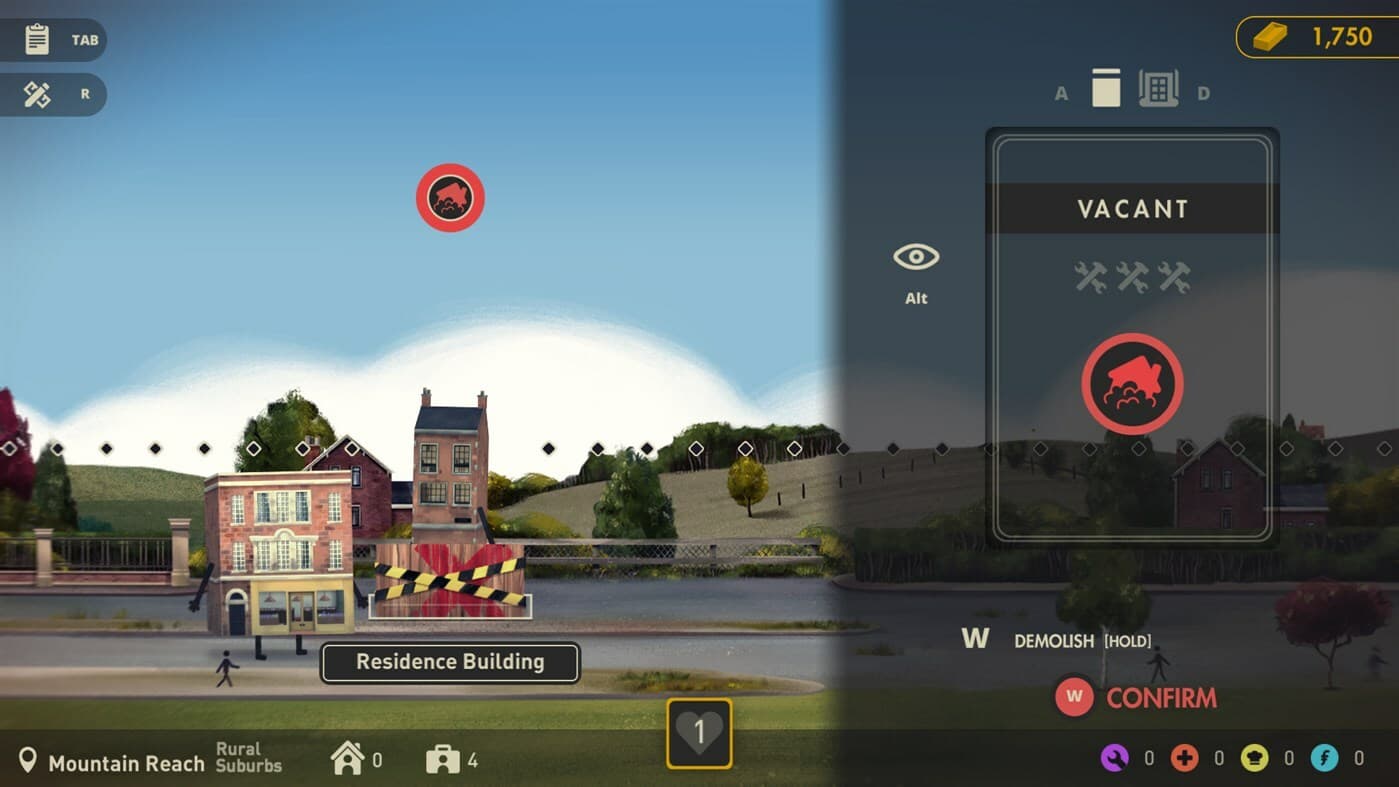
Buildings Have Feelings Too! offers a unique city management experience that emphasizes strategic thinking, resource management, and problem-solving as players strive to help their sentient buildings thrive. The game encourages reading and understanding the narratives of the buildings, fostering a sense of empathy and connection to the game world. Players will engage in complex decision-making, requiring them to anticipate consequences and adapt their strategies, thereby enhancing critical thinking and planning skills. The game's adaptive challenges ensure a continuous learning curve and sustained engagement.
Design risks
| R1 | Compulsion-loop pressure | 0.00 | |
| R2 | Monetization | 0.00 | |
| R3 | Social risk | 0.00 | |
The primary risk is potential frustration from challenging city management mechanics, which could lead to feelings of failure if buildings are demolished. While the game does not feature explicit social risks or harmful content, the emotional investment in the buildings' well-being could be a minor concern for highly sensitive individuals if their efforts to save buildings are unsuccessful.
Content (not in risk score)
| R4.1 | Violence Level | 0.00 | |
| R4.2 | Sexual Content | 0.00 | |
| R4.3 | Language | 0.00 | |
| R4.4 | Substance References | 0.00 | |
| R4.5 | Fear / Horror | 0.00 | |
Content risk is displayed separately and does not affect the time recommendation.
Regulatory design checks · DSA — Assessed: meets criteria·GDPR-K — Assessed: meets criteria·ODDS — Assessed: meets criteria
- DSA:What Ludograph checks: whether the game's design gives minors the transparency the EU Digital Services Act expects: plain terms, honest defaults, and clear reporting routes.: Estimated from review data. No dark pattern or child-targeting concerns found.
- GDPR-K:What Ludograph checks: whether age assurance and consent flows are designed for under-16s, in the spirit of GDPR Article 8.: Estimated from review data. No privacy or child-targeting concerns found.
- ODDS:What Ludograph checks: whether paid random-reward drop rates are disclosed, as required in China, Japan and South Korea.: Estimated from review data. No paid random-reward mechanics found, so drop-rate disclosure requirements do not apply.
These reflect Ludograph's assessment of the game's design practices against each framework's criteria, not a legal compliance determination.