Review · Simulation · iOS
Case Opener - skins simulator
Reviewed: 13 May 2026
iOS
Jakub Pokorski · 2016
Ludograph rating
Growth (BDS)
22
Risk (RIS)
36
Daily limit
60min
Age guidance
–
Developmental benefits
| B1 | Cognitive | 0.44 | |
| B2 | Social-emotional | 0.00 | |
| B3 | Motor | 0.00 | |
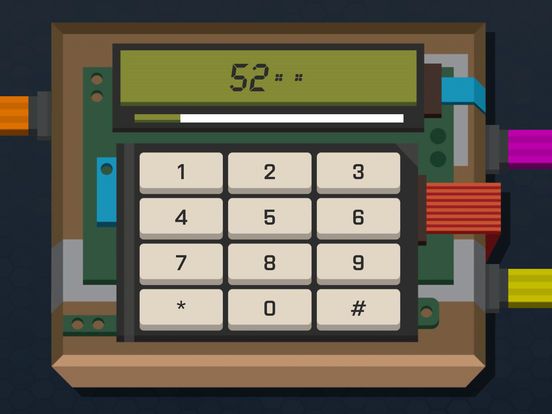
Case Opener offers some cognitive benefits through its strategic thinking and problem-solving elements in the mini-games, particularly 'Tower' and 'Crash'. Players need to apply mathematical reasoning and make quick decisions, which can enhance critical thinking and memory. The 'Bomb defuse' minigame specifically tests memory and attention. While there is no overt creativity, the game's core loop of opening cases and trading can provide a sense of progression and achievement. The game also provides learning transfer as it simulates elements of a well known game (CSGO).
Design risks
| R1 | Compulsion-loop pressure | 0.80 | |
| R2 | Monetization | 0.00 | |
| R3 | Social risk | 0.00 | |
The primary risks in Case Opener stem from its strong reliance on compulsion-loop design. The core mechanic of opening cases, with its variable rewards and 'near miss' elements, is highly addictive and designed to encourage continuous engagement. Streak mechanics, notifications, and the potential for infinite play further contribute to this risk, potentially leading to excessive screen time. While there are no direct monetization pressures, the game simulates the addictive nature of loot boxes, which could normalize such mechanics for younger players and potentially lead to real-world gambling habits later on. The game itself does not have social risks as there is no player interaction.
Content (not in risk score)
| R4.1 | Violence Level | 0.00 | |
| R4.2 | Sexual Content | 0.00 | |
| R4.3 | Language | 0.00 | |
| R4.4 | Substance References | 0.00 | |
| R4.5 | Fear / Horror | 0.00 | |
Content risk is displayed separately and does not affect the time recommendation.
Regulatory design checks · DSA — Assessed: meets criteria·GDPR-K — Assessed: meets criteria·ODDS — Assessed: meets criteria
- DSA:What Ludograph checks: whether the game's design gives minors the transparency the EU Digital Services Act expects: plain terms, honest defaults, and clear reporting routes.: Estimated from review data. No dark pattern or child-targeting concerns found.
- GDPR-K:What Ludograph checks: whether age assurance and consent flows are designed for under-16s, in the spirit of GDPR Article 8.: Estimated from review data. No privacy or child-targeting concerns found.
- ODDS:What Ludograph checks: whether paid random-reward drop rates are disclosed, as required in China, Japan and South Korea.: Estimated from review data. No paid random-reward mechanics found, so drop-rate disclosure requirements do not apply.
These reflect Ludograph's assessment of the game's design practices against each framework's criteria, not a legal compliance determination.