Review · Strategy · PC
Diceball
Reviewed: 20 Jun 2026
PC
Ducknest Games · 2025
Ludograph rating
Growth (BDS)
39
Risk (RIS)
23
Daily limit
90min
Age guidance
7+
Developmental benefits
| B1 | Cognitive | 0.72 | |
| B2 | Social-emotional | 0.03 | |
| B3 | Motor | 0.10 | |
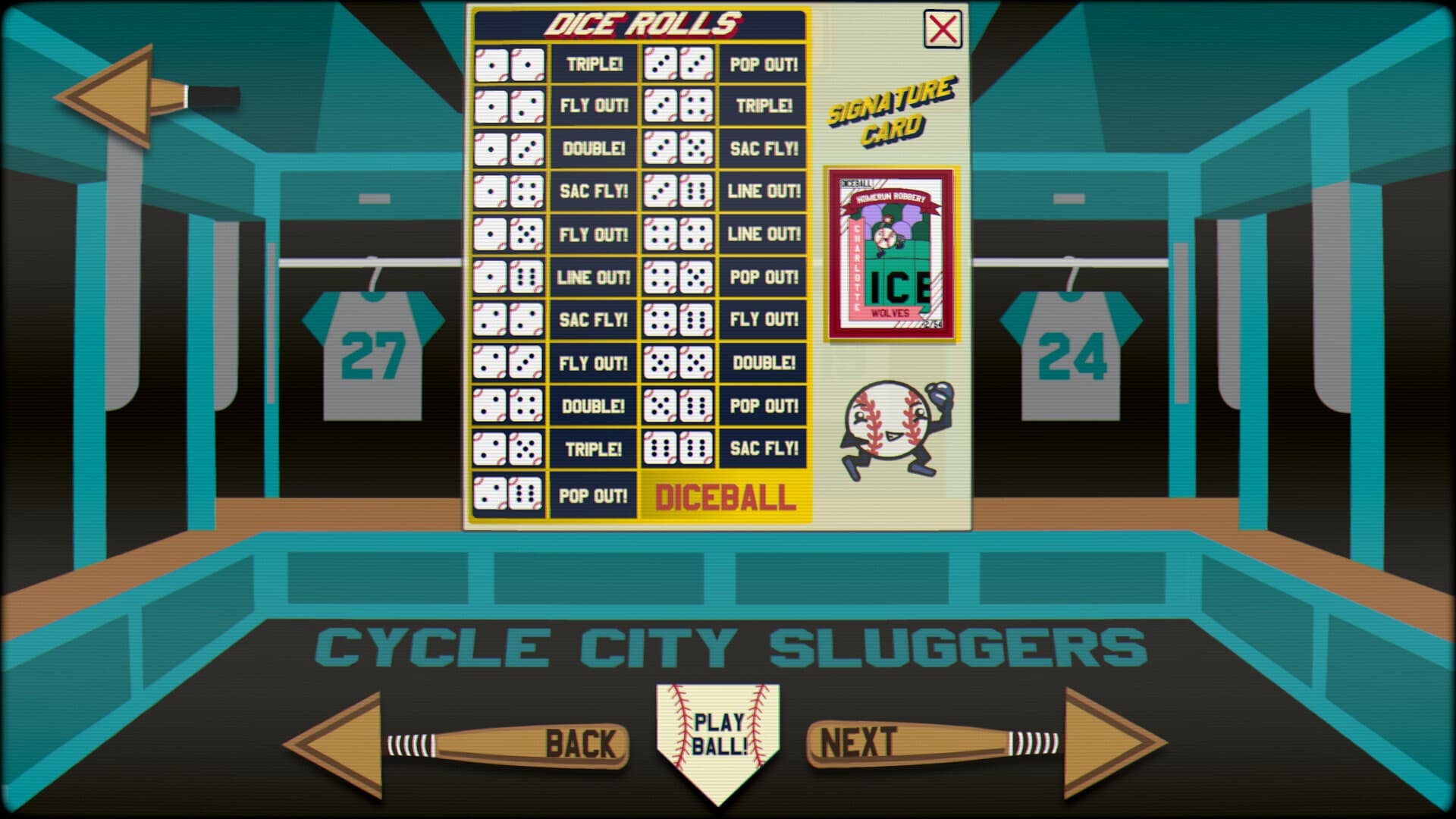
Diceball offers significant cognitive benefits through its blend of strategy and chance. Players will engage in problem-solving, strategic and critical thinking to manage their team, make tough decisions, and adapt to new challenges. The game also fosters memory and attention through card management and team building, and develops mathematical reasoning through dice rolls and upgrade calculations. Its adaptive challenge system ensures continuous learning and engagement.
Design risks
| R1 | Compulsion-loop pressure | 0.50 | |
| R2 | Monetization | 0.00 | |
| R3 | Social risk | 0.00 | |
While Diceball is free from monetization and social risks, it does employ some design mechanics that can encourage extended play. The variable rewards from dice rolls and unlocking new cards/teams, combined with the 'championship challenge' streak mechanic, can create a desire to continue playing. The risk of 'crushing defeat' may also lead to loss aversion, prompting players to try 'just one more game' to achieve victory or unlock content. Players may feel an escalating commitment as they invest time in building their card binder and unlocking all 8 teams.
Content (not in risk score)
| R4.1 | Violence Level | 0.33 | |
| R4.2 | Sexual Content | 0.00 | |
| R4.3 | Language | 0.00 | |
| R4.4 | Substance References | 0.00 | |
| R4.5 | Fear / Horror | 0.00 | |
Content risk is displayed separately and does not affect the time recommendation.
Regulatory design checks · DSA — Assessed: meets criteria·GDPR-K — Assessed: meets criteria·ODDS — Assessed: meets criteria
- DSA:What Ludograph checks: whether the game's design gives minors the transparency the EU Digital Services Act expects: plain terms, honest defaults, and clear reporting routes.: Estimated from review data. No dark pattern or child-targeting concerns found.
- GDPR-K:What Ludograph checks: whether age assurance and consent flows are designed for under-16s, in the spirit of GDPR Article 8.: Estimated from review data. No privacy or child-targeting concerns found.
- ODDS:What Ludograph checks: whether paid random-reward drop rates are disclosed, as required in China, Japan and South Korea.: Estimated from review data. No paid random-reward mechanics found, so drop-rate disclosure requirements do not apply.
These reflect Ludograph's assessment of the game's design practices against each framework's criteria, not a legal compliance determination.