Review · RPG · Android · iOS
Empires & Puzzles: RPG Quest
Reviewed: 30 Apr 2026
Android · iOS
Small Giant Games · 2017
Ludograph rating
D
Caution
40 /100
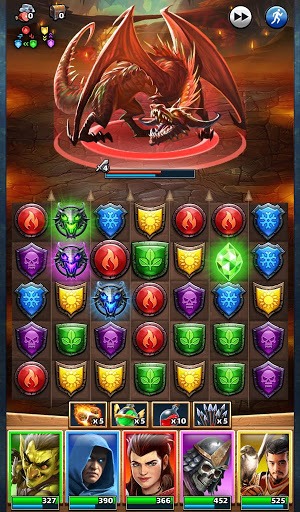
Empires & Puzzles: RPG Quest is an RPG puzzle game that builds problem-solving and strategic thinking, but has significant pay-to-win elements.
Growth (BDS)
43
Risk (RIS)
62
Daily limit
30min
Age guidance
7+
Developmental benefits
| B1 | Cognitive | 0.44 | |
| B2 | Social-emotional | 0.40 | |
| B3 | Motor | 0.45 | |
Empires & Puzzles offers engaging match-3 puzzle combat combined with strategic base building and hero collection, promoting problem-solving and strategic thinking. Team-up features encourage social interaction through alliances.
Design risks
| R1 | Compulsion-loop pressure | 0.73 | |
| R2 | Monetization | 0.54 | |
| R3 | Social risk | 0.50 | |
The game's monetization model strongly incentivizes spending to progress, with pay-to-win mechanics and social spending pressures. High compulsion-loop design with variable rewards, streak mechanics, and infinite play loops may lead to excessive engagement. The game lacks natural stopping points and penalizes breaks, potentially fostering addictive behavior.
Content (not in risk score)
| R4.1 | Violence Level | 0.33 | |
| R4.2 | Sexual Content | 0.00 | |
| R4.3 | Language | 0.00 | |
| R4.4 | Substance References | 0.00 | |
| R4.5 | Fear / Horror | 0.00 | |
Content risk is displayed separately and does not affect the time recommendation.
Heads up
- Monthly spendTypical real-money spend by engaged players: $0 – $100/mo.
Regulatory design checks · DSA — Assessed: concerns noted·GDPR-K — Not yet assessed·ODDS — Assessed: meets criteria
- DSA:What Ludograph checks: whether the game's design gives minors the transparency the EU Digital Services Act expects: plain terms, honest defaults, and clear reporting routes.: Estimated from review data. Likely violations: virtual currency that obscures real-money prices.
- GDPR-K:What Ludograph checks: whether age assurance and consent flows are designed for under-16s, in the spirit of GDPR Article 8.
- ODDS:What Ludograph checks: whether paid random-reward drop rates are disclosed, as required in China, Japan and South Korea.: Estimated from review data. No paid random-reward mechanics found, so drop-rate disclosure requirements do not apply.
These reflect Ludograph's assessment of the game's design practices against each framework's criteria, not a legal compliance determination.