Review · Racing · iOS
Flip Ball: Hit And Merge Color
Reviewed: 05 May 2026
iOS
pavsich aljosa · 2019
Ludograph rating
C
Mixed
47 /100
Flip Ball: Hit And Merge Color is a puzzle game that builds spatial awareness and strategic thinking, but has free-to-play mobile game risks.
Growth (BDS)
37
Risk (RIS)
36
Daily limit
60min
Age guidance
10+
Developmental benefits
| B1 | Cognitive | 0.48 | |
| B2 | Social-emotional | 0.13 | |
| B3 | Motor | 0.45 | |
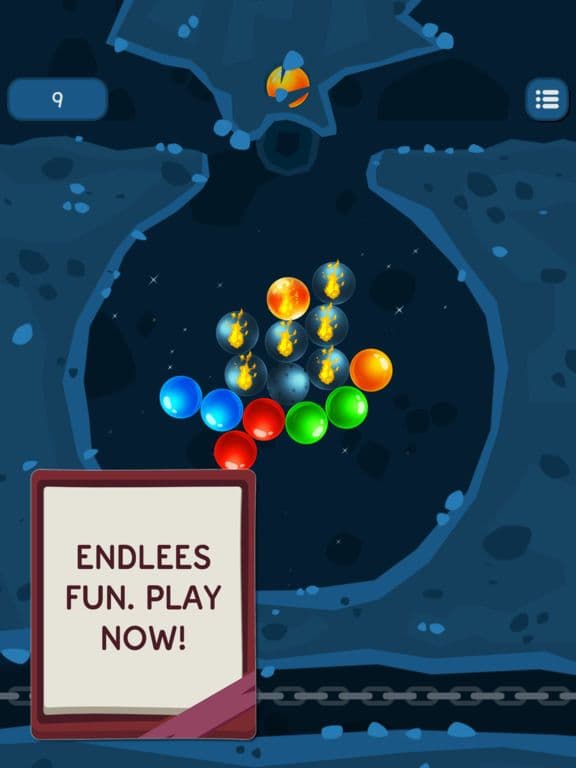
Flip Ball: Hit And Merge Color offers engaging puzzle gameplay that can enhance cognitive skills such as spatial awareness, strategic thinking, problem-solving, and reaction time. The core mechanic of rotating and merging colored balls provides a direct challenge to a player's ability to visualize and manipulate objects in space. Its innovative design keeps the brain active and can be a fun way to develop mental agility.
Design risks
| R1 | Compulsion-loop pressure | 0.47 | |
| R2 | Monetization | 0.21 | |
| R3 | Social risk | 0.33 | |
While offering cognitive benefits, Flip Ball presents several design risks common in free-to-play mobile puzzle games. The use of variable rewards (combos, busters) and an 'infinite play' design can contribute to addictive engagement patterns. The competitive aspect of high scores among friends may lead to social comparison. Although there are no direct monetization mechanics like microtransactions or subscriptions, as a free game, it is likely to include ad pressure. The game's explicit targeting of 'kids of all ages' also raises concerns regarding potential exposure to these manipulative design elements at a young age.
Content (not in risk score)
| R4.1 | Violence Level | 0.00 | |
| R4.2 | Sexual Content | 0.00 | |
| R4.3 | Language | 0.00 | |
| R4.4 | Substance References | 0.00 | |
| R4.5 | Fear / Horror | 0.00 | |
Content risk is displayed separately and does not affect the time recommendation.
Regulatory design checks · DSA — Assessed: concerns noted·GDPR-K — Assessed: concerns noted·ODDS — Assessed: meets criteria
- DSA:What Ludograph checks: whether the game's design gives minors the transparency the EU Digital Services Act expects: plain terms, honest defaults, and clear reporting routes.: Estimated from review data. Likely violations: monetisation that deliberately targets children.
- GDPR-K:What Ludograph checks: whether age assurance and consent flows are designed for under-16s, in the spirit of GDPR Article 8.: Estimated from review data. Likely violations: profiling or targeting of children for marketing.
- ODDS:What Ludograph checks: whether paid random-reward drop rates are disclosed, as required in China, Japan and South Korea.: Estimated from review data. No paid random-reward mechanics found, so drop-rate disclosure requirements do not apply.
These reflect Ludograph's assessment of the game's design practices against each framework's criteria, not a legal compliance determination.