AVOID
Escape Tsunami For Brainrots
by natrx
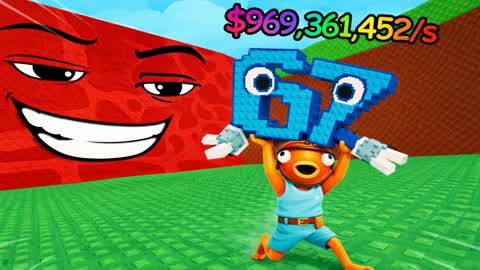
2228-2243-1076"Players collect 'Brainrots' in a race against a tsunami, earning passive income and upgrading their abilities."
What your child develops
What your child develops
This game offers light problem-solving as players strategically place 'Brainrots' to maximize earnings and encourages quick thinking to escape the tsunami. The presence of other players can foster a sense of shared experience, and the simple progression loop can be satisfying.
What to watch out for
What to watch out for
The game's core design heavily relies on repetitive collection and upgrading for passive income, which can create a strong 'dopamine trap' encouraging extended play. The 'In-Game Purchases' descriptor suggests potential for monetization pressure, and interactions with other players are possible given the 'Users Interact' descriptor.
This experience is scored on 9 dimensions adapted from the 50-dimension Ludograph rubric. Risk category weights match the rubric (Compulsion-loop design 45%, Monetization 30%, Social 25%); per-category sub-items are aggregated into a single score.
Parents ask…
Is Escape Tsunami For Brainrots safe for kids?
Ludograph gives Escape Tsunami For Brainrots a rating of 22/100, recommended for ages 8 and up. Significant risks make this hard to recommend for younger players.
What age is Escape Tsunami For Brainrots appropriate for?
Ludograph's rubric recommends a minimum age of 8+ for Escape Tsunami For Brainrots on Fortnite Creative, based on content, social, and monetization risks.
How long should kids play Escape Tsunami For Brainrots?
We don't publish a daily session budget for Escape Tsunami For Brainrots: its design-risk score sits in our highest band, where limiting time alone doesn't address the risks. For children we suggest choosing an alternative instead.
What are the main risks of Escape Tsunami For Brainrots?
The game's core design heavily relies on repetitive collection and upgrading for passive income, which can create a strong 'dopamine trap' encouraging extended play. The 'In-Game Purchases' descriptor suggests potential for monetization pressure, and interactions with other players are possible given the 'Users Interact' descriptor.
Parent tip
Discuss healthy screen time limits with your child before they start playing, and consider playing alongside them to understand the game's mechanics and social interactions.
ℹFortnite parent guide▾
Bottom line first
Fortnite Battle Royale has unfiltered voice chat with strangers enabled by default. Go to Epic Games account settings → Parental Controls and disable voice chat, or set it to friends-only, before your child plays any online mode.
Fortnite is five different games in one launcher. Battle Royale, LEGO Fortnite, Festival, Rocket Racing, and Creative each have different age-appropriateness and risk profiles. Your child may start in LEGO Fortnite and drift into Battle Royale. Check which modes they're actually playing.
V-Bucks are the shared currency across all modes. The Battle Pass, cosmetic bundles, and in-map purchases all use V-Bucks. Many Creative maps surface V-Buck spending prompts. Set spending limits in Epic Games account settings or use a prepaid card with a fixed balance.
Creative map content can change after our rating. Each map is rated by our AI at a point in time, and creators can update maps. We recommend periodically checking which maps your child plays and watching a few minutes of gameplay with them.
Action: Epic Games account → Parental Controls → set a PIN, disable voice chat, and cap monthly V-Buck spending. Takes under 5 minutes and significantly reduces risk across all Fortnite modes.