AVOID
Ultimate Slap Fights - Ragdoll
by tricktyger
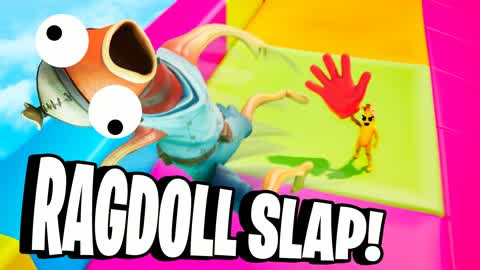
7369-7316-5016"This is a party game where players slap each other in various events to earn cosmetic rewards."
What your child develops
What your child develops
Children can enjoy competitive fun and social interaction through lively slapping contests with friends, fostering a sense of friendly competition and shared enjoyment.
What to watch out for
What to watch out for
The game's focus on earning cosmetic rewards and a clear progression path can encourage extended play sessions. While not explicitly toxic, the competitive nature of 'slap fights' could occasionally lead to minor frustrations. There are also in-game purchases for cosmetics that parents should be aware of.
This experience is scored on 9 dimensions adapted from the 50-dimension Ludograph rubric. Risk category weights match the rubric (Compulsion-loop design 45%, Monetization 30%, Social 25%); per-category sub-items are aggregated into a single score.
Parents ask…
Is Ultimate Slap Fights - Ragdoll safe for kids?
Ludograph gives Ultimate Slap Fights - Ragdoll a rating of 31/100, recommended for ages 7 and up. Significant risks make this hard to recommend for younger players.
What age is Ultimate Slap Fights - Ragdoll appropriate for?
Ludograph's rubric recommends a minimum age of 7+ for Ultimate Slap Fights - Ragdoll on Fortnite Creative, based on content, social, and monetization risks.
How long should kids play Ultimate Slap Fights - Ragdoll?
Our session recommendation for Ultimate Slap Fights - Ragdoll is up to 30 minutes per day. It is derived from the experience's own structure (natural stopping points, compulsion-loop design, monetization pressure, and social dynamics), not from a universal screen-time dose.
Session recommendations are design-based heuristics. Evidence linking specific daily durations to child outcomes is limited, and context matters as much as time; treat this as a starting point for household rules, not a clinical threshold.
What are the main risks of Ultimate Slap Fights - Ragdoll?
The game's focus on earning cosmetic rewards and a clear progression path can encourage extended play sessions. While not explicitly toxic, the competitive nature of 'slap fights' could occasionally lead to minor frustrations. There are also in-game purchases for cosmetics that parents should be aware of.
Parent tip
Parents can engage with their children by playing together, and helping them manage in-game purchases and screen time.
ℹFortnite parent guide▾
Bottom line first
Fortnite Battle Royale has unfiltered voice chat with strangers enabled by default. Go to Epic Games account settings → Parental Controls and disable voice chat, or set it to friends-only, before your child plays any online mode.
Fortnite is five different games in one launcher. Battle Royale, LEGO Fortnite, Festival, Rocket Racing, and Creative each have different age-appropriateness and risk profiles. Your child may start in LEGO Fortnite and drift into Battle Royale. Check which modes they're actually playing.
V-Bucks are the shared currency across all modes. The Battle Pass, cosmetic bundles, and in-map purchases all use V-Bucks. Many Creative maps surface V-Buck spending prompts. Set spending limits in Epic Games account settings or use a prepaid card with a fixed balance.
Creative map content can change after our rating. Each map is rated by our AI at a point in time, and creators can update maps. We recommend periodically checking which maps your child plays and watching a few minutes of gameplay with them.
Action: Epic Games account → Parental Controls → set a PIN, disable voice chat, and cap monthly V-Buck spending. Takes under 5 minutes and significantly reduces risk across all Fortnite modes.