Review · Strategy · iOS · PC · macOS
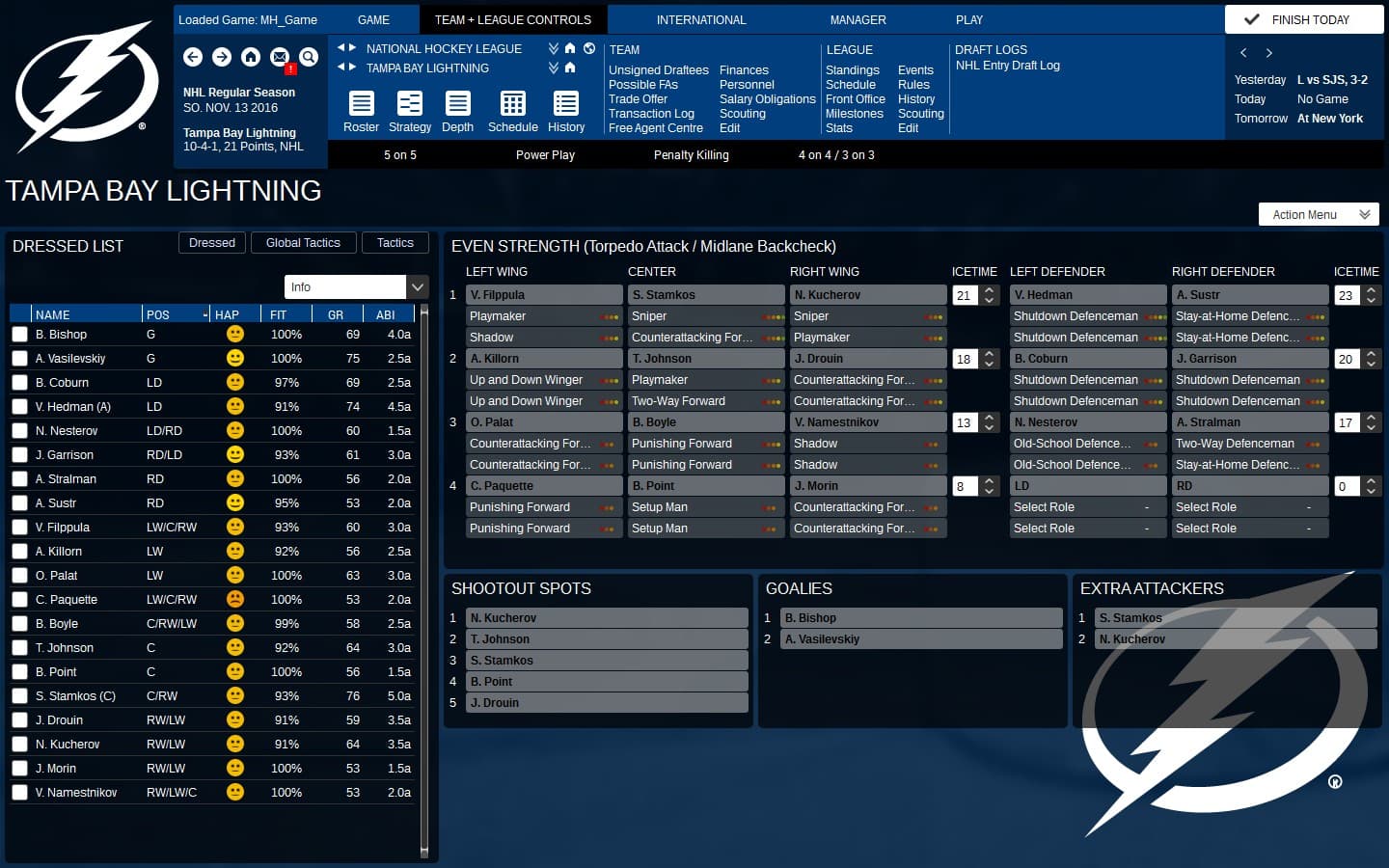
Franchise Hockey Manager 3
Reviewed: 02 May 2026
iOS · PC · macOS
Out of the Park Developments · 2016
Ludograph rating
C
Mixed
54 /100
Franchise Hockey Manager 3 is a strategy simulation that develops problem solving and critical thinking through managing a hockey team.
Growth (BDS)
37
Risk (RIS)
0
Daily limit
120min
Age guidance
–
Developmental benefits
| B1 | Cognitive | 0.74 | |
| B2 | Social-emotional | 0.00 | |
| B3 | Motor | 0.00 | |
Franchise Hockey Manager 3 offers a deep and authentic strategy experience, heavily engaging cognitive skills like problem-solving, strategic thinking, and critical thinking through managing a hockey franchise. Players will develop strong memory and attention to detail as they track player stats, finances, and league developments. The game also encourages learning transfer as players apply real-world hockey knowledge and economic principles to their in-game decisions. The adaptive challenge is high, as players must constantly adjust to changing league dynamics, player performance, and financial constraints. While it doesn't offer direct social or motor benefits, it provides a rich intellectual challenge for those interested in sports management.
Design risks
| R1 | Compulsion-loop pressure | 0.00 | |
| R2 | Monetization | 0.00 | |
| R3 | Social risk | 0.00 | |
Franchise Hockey Manager 3 presents minimal risks. There are no compulsion-loop design mechanics, monetization pressures, social risks, or concerning content. The game is a pure simulation experience, focusing on strategic management rather than addictive loops or exploitative practices. The lack of social interaction removes any risks associated with competitive toxicity, stranger interaction, or privacy concerns. Content is clean, without violence, sexual content, strong language, substance references, or fear-inducing elements.
Content (not in risk score)
| R4.1 | Violence Level | 0.00 | |
| R4.2 | Sexual Content | 0.00 | |
| R4.3 | Language | 0.00 | |
| R4.4 | Substance References | 0.00 | |
| R4.5 | Fear / Horror | 0.00 | |
Content risk is displayed separately and does not affect the time recommendation.
Regulatory design checks · DSA — Assessed: meets criteria·GDPR-K — Assessed: meets criteria·ODDS — Assessed: meets criteria
- DSA:What Ludograph checks: whether the game's design gives minors the transparency the EU Digital Services Act expects: plain terms, honest defaults, and clear reporting routes.: Estimated from review data. No dark pattern or child-targeting concerns found.
- GDPR-K:What Ludograph checks: whether age assurance and consent flows are designed for under-16s, in the spirit of GDPR Article 8.: Estimated from review data. No privacy or child-targeting concerns found.
- ODDS:What Ludograph checks: whether paid random-reward drop rates are disclosed, as required in China, Japan and South Korea.: Estimated from review data. No paid random-reward mechanics found, so drop-rate disclosure requirements do not apply.
These reflect Ludograph's assessment of the game's design practices against each framework's criteria, not a legal compliance determination.