Review · Strategy · PC
Grammar Grind
Reviewed: 18 Jun 2026
PC
Skylor Beck · 2025
Ludograph rating
Growth (BDS)
38
Risk (RIS)
17
Daily limit
90min
Age guidance
–
Developmental benefits
| B1 | Cognitive | 0.72 | |
| B2 | Social-emotional | 0.00 | |
| B3 | Motor | 0.10 | |
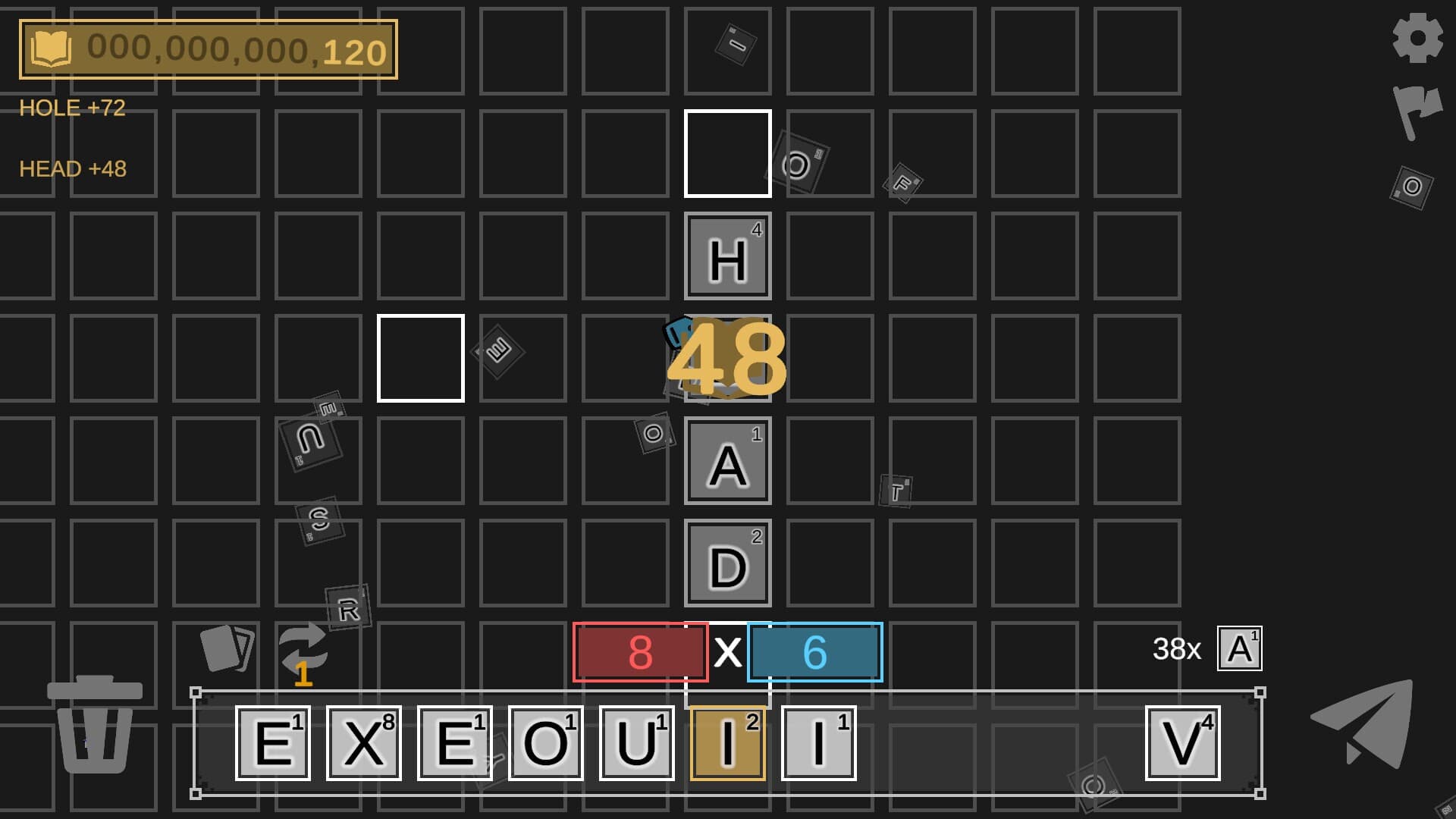
Grammar Grind offers significant cognitive benefits, particularly in problem-solving, strategic thinking, critical thinking, and language skills through its core word-building mechanics. The game encourages vocabulary expansion and mathematical reasoning via its scoring and upgrade systems. Its incremental nature and numerous upgrades provide an adaptive challenge, fostering continuous learning and skill development in a low-stress environment.
Design risks
| R1 | Compulsion-loop pressure | 0.37 | |
| R2 | Monetization | 0.00 | |
| R3 | Social risk | 0.00 | |
While largely benign, Grammar Grind incorporates mild engagement mechanics such as variable rewards, a long-term 'debt' goal that can induce a sense of loss aversion, and an infinite play loop through extensive upgrades. The 'BankMart' feature, while not monetized, could subtly encourage continued play to overcome temporary hurdles. However, the game explicitly promotes a relaxing pace and lacks any monetization, social risks, or concerning content, making its overall risk profile very low.
Content (not in risk score)
| R4.1 | Violence Level | 0.00 | |
| R4.2 | Sexual Content | 0.00 | |
| R4.3 | Language | 0.00 | |
| R4.4 | Substance References | 0.00 | |
| R4.5 | Fear / Horror | 0.00 | |
Content risk is displayed separately and does not affect the time recommendation.
Regulatory design checks · DSA — Assessed: meets criteria·GDPR-K — Assessed: meets criteria·ODDS — Assessed: meets criteria
- DSA:What Ludograph checks: whether the game's design gives minors the transparency the EU Digital Services Act expects: plain terms, honest defaults, and clear reporting routes.: Estimated from review data. No dark pattern or child-targeting concerns found.
- GDPR-K:What Ludograph checks: whether age assurance and consent flows are designed for under-16s, in the spirit of GDPR Article 8.: Estimated from review data. No privacy or child-targeting concerns found.
- ODDS:What Ludograph checks: whether paid random-reward drop rates are disclosed, as required in China, Japan and South Korea.: Estimated from review data. No paid random-reward mechanics found, so drop-rate disclosure requirements do not apply.
These reflect Ludograph's assessment of the game's design practices against each framework's criteria, not a legal compliance determination.