Review · Puzzle · iOS · Android
Harry Potter: Puzzles & Spells
Reviewed: 21 Apr 2026
iOS · Android
Zynga
Ludograph rating
E
Avoid
31 /100
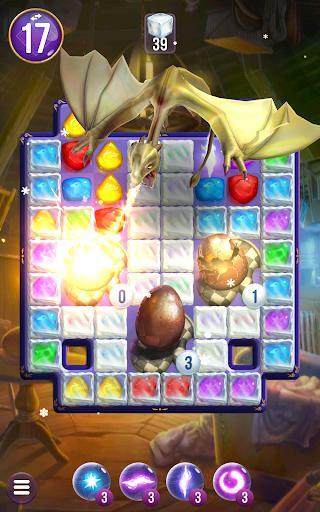
Harry Potter: Puzzles & Spells is a match-3 puzzle game that develops problem solving and spatial awareness, but has significant engagement-risk concerns.
Growth (BDS)
29
Risk (RIS)
67
Daily limit
30min
Age guidance
7+
Developmental benefits
| B1 | Cognitive | 0.40 | |
| B2 | Social-emotional | 0.13 | |
| B3 | Motor | 0.25 | |
Harry Potter: Puzzles & Spells offers a gentle cognitive workout through its Match-3 puzzle mechanics. Players practice spatial pattern recognition as they scan the board for optimal tile combinations, and the escalating difficulty of later levels requires modest strategic planning about move order and spell usage. The beloved Wizarding World setting gives reluctant readers small doses of reading comprehension via story cards and the in-game 'Daily Prophet,' and collecting lore cards can spark curiosity about the broader HP universe. The level-by-level structure means each session has a clear goal, making it accessible for younger children learning to follow rule-based systems.
Design risks
| R1 | Compulsion-loop pressure | 0.87 | |
| R2 | Monetization | 0.63 | |
| R3 | Social risk | 0.39 | |
As a Zynga mobile title built on a beloved children's IP, this game carries meaningful engagement-risk concerns. The core loop is loaded with classic compulsion-loop patterns: near-miss failure states (falling just short of three stars), variable reward drops from card collections, daily birthday events engineered to trigger FOMO, and a lives system that punishes breaks and nudges spending. The game is explicitly free-to-play with in-app purchases for premium currency, and its Harry Potter branding makes it especially effective at targeting children who are already emotionally invested in the franchise — raising child-targeting concerns. Spending prompts are embedded naturally into the flow of gameplay (e.g., buying extra moves when a level is nearly beaten). The collectible card system and daily events build escalating commitment and make it psychologically difficult to walk away, even when the underlying puzzle variety is thin.
Content (not in risk score)
| R4.1 | Violence Level | 0.00 | |
| R4.2 | Sexual Content | 0.00 | |
| R4.3 | Language | 0.00 | |
| R4.4 | Substance References | 0.00 | |
| R4.5 | Fear / Horror | 0.33 | |
Content risk is displayed separately and does not affect the time recommendation.
Heads up
- Monthly spendTypical real-money spend by engaged players: $0 – $30/mo.
Regulatory design checks · DSA — Assessed: concerns noted·GDPR-K — Assessed: concerns noted·ODDS — Assessed: meets criteria
- DSA:What Ludograph checks: whether the game's design gives minors the transparency the EU Digital Services Act expects: plain terms, honest defaults, and clear reporting routes.: Estimated from review data. Likely violations: monetisation that deliberately targets children; virtual currency that obscures real-money prices; frequent spending prompts in a children-rated game.
- GDPR-K:What Ludograph checks: whether age assurance and consent flows are designed for under-16s, in the spirit of GDPR Article 8.: Estimated from review data. Likely violations: profiling or targeting of children for marketing.
- ODDS:What Ludograph checks: whether paid random-reward drop rates are disclosed, as required in China, Japan and South Korea.: Estimated from review data. No paid random-reward mechanics found, so drop-rate disclosure requirements do not apply.
These reflect Ludograph's assessment of the game's design practices against each framework's criteria, not a legal compliance determination.