Review · Adventure · macOS · PC · Linux
Kairo
Reviewed: 16 May 2026
macOS · PC · Linux
Locked Door Puzzle · 2013
Ludograph rating
D
Caution
37 /100
Kairo is an adventure game that excels at developing problem-solving and spatial awareness through pure cognitive exercise.
Growth (BDS)
23
Risk (RIS)
10
Daily limit
120min
Age guidance
7+
Developmental benefits
| B1 | Cognitive | 0.56 | |
| B2 | Social-emotional | 0.03 | |
| B3 | Motor | 0.25 | |
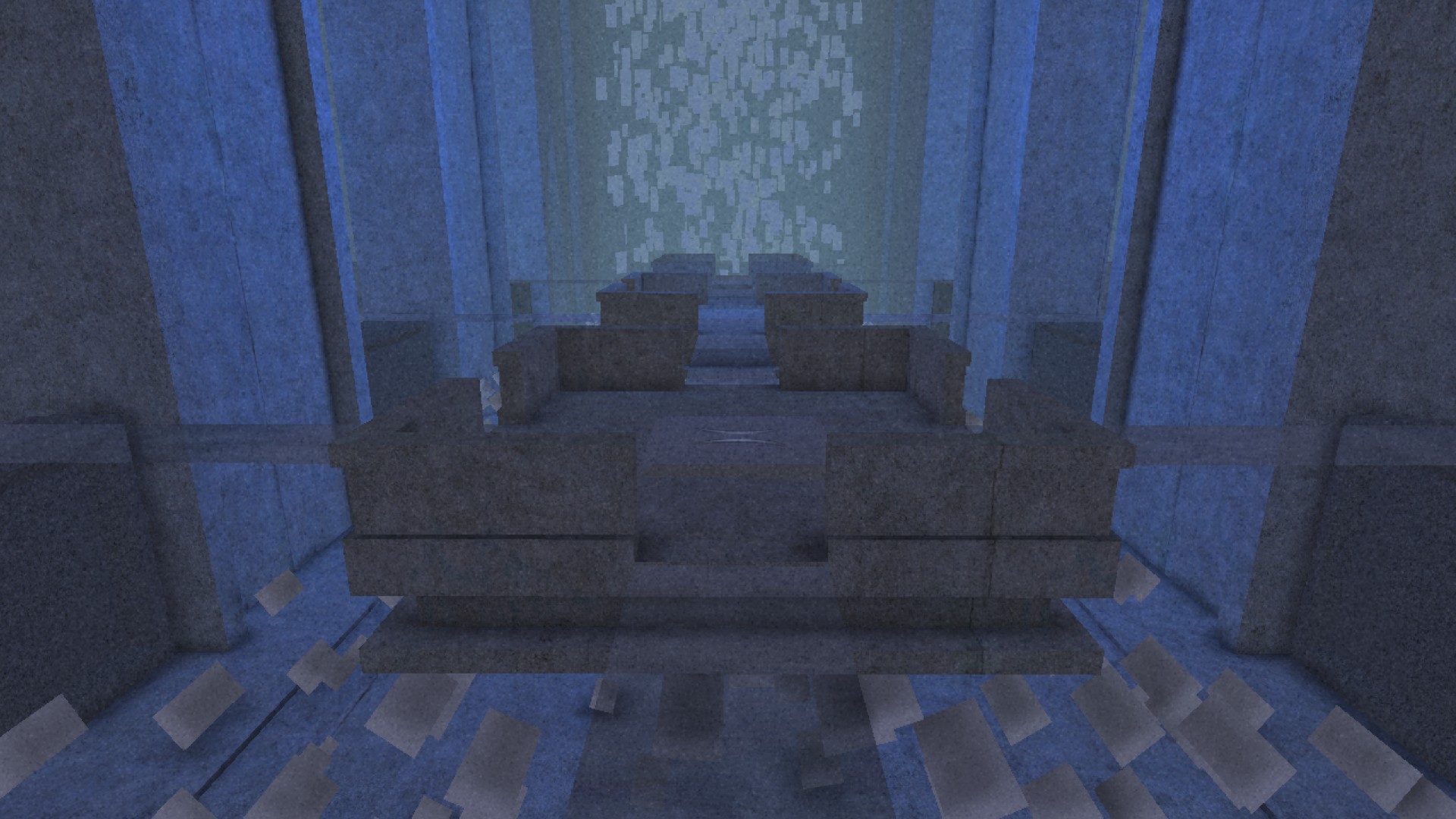
Kairo excels as a pure cognitive exercise in spatial reasoning and problem-solving. The game's abstract 3D environments demand strong spatial awareness as players navigate and mentally map interconnected architectural spaces. Problem-solving is core to the experience—every interaction involves deciphering how ancient machinery works and determining the correct sequence of actions to activate it. Critical thinking emerges naturally as players must observe environmental clues, form hypotheses about puzzle mechanics, and test solutions. The environmental storytelling approach encourages players to piece together narrative meaning from visual and spatial information, strengthening inference and pattern recognition skills. Memory and attention are consistently engaged as players must recall room layouts, remember puzzle states, and track cause-and-effect relationships across the game world. The abstract nature and lack of explicit guidance foster genuine learning transfer—players develop problem-solving frameworks applicable beyond the game itself.
Design risks
| R1 | Compulsion-loop pressure | 0.00 | |
| R2 | Monetization | 0.00 | |
| R3 | Social risk | 0.00 | |
Kairo represents an exceptionally low-risk gaming experience with virtually no manipulative design patterns. As a single-player, self-contained puzzle game with no monetization beyond initial purchase, it avoids all common compulsion-loop design tactics—no variable rewards, streaks, FOMO mechanics, or artificial barriers to stopping. There are no microtransactions, ads, or spending pressure of any kind. The complete absence of social features eliminates all social and privacy risks. Content is abstract and non-violent, though the atmospheric soundtrack and mysterious abandoned setting may create mild tension or unease for very sensitive younger children. The game's contemplative pacing and environmental storytelling style may feel slow or confusing to players accustomed to explicit objectives and constant stimulation, but this represents a design philosophy rather than a risk.
Content (not in risk score)
| R4.1 | Violence Level | 0.00 | |
| R4.2 | Sexual Content | 0.00 | |
| R4.3 | Language | 0.00 | |
| R4.4 | Substance References | 0.00 | |
| R4.5 | Fear / Horror | 0.33 | |
Content risk is displayed separately and does not affect the time recommendation.
Regulatory design checks · DSA — Assessed: meets criteria·GDPR-K — Assessed: meets criteria·ODDS — Assessed: meets criteria
- DSA:What Ludograph checks: whether the game's design gives minors the transparency the EU Digital Services Act expects: plain terms, honest defaults, and clear reporting routes.: Estimated from review data. No dark pattern or child-targeting concerns found.
- GDPR-K:What Ludograph checks: whether age assurance and consent flows are designed for under-16s, in the spirit of GDPR Article 8.: Estimated from review data. No privacy or child-targeting concerns found.
- ODDS:What Ludograph checks: whether paid random-reward drop rates are disclosed, as required in China, Japan and South Korea.: Estimated from review data. No paid random-reward mechanics found, so drop-rate disclosure requirements do not apply.
These reflect Ludograph's assessment of the game's design practices against each framework's criteria, not a legal compliance determination.