Review · Action · PC
Lone Fungus: Melody of Spores
Reviewed: 07 Jun 2026
PC
Basti Games · 2025
Ludograph rating
Growth (BDS)
39
Risk (RIS)
2
Daily limit
120min
Age guidance
7+
Developmental benefits
| B1 | Cognitive | 0.50 | |
| B2 | Social-emotional | 0.10 | |
| B3 | Motor | 0.55 | |
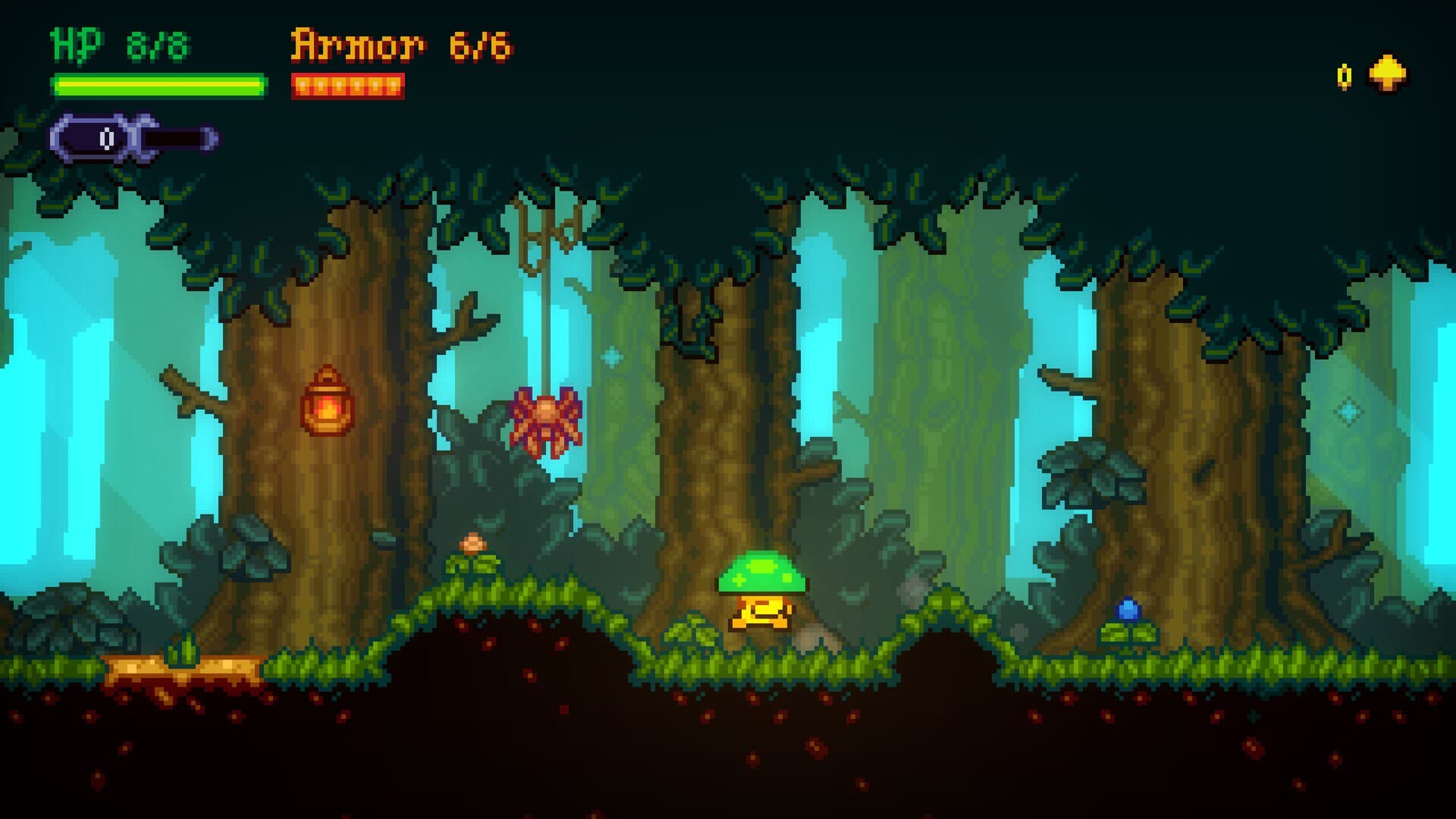
Lone Fungus: Melody of Spores offers a rich and engaging Metroidvania experience that fosters cognitive skills through exploration, problem-solving, and strategic combat. Players will develop hand-eye coordination, fine motor skills, and reaction time through its fluid 8-directional whip combat and tight, responsive platforming. The game encourages curiosity and learning transfer as players master new abilities and navigate an interconnected world brimming with secrets. Its uplifting narrative and charming pixel art create a fun and challenging journey without manipulative design.
Design risks
| R1 | Compulsion-loop pressure | 0.03 | |
| R2 | Monetization | 0.00 | |
| R3 | Social risk | 0.00 | |
The game presents minimal risks. Its solo nature and lack of online features eliminate social and privacy risks. With no microtransactions, loot boxes, or subscriptions, there are no monetization pressures. Content risks are low, with combat being whimsical rather than graphic. The game avoids manipulative compulsion-loop mechanics, focusing instead on intrinsic rewards of exploration and skill mastery.
Content (not in risk score)
| R4.1 | Violence Level | 0.33 | |
| R4.2 | Sexual Content | 0.00 | |
| R4.3 | Language | 0.00 | |
| R4.4 | Substance References | 0.00 | |
| R4.5 | Fear / Horror | 0.00 | |
Content risk is displayed separately and does not affect the time recommendation.
Regulatory design checks · DSA — Assessed: meets criteria·GDPR-K — Assessed: meets criteria·ODDS — Assessed: meets criteria
- DSA:What Ludograph checks: whether the game's design gives minors the transparency the EU Digital Services Act expects: plain terms, honest defaults, and clear reporting routes.: Estimated from review data. No dark pattern or child-targeting concerns found.
- GDPR-K:What Ludograph checks: whether age assurance and consent flows are designed for under-16s, in the spirit of GDPR Article 8.: Estimated from review data. No privacy or child-targeting concerns found.
- ODDS:What Ludograph checks: whether paid random-reward drop rates are disclosed, as required in China, Japan and South Korea.: Estimated from review data. No paid random-reward mechanics found, so drop-rate disclosure requirements do not apply.
These reflect Ludograph's assessment of the game's design practices against each framework's criteria, not a legal compliance determination.