Review · Strategy · macOS · PC · Linux
Making History II: The War of the World
Reviewed: 02 May 2026
macOS · PC · Linux
Muzzy Lane Software · 2010
Ludograph rating
B
Good
67 /100
Making History II: The War of the World is a grand strategy game that significantly develops problem solving, strategic thinking, and critical thinking.
Growth (BDS)
50
Risk (RIS)
0
Daily limit
120min
Age guidance
13+
Developmental benefits
| B1 | Cognitive | 0.84 | |
| B2 | Social-emotional | 0.17 | |
| B3 | Motor | 0.15 | |
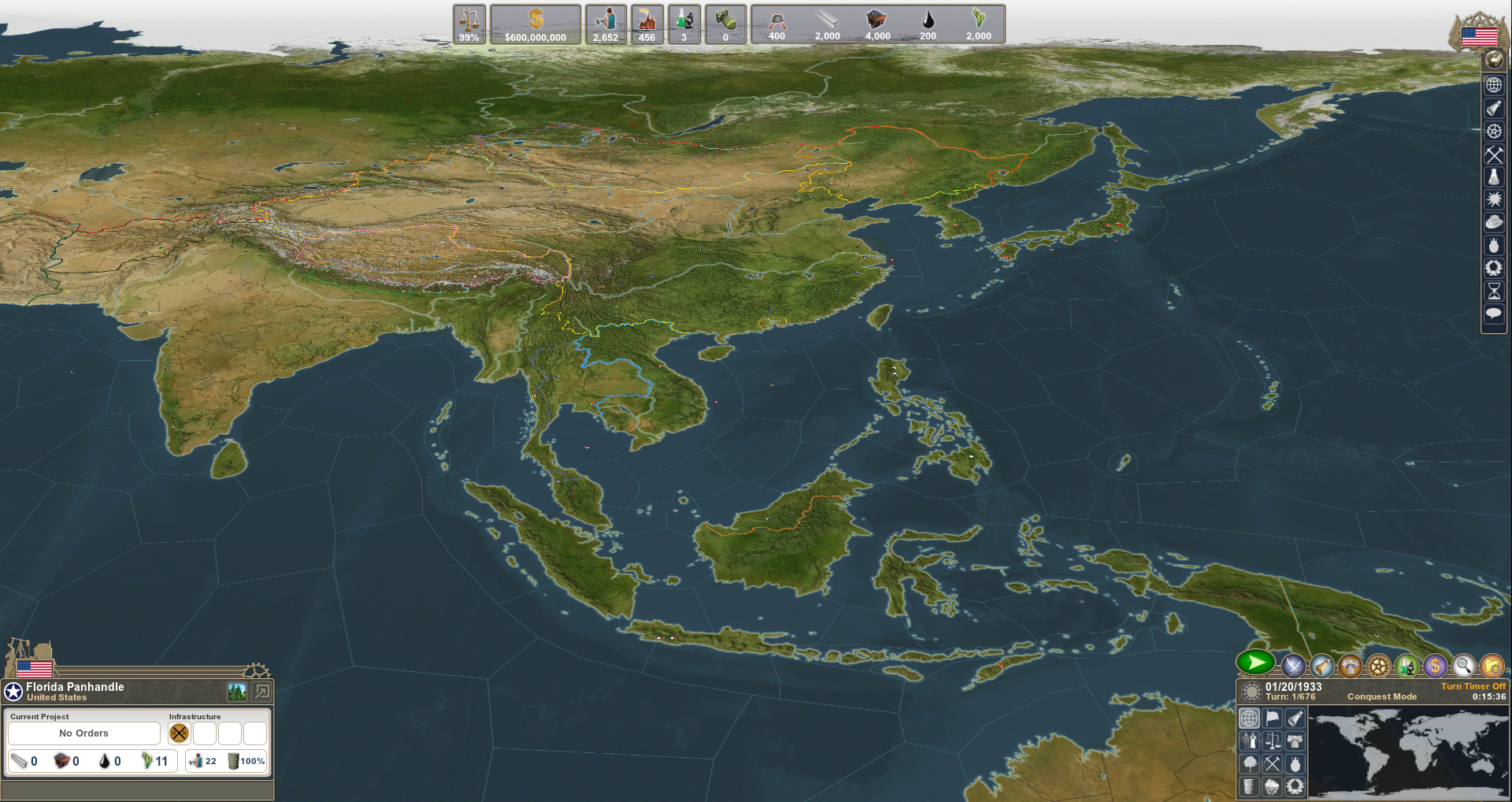
Making History II: The War of the World offers a rich and complex grand strategy experience that significantly develops cognitive skills. Players engage in deep problem-solving, strategic thinking, and critical analysis as they manage nations, economies, and military campaigns during WWII. The extensive economic and logistical systems foster strong mathematical and systems thinking, while the adaptive AI and varied historical outcomes promote learning transfer and creative problem-solving. It provides a unique opportunity to understand historical contexts and the complexities of international relations.
Design risks
| R1 | Compulsion-loop pressure | 0.00 | |
| R2 | Monetization | 0.00 | |
| R3 | Social risk | 0.00 | |
This game presents very low risks regarding compulsion-loop design, monetization, and social pressures, as it is a single-player, one-time purchase title with no microtransactions or social features. The primary risk lies in its content, featuring abstract violence inherent in a World War II strategy game. While not graphic, the theme of war, conflict, and espionage is central. There is a mild risk of propaganda, as the game allows players to alter history and achieve nationalistic goals, which could subtly influence perspectives on historical events and national power.
Content (not in risk score)
| R4.1 | Violence Level | 0.67 | |
| R4.2 | Sexual Content | 0.00 | |
| R4.3 | Language | 0.00 | |
| R4.4 | Substance References | 0.00 | |
| R4.5 | Fear / Horror | 0.00 | |
Content risk is displayed separately and does not affect the time recommendation.
Regulatory design checks · DSA — Assessed: meets criteria·GDPR-K — Assessed: meets criteria·ODDS — Assessed: meets criteria
- DSA:What Ludograph checks: whether the game's design gives minors the transparency the EU Digital Services Act expects: plain terms, honest defaults, and clear reporting routes.: Estimated from review data. No dark pattern or child-targeting concerns found.
- GDPR-K:What Ludograph checks: whether age assurance and consent flows are designed for under-16s, in the spirit of GDPR Article 8.: Estimated from review data. No privacy or child-targeting concerns found.
- ODDS:What Ludograph checks: whether paid random-reward drop rates are disclosed, as required in China, Japan and South Korea.: Estimated from review data. No paid random-reward mechanics found, so drop-rate disclosure requirements do not apply.
These reflect Ludograph's assessment of the game's design practices against each framework's criteria, not a legal compliance determination.