Review · Action · Linux · PC · macOS
Never Split the Party
Reviewed: 23 May 2026
Linux · PC · macOS
Legend Studio
Ludograph rating
Growth (BDS)
59
Risk (RIS)
32
Daily limit
60min
Age guidance
7+
Developmental benefits
| B1 | Cognitive | 0.62 | |
| B2 | Social-emotional | 0.70 | |
| B3 | Motor | 0.35 | |
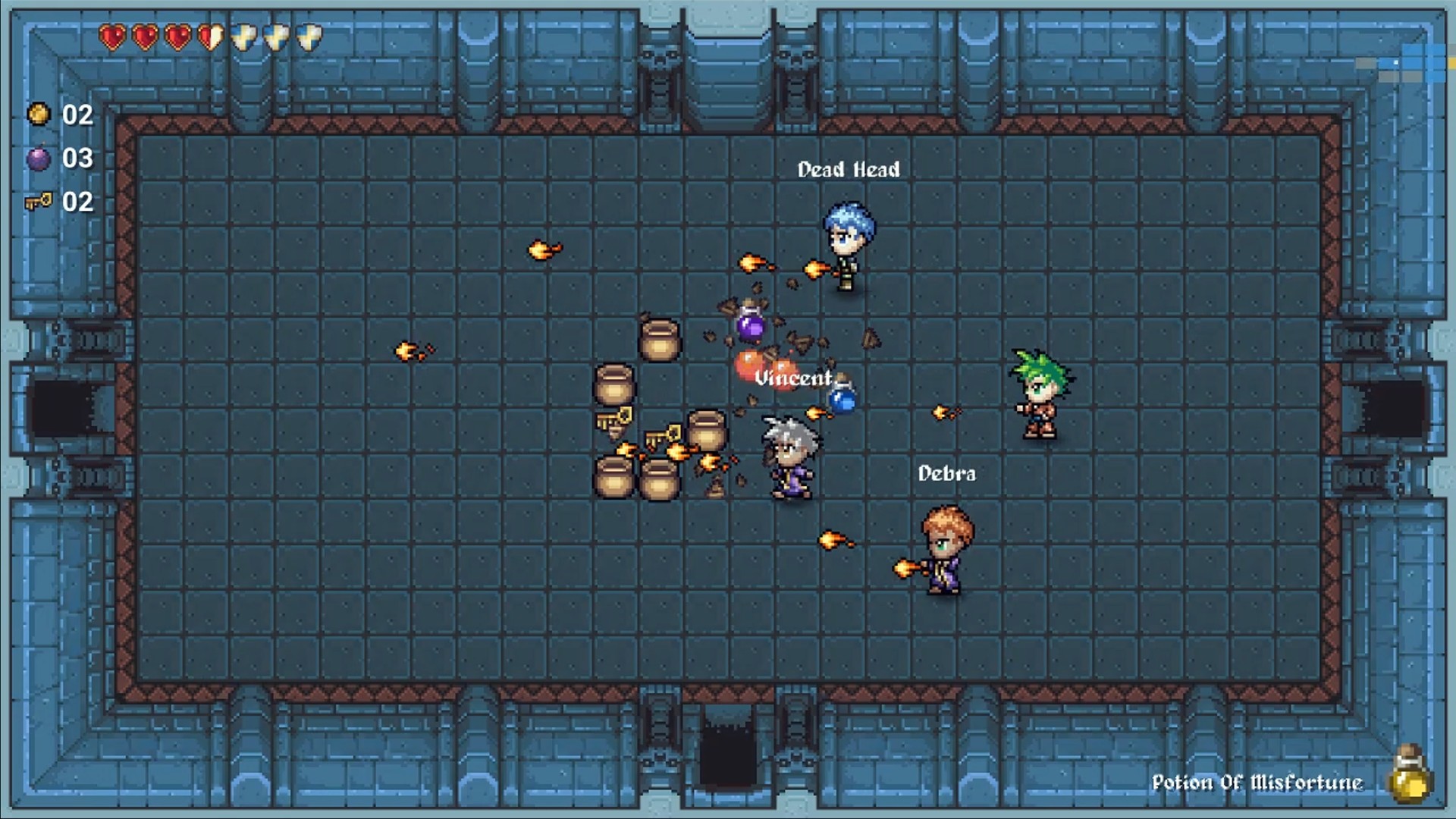
Never Split the Party is a highly cooperative rogue-like game that strongly encourages teamwork, communication, and strategic thinking among players. The procedurally generated dungeons and diverse challenges promote problem-solving, adaptive thinking, and learning transfer as players unlock new classes and master progressively difficult floors. Its 'ultra social' design fosters positive social interaction and empathy as players revive companions and cover each other's backs.
Design risks
| R1 | Compulsion-loop pressure | 0.43 | |
| R2 | Monetization | 0.29 | |
| R3 | Social risk | 0.17 | |
The game's 'free-to-play' model with paid DLC for additional character classes, combined with its strong emphasis on social co-op, creates a significant social spending pressure. Players may feel obligated to purchase the 'Fellowship DLC' to fully participate with friends using different classes, which could be seen as a 'pay-to-win' element if these classes offer distinct advantages. The rogue-like nature introduces loss aversion, and the 'infinite replayability' of procedurally generated dungeons, coupled with social obligation, could lead to extended play sessions. Additionally, the mechanic of losing vital role information if a party member leaves effectively penalizes breaks during a session.
Content (not in risk score)
| R4.1 | Violence Level | 0.33 | |
| R4.2 | Sexual Content | 0.00 | |
| R4.3 | Language | 0.33 | |
| R4.4 | Substance References | 0.00 | |
| R4.5 | Fear / Horror | 0.33 | |
Content risk is displayed separately and does not affect the time recommendation.
Regulatory design checks · DSA — Not yet assessed·GDPR-K — Not yet assessed·ODDS — Assessed: meets criteria
- DSA:What Ludograph checks: whether the game's design gives minors the transparency the EU Digital Services Act expects: plain terms, honest defaults, and clear reporting routes.
- GDPR-K:What Ludograph checks: whether age assurance and consent flows are designed for under-16s, in the spirit of GDPR Article 8.
- ODDS:What Ludograph checks: whether paid random-reward drop rates are disclosed, as required in China, Japan and South Korea.: Estimated from review data. No paid random-reward mechanics found, so drop-rate disclosure requirements do not apply.
These reflect Ludograph's assessment of the game's design practices against each framework's criteria, not a legal compliance determination.