Review · Action · PC
Organ Biker
Reviewed: 24 May 2026
PC
Screeching Wizard · 2015
Ludograph rating
Growth (BDS)
30
Risk (RIS)
5
Daily limit
120min
Age guidance
7+
Developmental benefits
| B1 | Cognitive | 0.34 | |
| B2 | Social-emotional | 0.00 | |
| B3 | Motor | 0.65 | |
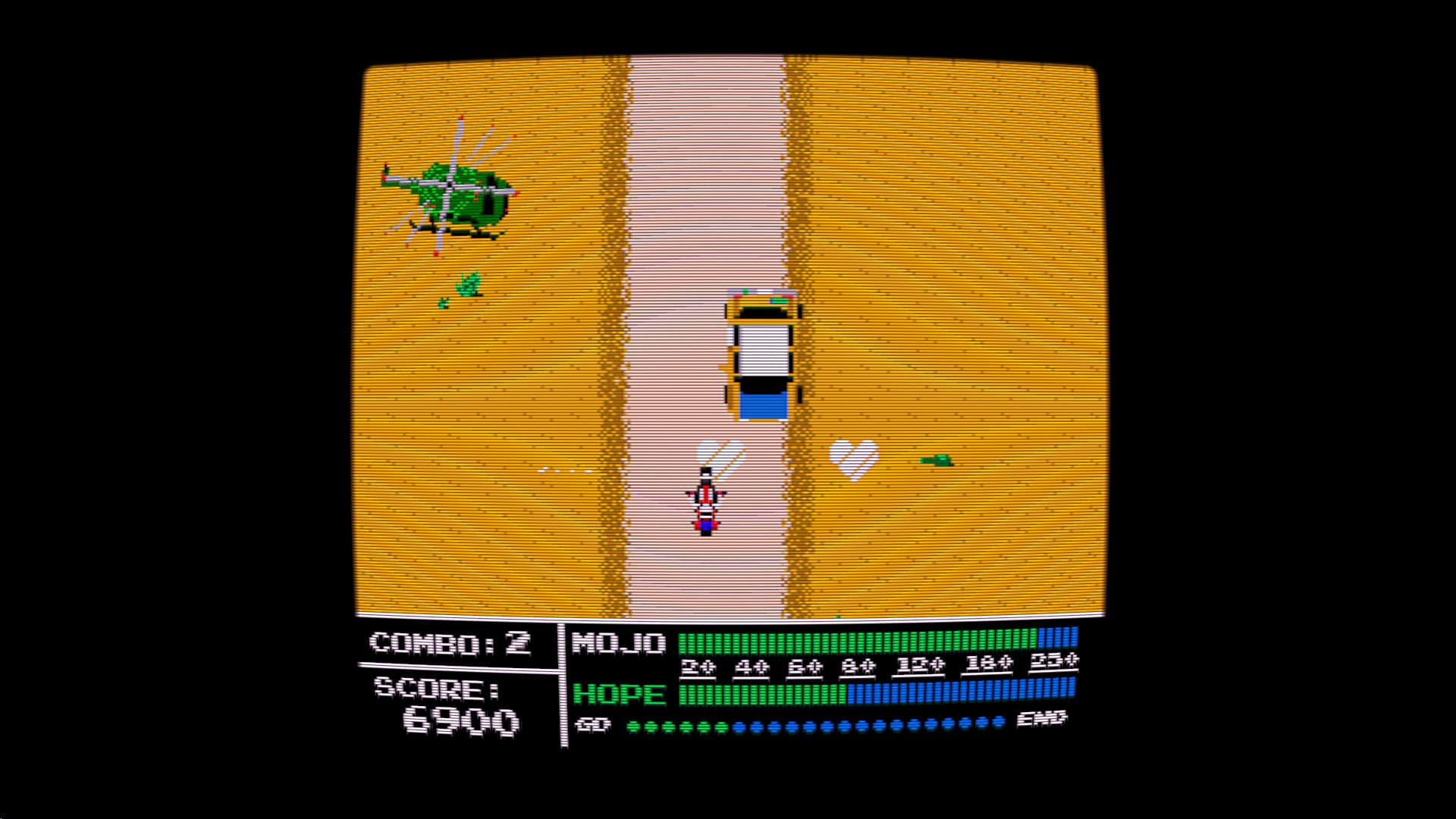
Organ Biker is an arcade-style action game that challenges players' hand-eye coordination, reaction time, and memory. It features a retro aesthetic with 8-bit graphics and chiptune music, offering a nostalgic experience. The game emphasizes delivering organs and collecting riches, providing clear objectives for players. Its pick-up-and-play nature makes it accessible for short sessions.
Design risks
| R1 | Compulsion-loop pressure | 0.10 | |
| R2 | Monetization | 0.00 | |
| R3 | Social risk | 0.00 | |
The game contains mild violence in line with its arcade action genre, though it's not graphically explicit. There are minimal compulsion-loop design techniques, primarily through variable rewards and near misses inherent in arcade games, which could encourage continued play. Monetization risks are non-existent as the game has no microtransactions, loot boxes, battle passes, or subscriptions. Social risks are also absent due to the single-player nature and lack of stranger interaction.
Content (not in risk score)
| R4.1 | Violence Level | 0.33 | |
| R4.2 | Sexual Content | 0.00 | |
| R4.3 | Language | 0.00 | |
| R4.4 | Substance References | 0.00 | |
| R4.5 | Fear / Horror | 0.00 | |
Content risk is displayed separately and does not affect the time recommendation.
Regulatory design checks · DSA — Assessed: meets criteria·GDPR-K — Assessed: meets criteria·ODDS — Assessed: meets criteria
- DSA:What Ludograph checks: whether the game's design gives minors the transparency the EU Digital Services Act expects: plain terms, honest defaults, and clear reporting routes.: Estimated from review data. No dark pattern or child-targeting concerns found.
- GDPR-K:What Ludograph checks: whether age assurance and consent flows are designed for under-16s, in the spirit of GDPR Article 8.: Estimated from review data. No privacy or child-targeting concerns found.
- ODDS:What Ludograph checks: whether paid random-reward drop rates are disclosed, as required in China, Japan and South Korea.: Estimated from review data. No paid random-reward mechanics found, so drop-rate disclosure requirements do not apply.
These reflect Ludograph's assessment of the game's design practices against each framework's criteria, not a legal compliance determination.