Review · Puzzle · PC
Package Delivery Service
Reviewed: 18 Apr 2026
PC
Thriver MediaWorks · 2020
Ludograph rating
D
Caution
40 /100
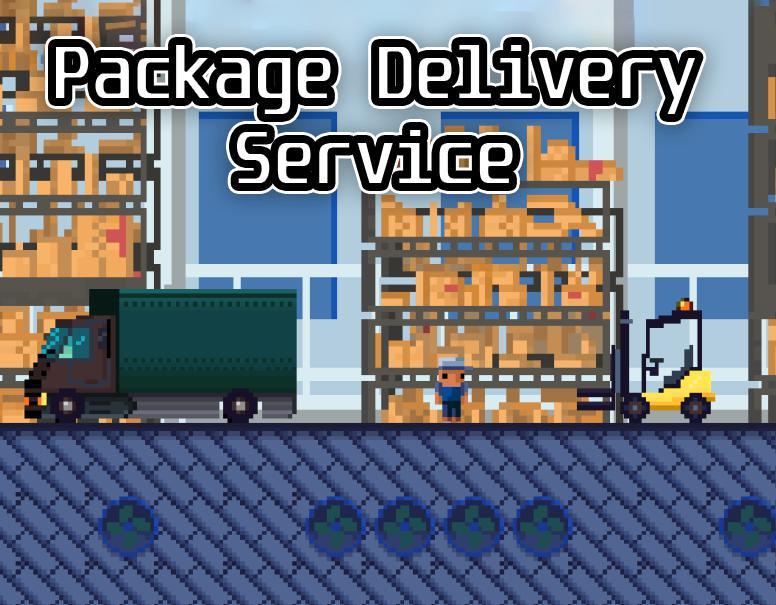
Package Delivery Service is a puzzle platformer that develops problem solving and spatial awareness while escaping a warehouse.
Growth (BDS)
25
Risk (RIS)
3
Daily limit
120min
Age guidance
–
Developmental benefits
| B1 | Cognitive | 0.34 | |
| B2 | Social-emotional | 0.03 | |
| B3 | Motor | 0.35 | |
Package Delivery Service is a puzzle-platformer game jam entry in which players must use packages in their environment to escape a warehouse. Its core loop gently exercises problem-solving and spatial reasoning as children figure out how to manipulate objects and navigate platforming challenges. The level-reset mechanic (R key) encourages a low-stakes trial-and-error mindset, supporting resilience and iterative thinking. Because it is a short, self-contained jam game with discrete levels, it offers calm, focused play sessions well-suited to younger children.
Design risks
| R1 | Compulsion-loop pressure | 0.07 | |
| R2 | Monetization | 0.00 | |
| R3 | Social risk | 0.00 | |
As a game jam prototype, Package Delivery Service carries virtually no commercial risk: there are no microtransactions, ads, loot boxes, subscriptions, or spending prompts of any kind. There are no compulsion-loop mechanics such as streaks, FOMO events, or variable reward systems. The developer explicitly notes that gameplay content is minimal due to jam time constraints, so children may find the experience very short or unfinished, which could cause mild frustration. No social features, stranger chat, or online components are present.
Content (not in risk score)
| R4.1 | Violence Level | 0.00 | |
| R4.2 | Sexual Content | 0.00 | |
| R4.3 | Language | 0.00 | |
| R4.4 | Substance References | 0.00 | |
| R4.5 | Fear / Horror | 0.00 | |
Content risk is displayed separately and does not affect the time recommendation.
Regulatory design checks · DSA — Assessed: meets criteria·GDPR-K — Assessed: meets criteria·ODDS — Assessed: meets criteria
- DSA:What Ludograph checks: whether the game's design gives minors the transparency the EU Digital Services Act expects: plain terms, honest defaults, and clear reporting routes.: Estimated from review data. No dark pattern or child-targeting concerns found.
- GDPR-K:What Ludograph checks: whether age assurance and consent flows are designed for under-16s, in the spirit of GDPR Article 8.: Estimated from review data. No privacy or child-targeting concerns found.
- ODDS:What Ludograph checks: whether paid random-reward drop rates are disclosed, as required in China, Japan and South Korea.: Estimated from review data. No paid random-reward mechanics found, so drop-rate disclosure requirements do not apply.
These reflect Ludograph's assessment of the game's design practices against each framework's criteria, not a legal compliance determination.