Review · Adventure · Nintendo Switch · Xbox One · PlayStation 4
PHOGS!
Reviewed: 20 Apr 2026
Nintendo Switch · Xbox One · PlayStation 4 · PC
Coatsink · 2020
Ludograph rating
A
Recommended
71 /100
PHOGS! is a cooperative puzzle-platformer that builds problem-solving, teamwork, and communication skills for two players.
Growth (BDS)
60
Risk (RIS)
12
Daily limit
120min
Age guidance
–
Developmental benefits
| B1 | Cognitive | 0.60 | |
| B2 | Social-emotional | 0.73 | |
| B3 | Motor | 0.40 | |
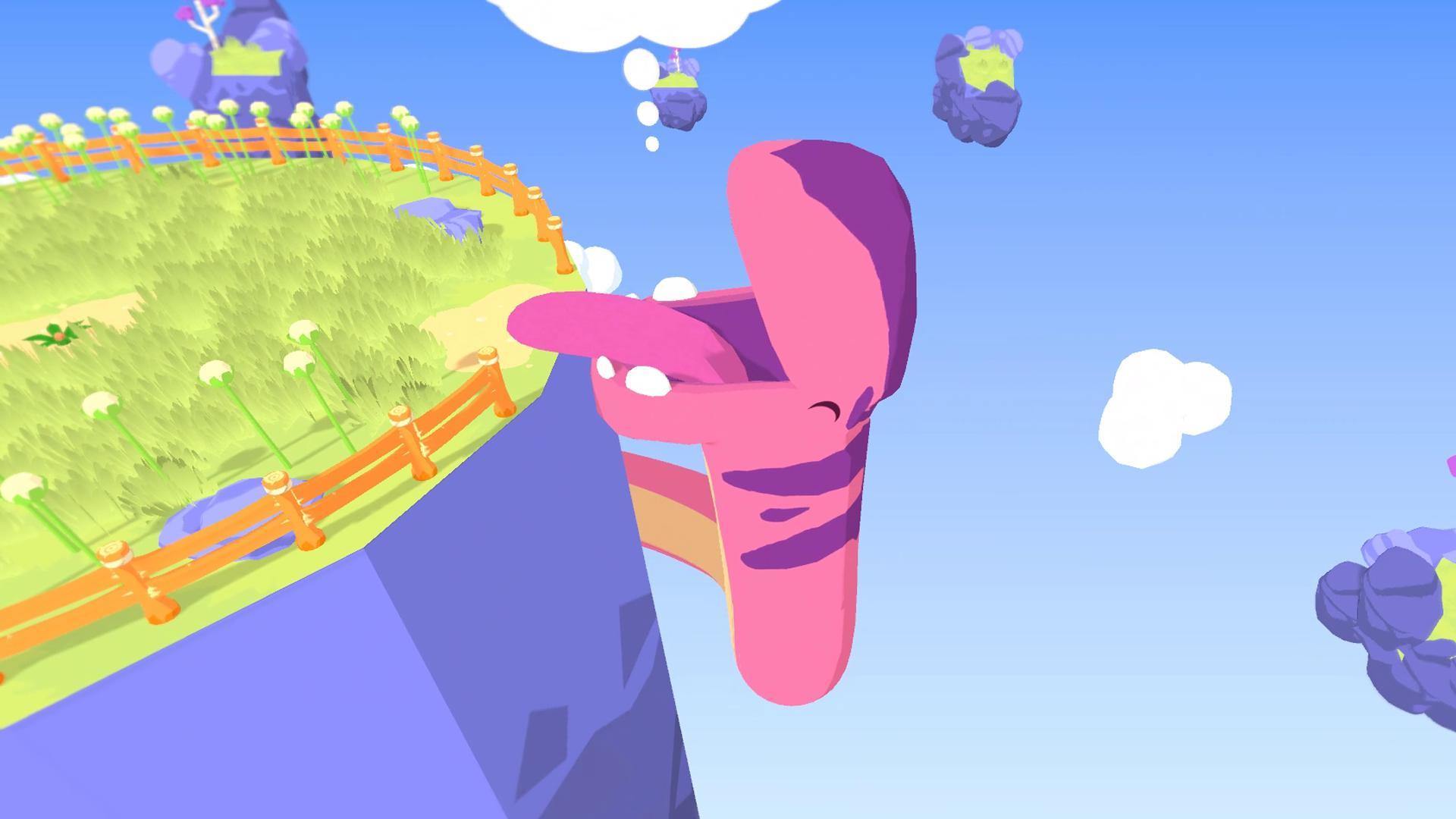
PHOGS! is a standout cooperative puzzle-platformer built from the ground up for two players sharing a single screen — and even a single controller. Its core mechanic of controlling opposite ends of one stretchy dog demands constant real-time communication and coordination, making teamwork not just helpful but absolutely essential. Players must talk, plan, and adapt together to stretch across gaps, grab objects simultaneously, and chain movements to solve inventive environmental puzzles. This genuine cooperative design earns top marks for communication and teamwork, making it one of the best co-op experiences available for families and young players. Cognitively, PHOGS! shines in problem-solving and critical thinking: each puzzle introduces a new environmental rule that players must observe, hypothesize about, and test. Spatial reasoning is exercised constantly as both players mentally model the dog's flexible body in 3D space. The game's gentle difficulty curve scaffolds new mechanics progressively, supporting learning transfer across its three themed worlds (Food, Sleep, Play). The tone is warm, joyful, and completely free of mature content, making it appropriate for a wide age range.
Design risks
| R1 | Compulsion-loop pressure | 0.23 | |
| R2 | Monetization | 0.00 | |
| R3 | Social risk | 0.06 | |
PHOGS! presents an exceptionally clean risk profile. It has no microtransactions, no loot boxes, no battle pass, no ads, and no subscription — the one-time purchase price is the entire cost. There are no streaks, no FOMO events, no push notifications, and no mechanisms designed to exploit compulsion loops or compulsive play. The only minor dopamine-adjacent elements are mild level-progression rewards and the natural satisfaction loop of solving puzzles, which are healthy and age-appropriate. The sole social risk worth noting is a light social obligation: because the game requires two players, one partner may feel mild pressure to play when the other wants to. There is no stranger chat, no competitive toxicity, and no social comparison mechanics. Content is entirely benign — no violence, no mature themes, no scary imagery.
Content (not in risk score)
| R4.1 | Violence Level | 0.00 | |
| R4.2 | Sexual Content | 0.00 | |
| R4.3 | Language | 0.00 | |
| R4.4 | Substance References | 0.00 | |
| R4.5 | Fear / Horror | 0.00 | |
Content risk is displayed separately and does not affect the time recommendation.
Regulatory design checks · DSA — Assessed: meets criteria·GDPR-K — Assessed: meets criteria·ODDS — Assessed: meets criteria
- DSA:What Ludograph checks: whether the game's design gives minors the transparency the EU Digital Services Act expects: plain terms, honest defaults, and clear reporting routes.: Estimated from review data. No dark pattern or child-targeting concerns found.
- GDPR-K:What Ludograph checks: whether age assurance and consent flows are designed for under-16s, in the spirit of GDPR Article 8.: Estimated from review data. No privacy or child-targeting concerns found.
- ODDS:What Ludograph checks: whether paid random-reward drop rates are disclosed, as required in China, Japan and South Korea.: Estimated from review data. No paid random-reward mechanics found, so drop-rate disclosure requirements do not apply.
These reflect Ludograph's assessment of the game's design practices against each framework's criteria, not a legal compliance determination.