Review · Platformer · PC · macOS
Purgatory Run
Reviewed: 21 Apr 2026
PC · macOS
Inariko · 2020
Ludograph rating
D
Caution
36 /100
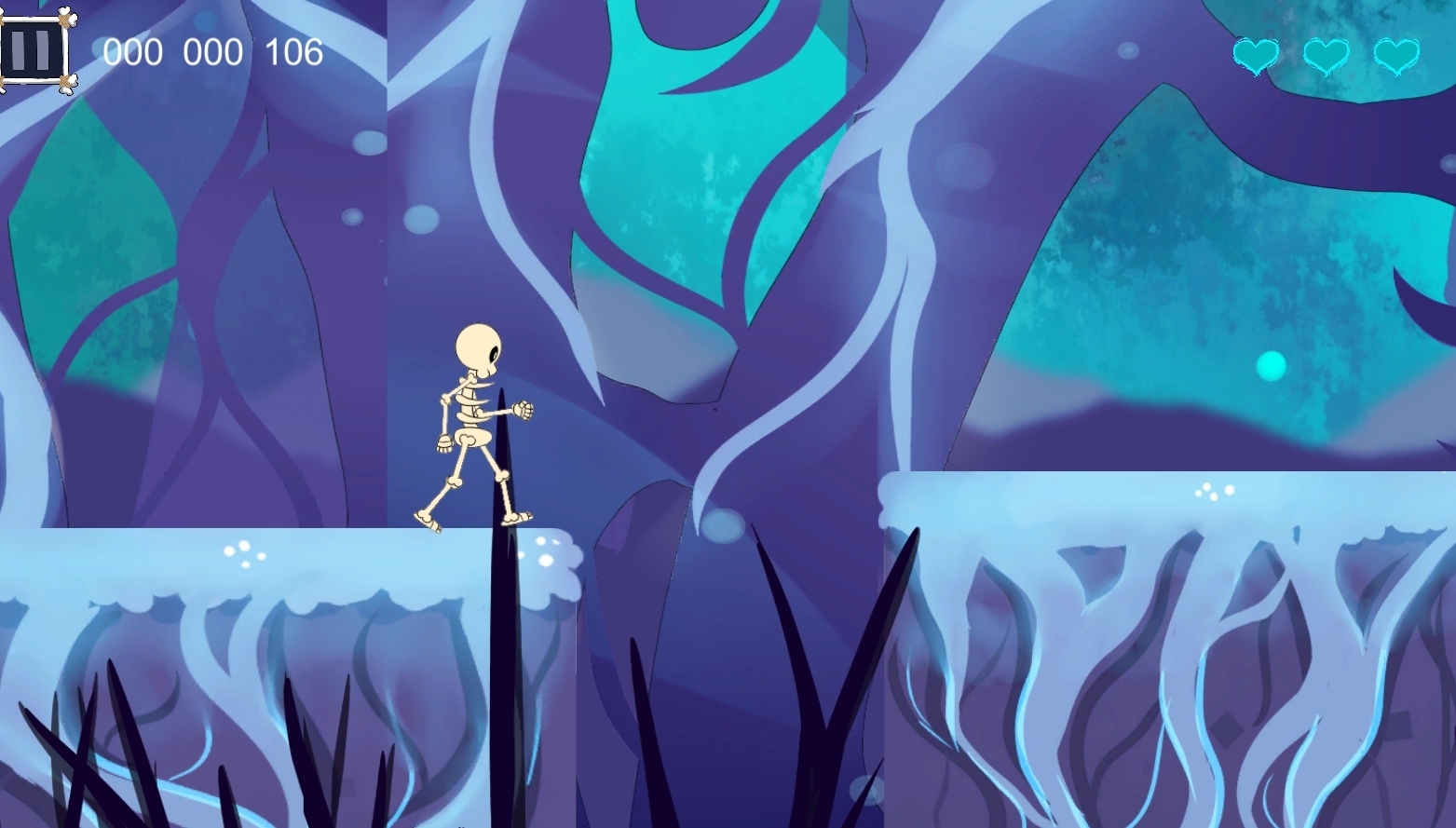
Purgatory Run is an endless platformer that builds hand-eye coordination and reaction time, but lacks a natural stopping point.
Growth (BDS)
23
Risk (RIS)
19
Daily limit
90min
Age guidance
7+
Developmental benefits
| B1 | Cognitive | 0.26 | |
| B2 | Social-emotional | 0.07 | |
| B3 | Motor | 0.40 | |
Purgatory Run is a minimalist endless platformer that exercises hand-eye coordination and reaction time as players time precise jumps to avoid falling into the abyss. The game demands sustained attention and spatial awareness to read the terrain ahead, and repeated runs naturally build pattern recognition and fine motor timing. The trial-and-error loop offers mild learning transfer — children internalize cause-and-effect quickly and learn to self-regulate frustration as they push their personal distance records.
Design risks
| R1 | Compulsion-loop pressure | 0.37 | |
| R2 | Monetization | 0.00 | |
| R3 | Social risk | 0.11 | |
The core loop is a textbook 'infinite play' structure: there is no win state, no chapters, and no natural off-ramp, meaning sessions can stretch well beyond intended limits. The restart-from-zero mechanic creates escalating commitment ('just one more run') and near-miss tension that compels continued play after failure. Notably, the game's own description states that the only way to quit on Windows is via Task Manager — a genuine stopping barrier that could frustrate younger players and caregivers. Because distance is the sole metric of worth, repeated failure may briefly sting self-esteem, though the stakes are low given the game's whimsical tone. Monetization and social risks are essentially zero.
Content (not in risk score)
| R4.1 | Violence Level | 0.00 | |
| R4.2 | Sexual Content | 0.00 | |
| R4.3 | Language | 0.00 | |
| R4.4 | Substance References | 0.00 | |
| R4.5 | Fear / Horror | 0.33 | |
Content risk is displayed separately and does not affect the time recommendation.
Regulatory design checks · DSA — Assessed: meets criteria·GDPR-K — Assessed: meets criteria·ODDS — Assessed: meets criteria
- DSA:What Ludograph checks: whether the game's design gives minors the transparency the EU Digital Services Act expects: plain terms, honest defaults, and clear reporting routes.: Estimated from review data. No dark pattern or child-targeting concerns found.
- GDPR-K:What Ludograph checks: whether age assurance and consent flows are designed for under-16s, in the spirit of GDPR Article 8.: Estimated from review data. No privacy or child-targeting concerns found.
- ODDS:What Ludograph checks: whether paid random-reward drop rates are disclosed, as required in China, Japan and South Korea.: Estimated from review data. No paid random-reward mechanics found, so drop-rate disclosure requirements do not apply.
These reflect Ludograph's assessment of the game's design practices against each framework's criteria, not a legal compliance determination.