Review · Action · PC
Sektori
By the LumiKin editors
Reviewed: 06 Jun 2026
PC
Kimmo Lahtinen · 2025
LumiScore
66/100
Good
Growth (BDS)
50
Risk (RIS)
3
Daily limit
120min
Age guidance
—
Developmental benefits
| B1 | Cognitive | 0.68 | |
| B2 | Social-emotional | 0.03 | |
| B3 | Motor | 0.75 | |
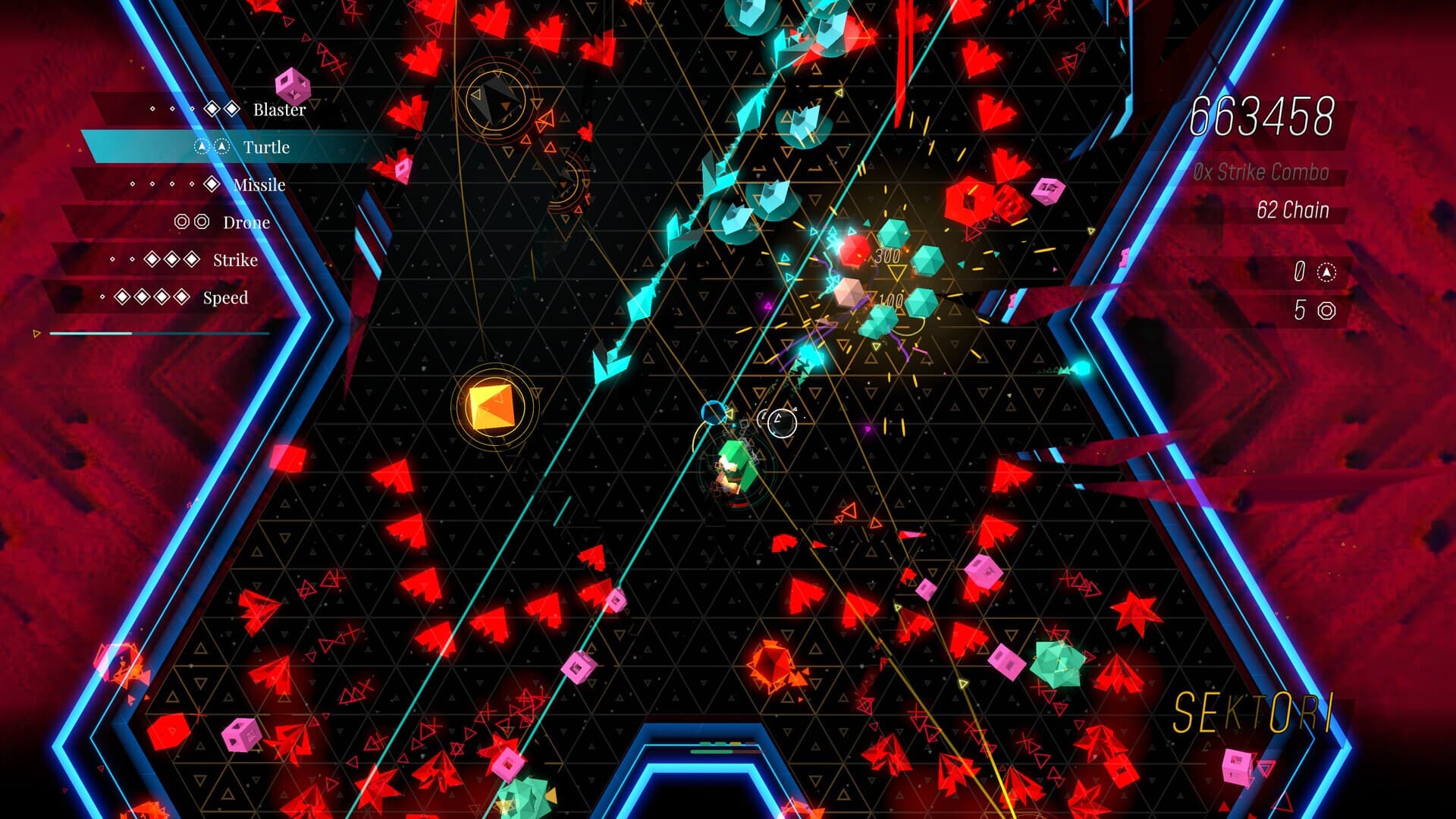
Sektori is a fast-paced twin-stick shooter that significantly develops cognitive skills such as spatial awareness, strategic thinking, critical thinking, and sustained attention. Its dynamically evolving levels and upgrade systems encourage adaptive challenge and learning transfer, making each play session a unique test of skill and focus. The game's pure gameplay loop and short runs also make it accessible for quick, engaging bursts of mental exercise.
Design risks
| R1 | Dopamine pressure | 0.07 | |
| R2 | Monetization | 0.00 | |
| R3 | Social risk | 0.00 | |
The primary risks in Sektori are related to its intense, aggressive aesthetic and stylized violence, which may not be suitable for all players. While the game's techno theme might subtly reference certain cultural elements, there are no explicit substance references. Importantly, Sektori features minimal dopamine manipulation and no monetization pressures or social risks, focusing instead on skill-based gameplay.
Heads up
- Monthly spendTypical real-money spend by engaged players: $0–0/mo.