Review · Action · PC
Supralympic Runners
Reviewed: 22 May 2026
PC
Uranium Soda Studio · 2018
Ludograph rating
Growth (BDS)
46
Risk (RIS)
38
Daily limit
60min
Age guidance
13+
Developmental benefits
| B1 | Cognitive | 0.60 | |
| B2 | Social-emotional | 0.10 | |
| B3 | Motor | 0.65 | |
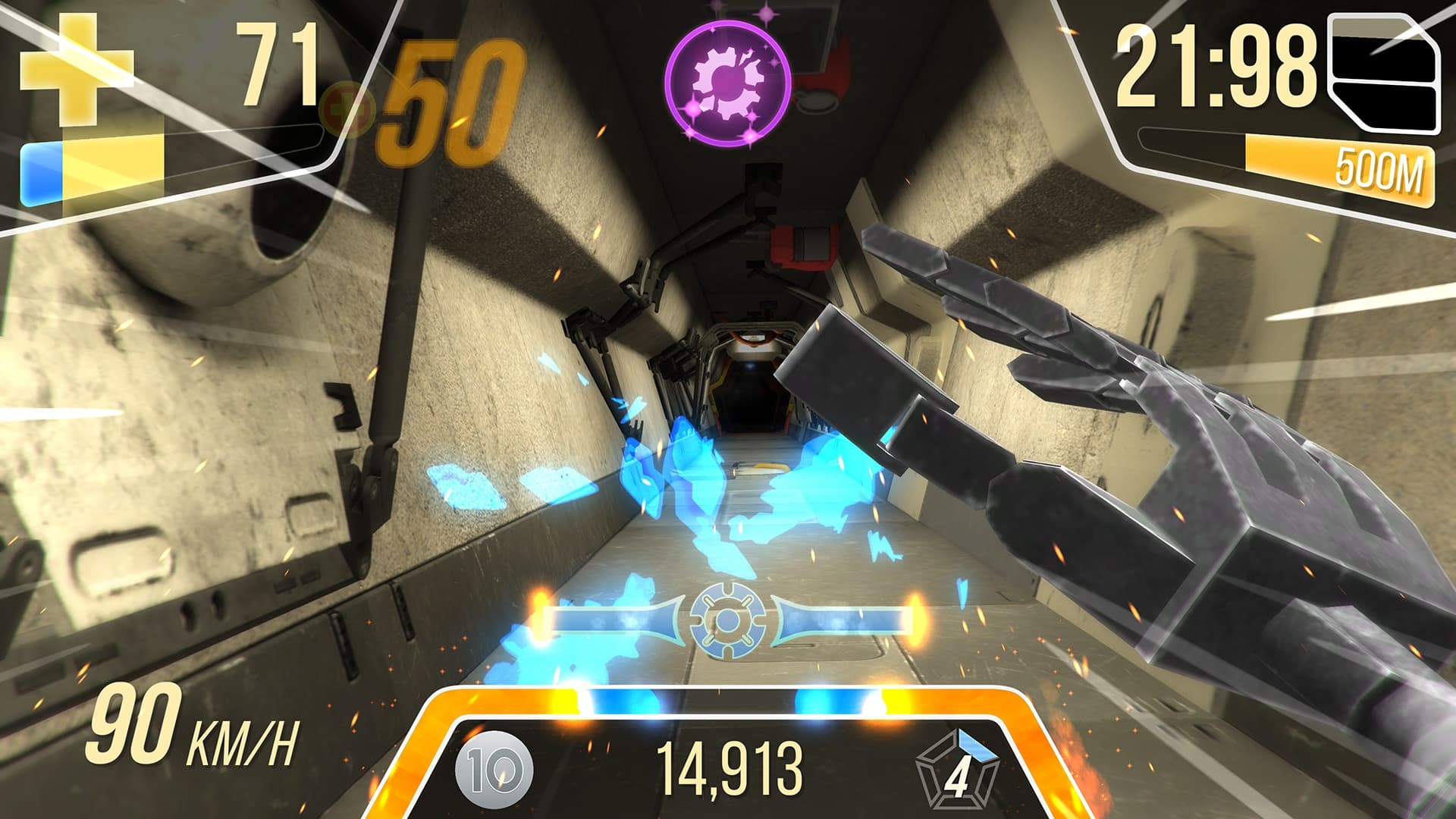
Supralympic Runners is a high-octane, first-person endless runner that demands quick reflexes, strategic thinking, and intense focus. Players will develop strong hand-eye coordination and reaction time as they navigate procedurally generated tracks and overcome increasingly deadly obstacles. The game's adaptive challenge system ensures continuous learning and improvement, pushing players to master complex movement mechanics and make split-second decisions under pressure.
Design risks
| R1 | Compulsion-loop pressure | 0.70 | |
| R2 | Monetization | 0.00 | |
| R3 | Social risk | 0.28 | |
The game's core 'Stungate' mechanism and infinite procedural generation are designed to create a highly addictive experience, leveraging loss aversion and escalating commitment to keep players engaged for extended periods. The competitive focus on 'worldwide leading position' may also foster social comparison and competitive toxicity. While free from direct monetization, the game's intense pressure and constant threat of failure could lead to frustration and difficulty disengaging.
Content (not in risk score)
| R4.1 | Violence Level | 0.67 | |
| R4.2 | Sexual Content | 0.00 | |
| R4.3 | Language | 0.00 | |
| R4.4 | Substance References | 0.00 | |
| R4.5 | Fear / Horror | 0.67 | |
Content risk is displayed separately and does not affect the time recommendation.
Regulatory design checks · DSA — Assessed: meets criteria·GDPR-K — Assessed: meets criteria·ODDS — Assessed: meets criteria
- DSA:What Ludograph checks: whether the game's design gives minors the transparency the EU Digital Services Act expects: plain terms, honest defaults, and clear reporting routes.: Estimated from review data. No dark pattern or child-targeting concerns found.
- GDPR-K:What Ludograph checks: whether age assurance and consent flows are designed for under-16s, in the spirit of GDPR Article 8.: Estimated from review data. No privacy or child-targeting concerns found.
- ODDS:What Ludograph checks: whether paid random-reward drop rates are disclosed, as required in China, Japan and South Korea.: Estimated from review data. No paid random-reward mechanics found, so drop-rate disclosure requirements do not apply.
These reflect Ludograph's assessment of the game's design practices against each framework's criteria, not a legal compliance determination.