Review · Adventure · Nintendo 3DS · Wii U · PC
The Mysterious Cities of Gold: Secret Paths
Reviewed: 25 May 2026
Nintendo 3DS · Wii U · PC · iOS
Neko Entertainment · 2013
Ludograph rating
Growth (BDS)
25
Risk (RIS)
0
Daily limit
120min
Age guidance
–
Developmental benefits
| B1 | Cognitive | 0.28 | |
| B2 | Social-emotional | 0.27 | |
| B3 | Motor | 0.15 | |
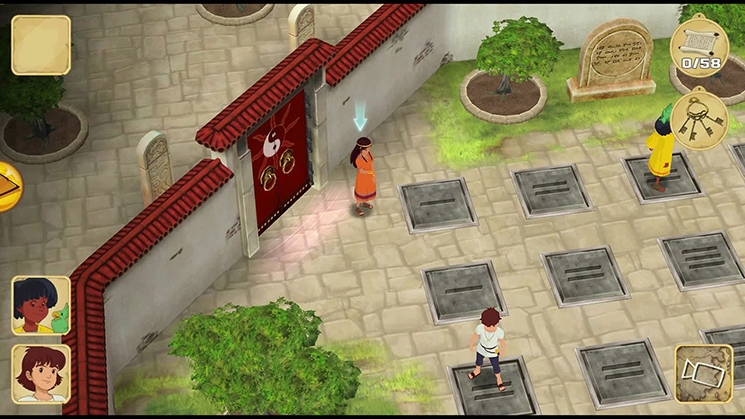
The Mysterious Cities of Gold: Secret Paths offers a gentle adventure that encourages problem-solving, spatial reasoning, and strategic thinking through its varied puzzles. Players must utilize the unique skills of each character, fostering a moderate sense of teamwork and planning. The game's family-friendly nature and fidelity to the classic cartoon provide a positive and familiar experience.
Design risks
| R1 | Compulsion-loop pressure | 0.00 | |
| R2 | Monetization | 0.00 | |
| R3 | Social risk | 0.00 | |
This game presents minimal risks, with no compulsion-loop design, monetization pressures, or significant social risks. The content is suitable for all ages, with no violence, sexual content, or other concerning themes. The primary 'risk' is simply the time commitment, though the game's structure supports natural stopping points.
Content (not in risk score)
| R4.1 | Violence Level | 0.00 | |
| R4.2 | Sexual Content | 0.00 | |
| R4.3 | Language | 0.00 | |
| R4.4 | Substance References | 0.00 | |
| R4.5 | Fear / Horror | 0.00 | |
Content risk is displayed separately and does not affect the time recommendation.
Regulatory design checks · DSA — Assessed: meets criteria·GDPR-K — Assessed: meets criteria·ODDS — Assessed: meets criteria
- DSA:What Ludograph checks: whether the game's design gives minors the transparency the EU Digital Services Act expects: plain terms, honest defaults, and clear reporting routes.: Estimated from review data. No dark pattern or child-targeting concerns found.
- GDPR-K:What Ludograph checks: whether age assurance and consent flows are designed for under-16s, in the spirit of GDPR Article 8.: Estimated from review data. No privacy or child-targeting concerns found.
- ODDS:What Ludograph checks: whether paid random-reward drop rates are disclosed, as required in China, Japan and South Korea.: Estimated from review data. No paid random-reward mechanics found, so drop-rate disclosure requirements do not apply.
These reflect Ludograph's assessment of the game's design practices against each framework's criteria, not a legal compliance determination.