Review · Action · Wii
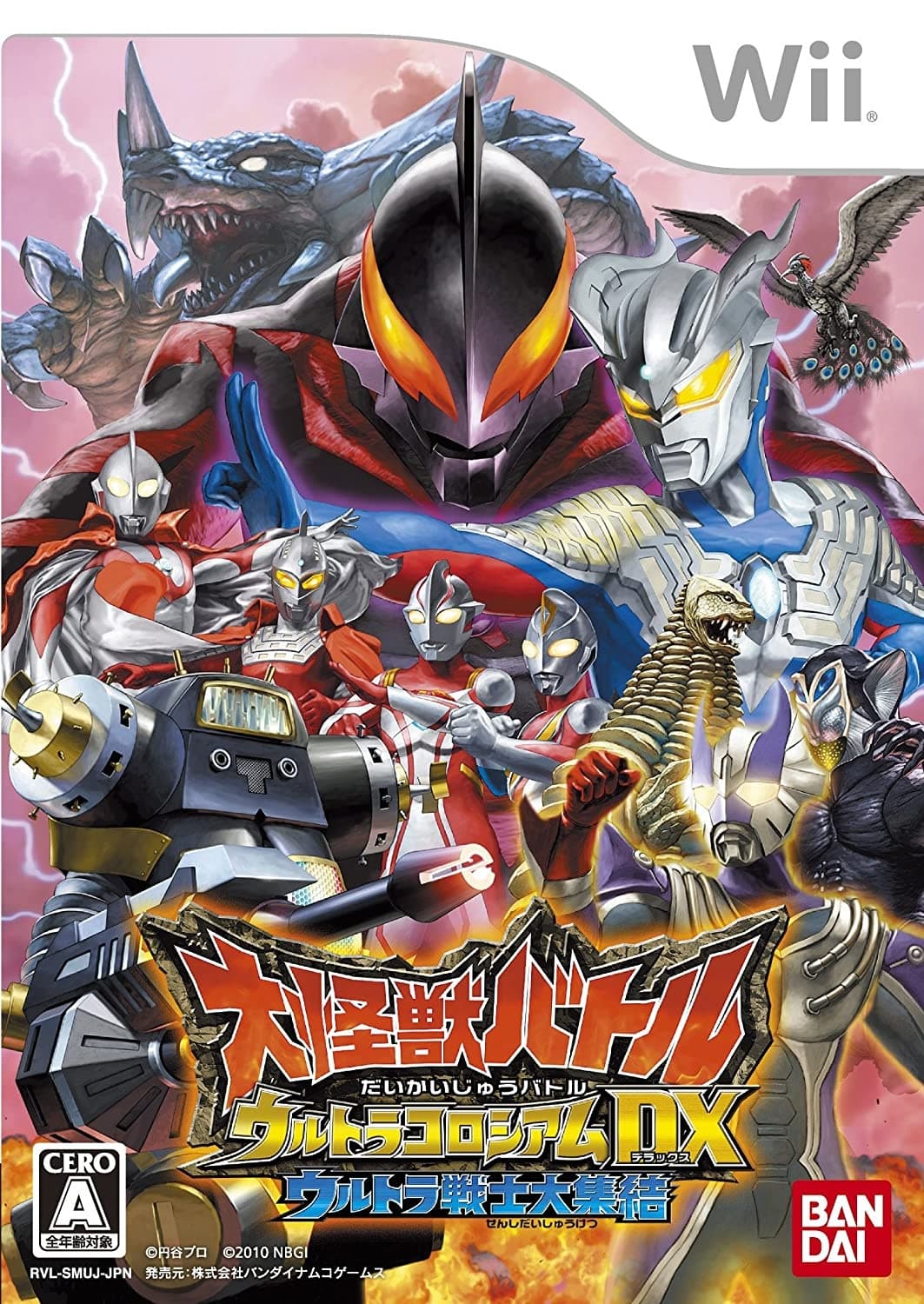
Mega Monster Battle: Ultra Coliseum DX: The Gathering of The Ultra Heroes
Reviewed: 10 May 2026
Wii
Bandai Namco Entertainment · 2010
Ludograph rating
B
Good
62 /100
Mega Monster Battle: Ultra Coliseum DX: The Gathering of The Ultra Heroes is an action-fighting game that builds hand-eye coordination and reaction time, with moderate fantasy violence.
Growth (BDS)
45
Risk (RIS)
1
Daily limit
120min
Age guidance
13+
Developmental benefits
| B1 | Cognitive | 0.46 | |
| B2 | Social-emotional | 0.13 | |
| B3 | Motor | 0.90 | |
Mega Monster Battle: Ultra Coliseum DX offers engaging action and fighting mechanics that can enhance hand-eye coordination, reaction time, and strategic thinking. Playing with friends locally can also foster positive social interaction and friendly competition. The Wii's motion controls provide a good opportunity for physical activity.
Design risks
| R1 | Compulsion-loop pressure | 0.00 | |
| R2 | Monetization | 0.00 | |
| R3 | Social risk | 0.06 | |
The game's ESRB T rating indicates moderate fantasy violence. While competitive play can sometimes lead to frustration, the absence of online stranger interaction, monetization pressures, and manipulative engagement mechanics significantly reduces overall risks.
Content (not in risk score)
| R4.1 | Violence Level | 0.67 | |
| R4.2 | Sexual Content | 0.00 | |
| R4.3 | Language | 0.33 | |
| R4.4 | Substance References | 0.00 | |
| R4.5 | Fear / Horror | 0.00 | |
Content risk is displayed separately and does not affect the time recommendation.
Regulatory design checks · DSA — Assessed: meets criteria·GDPR-K — Assessed: meets criteria·ODDS — Assessed: meets criteria
- DSA:What Ludograph checks: whether the game's design gives minors the transparency the EU Digital Services Act expects: plain terms, honest defaults, and clear reporting routes.: Estimated from review data. No dark pattern or child-targeting concerns found.
- GDPR-K:What Ludograph checks: whether age assurance and consent flows are designed for under-16s, in the spirit of GDPR Article 8.: Estimated from review data. No privacy or child-targeting concerns found.
- ODDS:What Ludograph checks: whether paid random-reward drop rates are disclosed, as required in China, Japan and South Korea.: Estimated from review data. No paid random-reward mechanics found, so drop-rate disclosure requirements do not apply.
These reflect Ludograph's assessment of the game's design practices against each framework's criteria, not a legal compliance determination.