Reseña · Simulación · PC
Conway's Game of Life (Mikulus)
Revisado: 11 may 2026
PC
Mikulus · 2023
Calificación Ludograph
Desarrollo (BDS)
44
Riesgo (RIS)
0
Límite diario
120min
Clasificación por edad
–
Beneficios para el desarrollo
| B1 | Cognitivo | 0.84 | |
| B2 | Socioemocional | 0.00 | |
| B3 | Motricidad | 0.10 | |
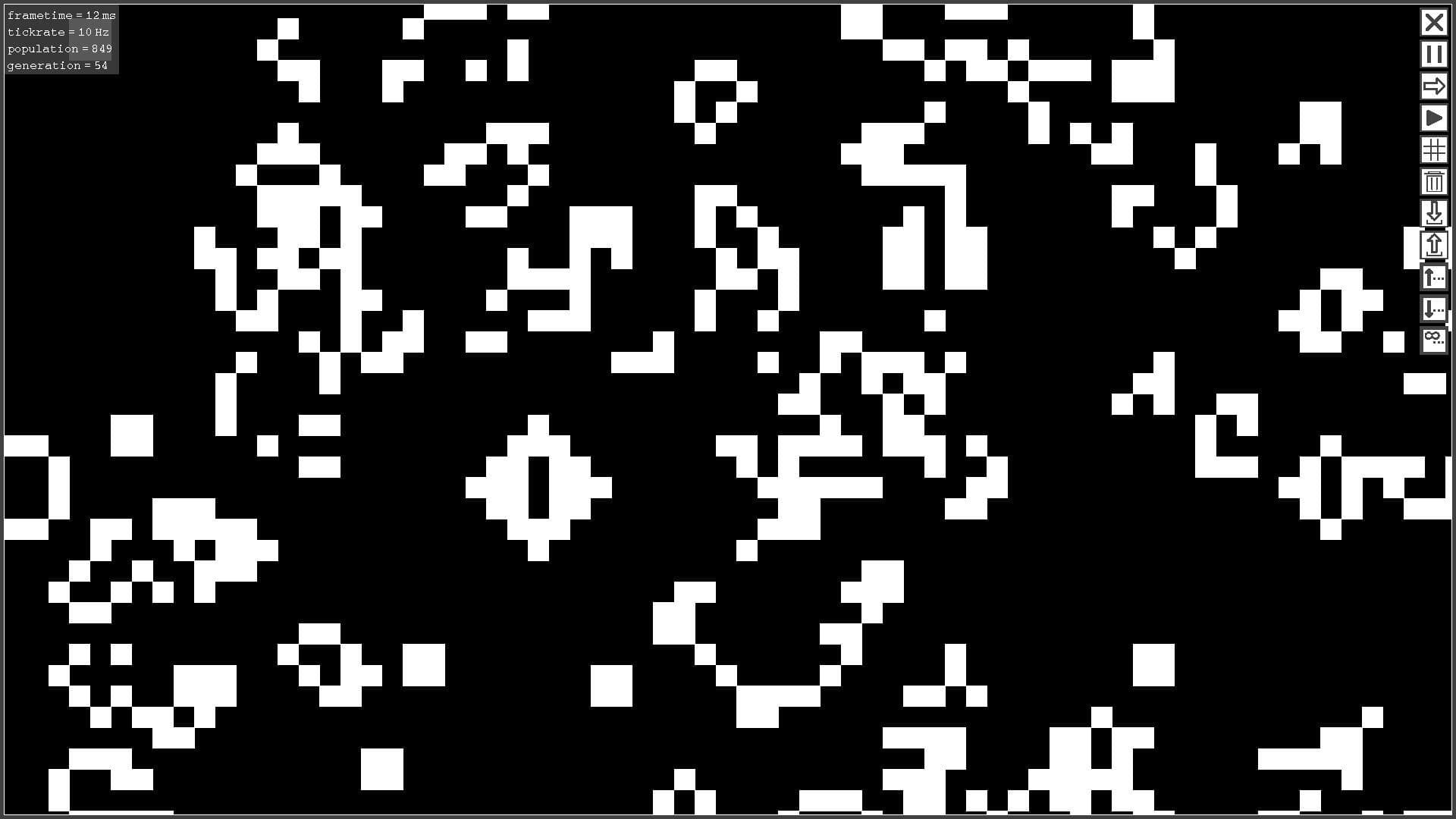
Conway's Game of Life es una excelente herramienta educativa que fomenta el pensamiento crítico, la resolución de problemas y la conciencia espacial a través de la exploración de autómatas celulares. Fomenta la creatividad en el diseño de condiciones iniciales y proporciona una clara demostración de sistemas complejos que emergen de reglas simples, lo que lo hace muy beneficioso para comprender conceptos matemáticos y computacionales.
Riesgos de diseño
| R1 | Presión de bucles de compulsión | 0.00 | |
| R2 | Monetización | 0.00 | |
| R3 | Riesgo social | 0.00 | |
Este juego no presenta prácticamente ningún riesgo. Carece de cualquier diseño manipulador, presiones de monetización, riesgos sociales o contenido objetable. Su naturaleza abstracta y su enfoque en la simulación matemática garantizan una experiencia segura y sencilla.
Contenido (no incluido en el puntaje de riesgo)
| R4.1 | Nivel de violencia | 0.00 | |
| R4.2 | Contenido sexual | 0.00 | |
| R4.3 | Lenguaje (grosero) | 0.00 | |
| R4.4 | Referencias a sustancias | 0.00 | |
| R4.5 | Miedo / Horror | 0.00 | |
El riesgo de contenido se muestra por separado y no afecta la recomendación de tiempo.
Comprobaciones de diseño normativo · DSA — Evaluado: cumple los criterios·GDPR-K — Evaluado: cumple los criterios·ODDS — Evaluado: cumple los criterios
- DSA:Qué comprueba Ludograph: si el diseño del juego ofrece a los menores la transparencia que exige la Ley de Servicios Digitales de la UE: términos claros, valores predeterminados honestos y vías de denuncia visibles.: Estimated from review data. No dark pattern or child-targeting concerns found.
- GDPR-K:Qué comprueba Ludograph: si la verificación de edad y los flujos de consentimiento están diseñados para menores de 16 años, en el espíritu del Artículo 8 del GDPR.: Estimated from review data. No privacy or child-targeting concerns found.
- ODDS:Qué comprueba Ludograph: si se publican las probabilidades de las recompensas aleatorias de pago, como exigen China, Japón y Corea del Sur.: Estimated from review data. No paid random-reward mechanics found, so drop-rate disclosure requirements do not apply.
Reflejan la evaluación de Ludograph de las prácticas de diseño del juego frente a los criterios de cada marco, no una determinación legal de cumplimiento.