LumiKin
Metacritic 9017+

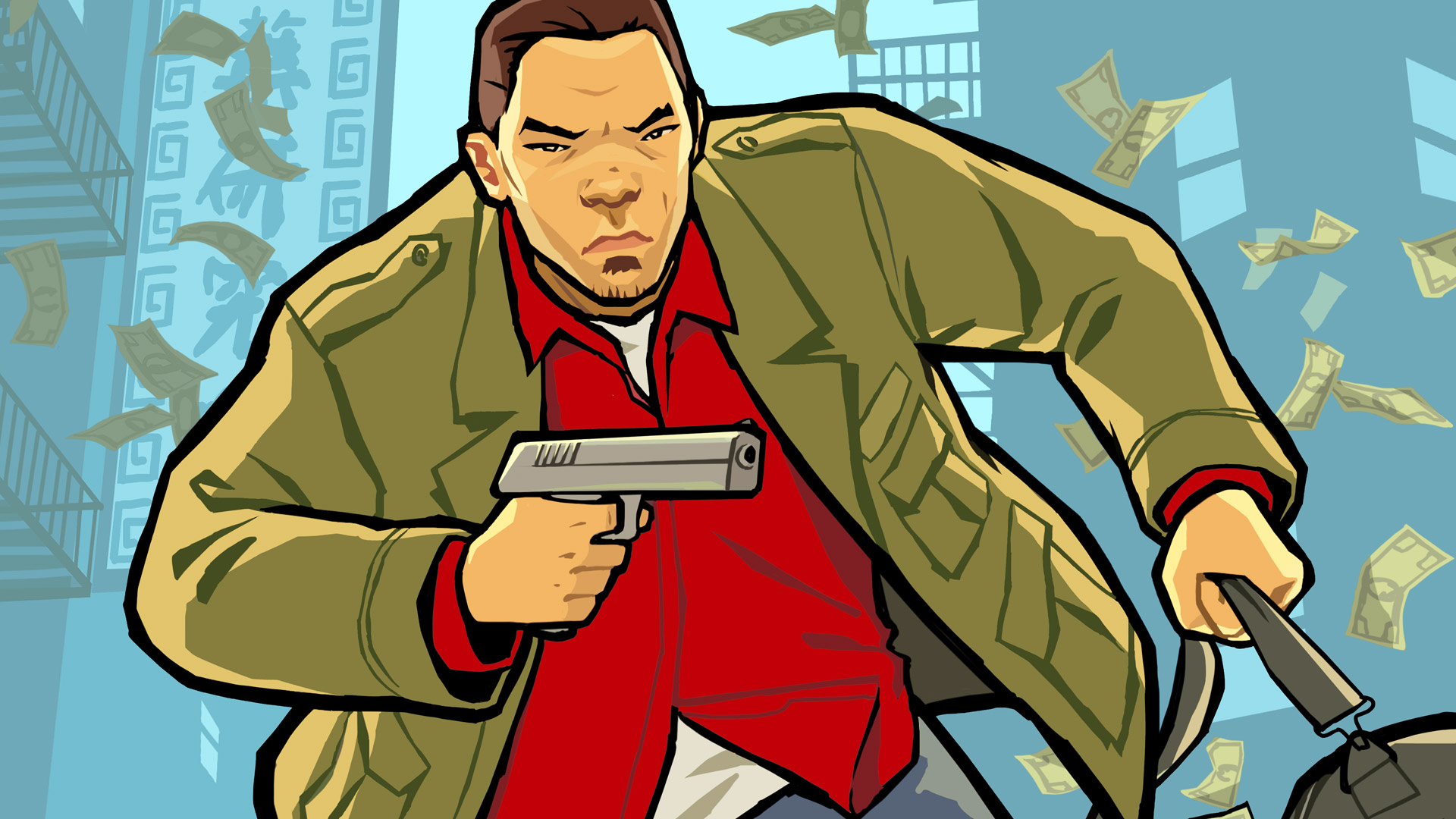
Grand Theft Auto: Chinatown Wars

Rockstar North|2009ActionAdventure

LumiScore

57/ 100
BON
90 min/jour recommandés
⚖️Débat contradictoire · 2 manches

Croissance

46/100

Valeur de croissance

  • Orientation spatiale
  • Coordination œil-main
  • Résolution de problèmes

Risque

FAIBLE

Modèles d'engagement

Très peu de pression pour dépenser ou jouer excessivement.

Attention

💸 Coût mensuel: Gratuit

Conseil de parent expert

Parents should be aware of the game's mature content and thematic elements before allowing play. It's advisable to engage in discussions about the game's narrative and ethical implications to help children distinguish between fiction and reality, and to set clear play time limits.

Principales compétences développées

Orientation spatiale5/5
Coordination œil-main5/5
Résolution de problèmes3/5
Pensée stratégique3/5
Pensée critique3/5

Domaines de développement

Cognition?Résolution de problèmes, conscience spatiale, pensée stratégique, créativité, mémoire et transfert des apprentissages. Pondéré à 50 % du score de bénéfice.
56
Socio-émotionnel?Travail d'équipe, communication, empathie, régulation émotionnelle et raisonnement éthique. Pondéré à 30 % du score de bénéfice.
7
Motricité?Coordination œil-main, motricité fine, temps de réaction et activité physique. Pondéré à 20 % du score de bénéfice.
55
Score Bénéfice Global (BDS)46/100

Représentation?Degré de diversité des personnages du jeu en termes de genre et d'ethnicité. Plus le score est élevé, plus la représentation est authentique. Affiché uniquement — n'affecte pas la recommandation de temps de jeu.

Équilibre des genres
0/3
Diversité ethnique
0/3

Test de Bechdel?Le test de Bechdel vérifie si un jeu comporte au moins deux personnages féminins nommés qui se parlent d'autre chose qu'un homme. Une mesure simple de la représentation.Échoue au test

The game has named female characters such as Lian Chu and Ling Shan, but they do not have direct interactions with each other within the game's narrative.

Ce que votre enfant développe

Grand Theft Auto: Chinatown Wars offers players opportunities to develop spatial awareness through navigating its urban environment and refine hand-eye coordination and reaction time in its action sequences. The game also provides challenges that encourage problem-solving and strategic thinking, particularly during mission planning and execution.

Base: InconnuMensuel: GratuitÉvalué avr. 2026
⚖️Comment ce score a été discuté et validé
Afficher la transcription

Deux modèles IA ont débattu de ce score en 2 tours : un Défenseur argumentant pour les scores les plus élevés défendables, et un Critique argumentant pour les plus bas. Le score final est la moyenne de leurs positions au tour 2.


=== Round 1 ===

ADVOCATE (arguing HIGH):
B1: problemSolving=5, spatialAwareness=4, strategicThinking=5, criticalThinking=5, memoryAttention=4, creativity=4, readingLanguage=5, mathSystems=2, learningTransfer=5, adaptiveChallenge=5
B2: teamwork=0, communication=0, empathy=2, emotionalRegulation=3, ethicalReasoning=4, positiveSocial=1
B3: handEyeCoord=4, fineMotor=4, reactionTime=4, physicalActivity=0
R1: variableRewards=1, streakMechanics=1, lossAversion=2, fomoEvents=0, stoppingBarriers=1, notifications=0, nearMiss=2, infinitePlay=2, escalatingCommitment=2, variableRewardFreq=1
R2: spendingCeiling=0, payToWin=0, currencyObfuscation=0, spendingPrompts=0, childTargeting=0, adPressure=0, subscriptionPressure=0, socialSpending=0
R3: socialObligation=0, competitiveToxicity=0, strangerRisk=0, socialComparison=0, identitySelfWorth=0, privacyRisk=0
Reasoning: Grand Theft Auto: Chinatown Wars offers profound cognitive benefits, demanding high problem-solving, strategic thinking, and critical analysis to navigate its complex, morally ambiguous open world. Players develop strong learning transfer as they master diverse mechanics and adapt to ever-changing challenges, while the narrative also fosters ethical reasoning. The action-oriented gameplay significantly hones motor skills including hand-eye coordination, fine motor control, and reaction time across various platforms. Crucially, the complete absence of microtransactions, loot boxes, or any multiplayer social interaction means the game carries zero monetization or social risks. This delivers a rich, challenging experience focused purely on skill development and narrative engagement.

CRITIC (arguing LOW):
B1: problemSolving=3, spatialAwareness=4, strategicThinking=3, criticalThinking=2, memoryAttention=3, creativity=1, readingLanguage=3, mathSystems=1, learningTransfer=3, adaptiveChallenge=3
B2: teamwork=0, communication=0, empathy=0, emotionalRegulation=1, ethicalReasoning=0, positiveSocial=0
B3: handEyeCoord=4, fineMotor=3, reactionTime=3, physicalActivity=0
R1: variableRewards=2, streakMechanics=1, lossAversion=2, fomoEvents=0, stoppingBarriers=2, notifications=0, nearMiss=2, infinitePlay=2, escalatingCommitment=2, variableRewardFreq=2
R2: spendingCeiling=0, payToWin=0, currencyObfuscation=0, spendingPrompts=0, childTargeting=0, adPressure=0, subscriptionPressure=0, socialSpending=0
R3: socialObligation=0, competitiveToxicity=0, strangerRisk=0, socialComparison=0, identitySelfWorth=0, privacyRisk=0
Reasoning: My scores reflect Grand Theft Auto: Chinatown Wars' nature as a single-player experience with a morally ambiguous, criminal narrative. The complete absence of co-op or multiplayer functionality necessitates a score of zero for teamwork, communication, and positive social interaction. Furthermore, the game's focus on revenge, illegal activities, and a "morally bankrupt city" actively undermines any potential for developing empathy, emotional regulation, or ethical reasoning in a positive developmental context for children. The Metacritic score, while high, does not correlate with developmental benefits, especially given the game's themes.


=== Round 2 ===

ADVOCATE (arguing HIGH):
B1: problemSolving=4, spatialAwareness=5, strategicThinking=4, criticalThinking=3, memoryAttention=4, creativity=2, readingLanguage=3, mathSystems=1, learningTransfer=4, adaptiveChallenge=4
B2: teamwork=0, communication=0, empathy=1, emotionalRegulation=1, ethicalReasoning=0, positiveSocial=0
B3: handEyeCoord=5, fineMotor=3, reactionTime=4, physicalActivity=0
R1: variableRewards=2, streakMechanics=1, lossAversion=2, fomoEvents=0, stoppingBarriers=3, notifications=0, nearMiss=2, infinitePlay=3, escalatingCommitment=3, variableRewardFreq=2
R2: spendingCeiling=0, payToWin=0, currencyObfuscation=0, spendingPrompts=0, childTargeting=0, adPressure=0, subscriptionPressure=0, socialSpending=0
R3: socialObligation=0, competitiveToxicity=0, strangerRisk=0, socialComparison=0, identitySelfWorth=0, privacyRisk=0
Reasoning: The critic unfairly discounts the cognitive and motor benefits of Grand Theft Auto: Chinatown Wars due to its narrative themes. This game, despite its mature content, actively cultivates high-level problem-solving, spatial awareness, and strategic thinking through complex missions and open-world navigation. Its fast-paced action also demands superior hand-eye coordination and reaction time. While social-emotional benefits are limited by its single-player nature, engagement with its rich, albeit dark, narrative can still stimulate a degree of narrative empathy. The game exhibits moderate dopamine hooks typical of open-world design, yet entirely avoids monetization and social risks, making it far more developmentally beneficial than the critic suggests, especially on cognitive and motor fronts.

CRITIC (arguing LOW):
B1: problemSolving=4, spatialAwareness=4, strategicThinking=4, criticalThinking=2, memoryAttention=4, creativity=2, readingLanguage=2, mathSystems=2, learningTransfer=3, adaptiveChallenge=3
B2: teamwork=0, communication=0, empathy=1, emotionalRegulation=1, ethicalReasoning=1, positiveSocial=1
B3: handEyeCoord=4, fineMotor=4, reactionTime=4, physicalActivity=0
R1: variableRewards=2, streakMechanics=2, lossAversion=2, fomoEvents=0, stoppingBarriers=2, notifications=0, nearMiss=2, infinitePlay=2, escalatingCommitment=2, variableRewardFreq=2
R2: spendingCeiling=0, payToWin=0, currencyObfuscation=0, spendingPrompts=0, childTargeting=0, adPressure=0, subscriptionPressure=0, socialSpending=0
R3: socialObligation=0, competitiveToxicity=0, strangerRisk=0, socialComparison=0, identitySelfWorth=0, privacyRisk=0
Reasoning: The advocate overstates cognitive benefits for critical thinking, creativity, and reading, as this open-world title, while complex, does not actively develop these skills to the claimed degree. Social-emotional scores for empathy, emotional regulation, and ethical reasoning are inflated; as a single-player experience without interactive social mechanics, it cannot foster these areas beyond mere narrative exposure. While commendably free of monetization and most social risks, its open-world design inherently incorporates moderate variable rewards and strong engagement loops, justifying higher R1 scores for stopping barriers and variable reward frequency. These revised scores reflect a strict adherence to the rubric's demand for strong, specific evidence of active development, rather than potential benefits or general engagement.

=== Final (weighted 40% advocate / 60% critic, Round 2) ===
B1: problemSolving=4, spatialAwareness=4, strategicThinking=4, criticalThinking=2, memoryAttention=4, creativity=2, readingLanguage=2, mathSystems=2, learningTransfer=3, adaptiveChallenge=3
B2: teamwork=0, communication=0, empathy=1, emotionalRegulation=1, ethicalReasoning=1, positiveSocial=1
B3: handEyeCoord=4, fineMotor=4, reactionTime=4, physicalActivity=0
R1: variableRewards=2, streakMechanics=2, lossAversion=2, fomoEvents=0, stoppingBarriers=2, notifications=0, nearMiss=2, infinitePlay=2, escalatingCommitment=2, variableRewardFreq=2
R2: spendingCeiling=0, payToWin=0, currencyObfuscation=0, spendingPrompts=0, childTargeting=0, adPressure=0, subscriptionPressure=0, socialSpending=0
R3: socialObligation=0, competitiveToxicity=0, strangerRisk=0, socialComparison=0, identitySelfWorth=0, privacyRisk=0
Curascore: 57  BDS: 0.460  RIS: 0.240

Conformité réglementaire

Touchez un badge pour en savoir plus. Gris = non encore évalué.

Comparer ce jeu

À propos de ce jeu

Left For Dead In The Worst Place In America Following his father’s murder, Huang Lee has a simple mission: deliver an ancient sword to his Uncle Kenny to ensure his family retains control of the Triad gangs of Liberty City. Huang is a spoiled rich kid who expects everything to run smoothly, but his trip does not go exactly as planned.