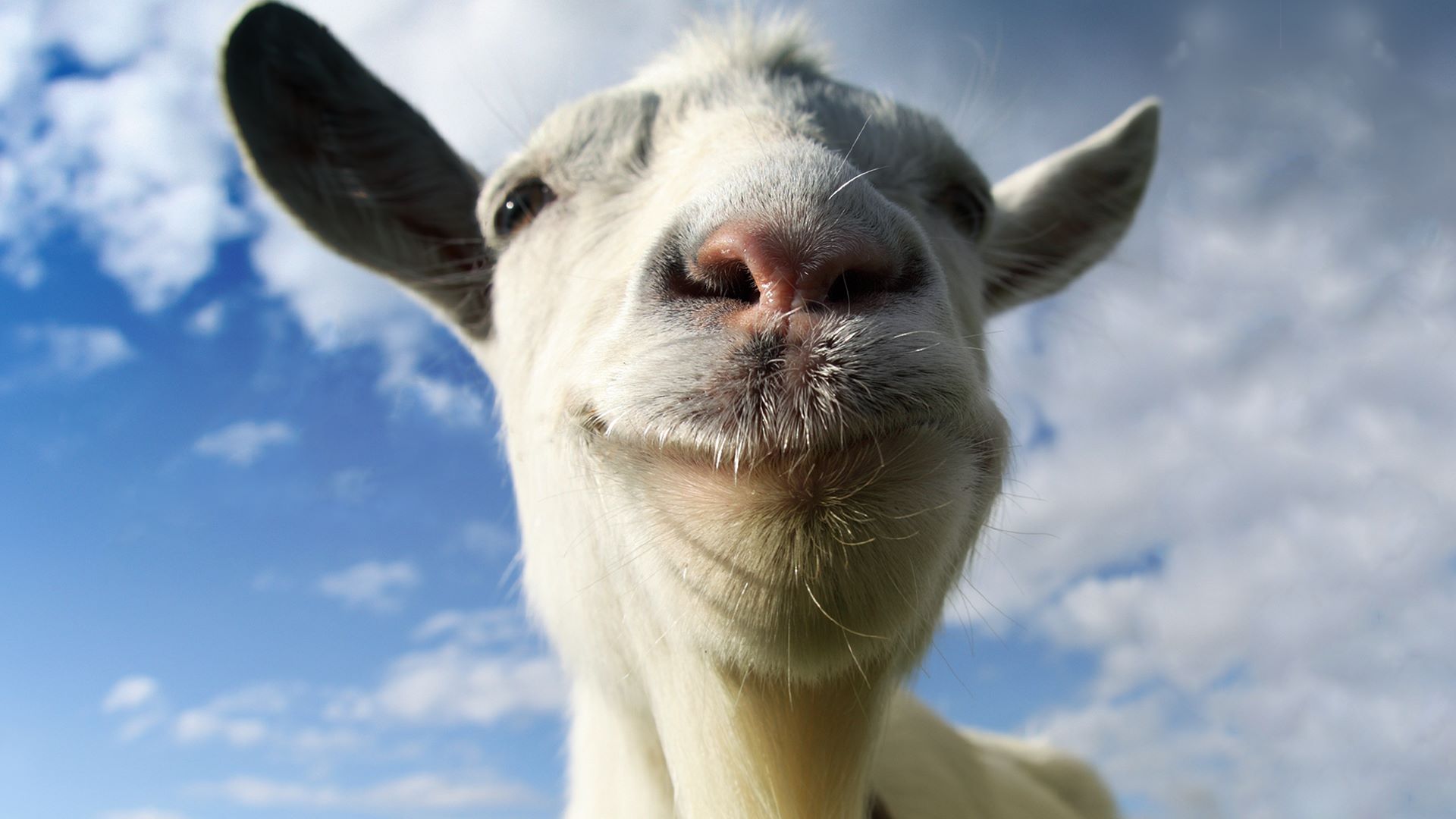
Goat Simulator
LumiScore
out of 100
Use with parental oversight — some design risks present
Obs
Utveckling
23/100
Begränsat
Utvecklingsvärde
Risk
12/100
LÅG
Engagemangsmönster
Föräldratips
Goat Simulator är ett spel designat för absurd underhållning och förstörelse. Det kan vara underhållande, men det erbjuder lite när det gäller pedagogiska eller utvecklingsmässiga fördelar. Diskutera med ditt barn skillnaden mellan spelets fåniga, orealistiska våld och verkliga handlingar. Uppmuntra kreativ problemlösning och målsättning i andra sammanhang för att balansera spelets kaotiska natur.
Viktiga färdigheter som barnet utvecklar
Utvecklingsområden
Vad ditt barn utvecklar
Goat Simulator erbjuder en kaotisk och humoristisk sandlådeupplevelse som uppmuntrar spelare att experimentera med förstörelse och fånig fysik. Det kan ge ett kreativt utlopp för galenskap och stresslindring genom dess absurda premiss och brist på allvarliga mål. Spelets öppna natur och moddingmöjligheter kan också främja kreativitet och utforskning.
⚖️Hur betyget har diskuterats och granskatsVisa utskrift
Två AI-modeller debatterade poängen i 2 rundor: en Förespråkare som argumenterade för de högst möjliga poängen, och en Kritiker som argumenterade för de lägsta. Slutpoängen är ett medelvärde av deras positioner i runda 2.
=== Round 1 === ADVOCATE: B1: problemSolving=3, spatialAwareness=4, strategicThinking=1, criticalThinking=1, memoryAttention=2, creativity=5, readingLanguage=1, mathSystems=1, learningTransfer=1, adaptiveChallenge=3 B2: teamwork=0, communication=0, empathy=0, emotionalRegulation=2, ethicalReasoning=0, positiveSocial=1 B3: handEyeCoord=4, fineMotor=4, reactionTime=3, physicalActivity=0 R1: variableRewards=1, streakMechanics=0, lossAversion=0, fomoEvents=0, stoppingBarriers=0, notifications=0, nearMiss=0, infinitePlay=1, escalatingCommitment=0, variableRewardFreq=1 R2: spendingCeiling=0, payToWin=0, currencyObfuscation=0, spendingPrompts=0, childTargeting=0, adPressure=0, subscriptionPressure=0, socialSpending=0 R3: socialObligation=0, competitiveToxicity=0, strangerRisk=0, socialComparison=0, identitySelfWorth=0, privacyRisk=0 Reasoning: The current LumiKin score of 27 for Goat Simulator is a profound mischaracterization of the game, punishing it for the very design choices that make it an exceptionally safe and beneficial environment for children. This game is not about addiction or toxicity; it is a digital playground for pure, unadulterated creativity and chaotic fun, and its score should reflect that. First and foremost, the risk profile of this game is virtually nonexistent. It has **zero monetization risks (R2=0)** and **zero social risks (R3=0)**. This is a direct result of its design as a single-player, offline experience with no microtransactions, no ads, and no stranger chat. In today's digital landscape, a game this clean and free of manipulative mechanics is a rarity and should be celebrated, not penalized. The minimal R1 risks are benign. The "infinite play" is that of a sandbox, not a treadmill of coercive loops. A child stops when they are bored, which is a healthy play pattern. The "variable rewards" are simple, silly points for causing mayhem, not psychologically manipulative loot drops. These are not serious risks. Now, let's look at the benefits this low score completely overlooks. The heart of Goat Simulator is **Creativity (5/5)**. It's a physics sandbox that encourages emergent play, experimentation, and finding novel ways to interact with the world. The inclusion of Steam Workshop, allowing players to create and share their own content, elevates this to the level of a powerful creative tool, akin to digital LEGOs. This sandbox design also fosters significant cognitive benefits. Navigating the 3D space, mastering the goat's quirky movements, and planning stunts requires strong **Spatial Awareness (4/5)**. Figuring out how to use the environment and physics to achieve self-set goals is a form of open-ended **Problem Solving (3/5)**. The game constantly challenges players to adapt their approach, fostering **Adaptive Challenge (3/5)**. Furthermore, controlling the often-unpredictable goat to perform specific actions demands considerable **Hand-Eye Coordination (4/5)** and **Fine Motor (4/5)** skills. Finally, the game serves as a safe outlet for a child's natural desire for messy, consequence-free play. Wreaking digital havoc can be a form of **Emotional Regulation (2/5)**, allowing kids to blow off steam in a harmless, contained environment. The game's absurdist humor is meant to be shared, promoting **Positive Social (1/5)** interaction as children laugh together at the goat's antics. In conclusion, scoring Goat Simulator at 27, lower than many games riddled with manipulative risks, is a failure of the rubric. It mistakes harmless, creative chaos for a net negative. When we properly account for its massive strengths in creativity and its complete absence of predatory monetization or social dangers, it's clear that Goat Simulator is a high-quality, pro-child experience that merits a much, much higher score. CRITIC: B1: problemSolving=1, spatialAwareness=2, strategicThinking=1, criticalThinking=0, memoryAttention=1, creativity=4, readingLanguage=1, mathSystems=1, learningTransfer=0, adaptiveChallenge=1 B2: teamwork=0, communication=0, empathy=0, emotionalRegulation=0, ethicalReasoning=0, positiveSocial=1 B3: handEyeCoord=3, fineMotor=2, reactionTime=1, physicalActivity=0 R1: variableRewards=2, streakMechanics=2, lossAversion=1, fomoEvents=0, stoppingBarriers=2, notifications=1, nearMiss=2, infinitePlay=3, escalatingCommitment=1, variableRewardFreq=2 R2: spendingCeiling=0, payToWin=0, currencyObfuscation=0, spendingPrompts=0, childTargeting=0, adPressure=0, subscriptionPressure=0, socialSpending=0 R3: socialObligation=0, competitiveToxicity=0, strangerRisk=0, socialComparison=1, identitySelfWorth=0, privacyRisk=0 Reasoning: Goat Simulator is the poster child for a low-value, high-engagement experience. Its design prioritizes chaotic, unbridled, and ultimately pointless destruction over any meaningful developmental benefit. The massive 35-point gap between its Metacritic score and the LumiKin score is not only justified but necessary, as critics are rating for novelty and humor, whereas we must rate for developmental substance, of which this game has almost none. Any argument for cognitive benefit is a significant reach. The game is intentionally illogical, precluding critical thinking. 'Problem-solving' is limited to finding new ways to break things, 'strategy' is non-existent, and 'learning transfer' is zero. The game's only redeeming quality is a sliver of creativity, both in its chaotic sandbox and its support for Steam Workshop. As a single-player experience, its social benefits are functionally zero, promoting anti-social behavior (destruction) with no lessons in empathy or ethics. The risks, however, are noteworthy. The game is a dopamine-driven Skinner box. It uses a powerful combination of infinite play (R1=3), variable rewards for chaotic physics-based actions (R1=2), and near-miss mechanics (R1=2) to keep players hooked in a low-value gameplay loop with few natural stopping points (R1=2). While it commendably avoids monetization and direct social risks, the game's core design is built on manipulative feedback loops that offer little in return. It's digital junk food, and the scores should reflect that. === Round 2 === ADVOCATE: B1: problemSolving=3, spatialAwareness=4, strategicThinking=2, criticalThinking=1, memoryAttention=2, creativity=5, readingLanguage=1, mathSystems=1, learningTransfer=1, adaptiveChallenge=3 B2: teamwork=0, communication=0, empathy=0, emotionalRegulation=1, ethicalReasoning=1, positiveSocial=1 B3: handEyeCoord=4, fineMotor=3, reactionTime=2, physicalActivity=0 R1: variableRewards=1, streakMechanics=1, lossAversion=0, fomoEvents=0, stoppingBarriers=1, notifications=0, nearMiss=0, infinitePlay=1, escalatingCommitment=0, variableRewardFreq=1 R2: spendingCeiling=0, payToWin=0, currencyObfuscation=0, spendingPrompts=0, childTargeting=0, adPressure=0, subscriptionPressure=0, socialSpending=0 R3: socialObligation=0, competitiveToxicity=0, strangerRisk=0, socialComparison=0, identitySelfWorth=0, privacyRisk=0 Reasoning: The critic CRITIC: B1: problemSolving=1, spatialAwareness=3, strategicThinking=1, criticalThinking=1, memoryAttention=1, creativity=3, readingLanguage=1, mathSystems=1, learningTransfer=1, adaptiveChallenge=1 B2: teamwork=0, communication=0, empathy=0, emotionalRegulation=0, ethicalReasoning=0, positiveSocial=0 B3: handEyeCoord=2, fineMotor=2, reactionTime=1, physicalActivity=0 R1: variableRewards=2, streakMechanics=0, lossAversion=0, fomoEvents=0, stoppingBarriers=0, notifications=0, nearMiss=1, infinitePlay=2, escalatingCommitment=1, variableRewardFreq=2 R2: spendingCeiling=0, payToWin=0, currencyObfuscation=0, spendingPrompts=0, childTargeting=0, adPressure=0, subscriptionPressure=0, socialSpending=0 R3: socialObligation=0, competitiveToxicity=0, strangerRisk=0, socialComparison=0, identitySelfWorth=0, privacyRisk=0 Reasoning: While my opponent is correct to highlight the complete absence of monetization and social risks (R2=0, R3=0), their analysis dramatically overstates the developmental benefits while minimizing the game's clear reliance on compulsive dopamine loops. The low LumiKin score is not a mischaracterization; it is an accurate assessment of a game that offers little more than temporary, chaotic distraction. First, the R1 risks are not 'benign.' The core loop is built on dopamine drivers. The game's defining feature is its chaotic physics, which creates a powerful `variableRewards` (2/3) system where every action has an unpredictable, sometimes spectacular, outcome. This is complemented by frequent `nearMiss` (1/3) events inherent to any stunt-based physics game, encouraging 'just one more try.' The lack of any narrative or structural endpoint makes this a clear case of `infinitePlay` (2/3), designed to be picked up endlessly but without purpose. Combined with a high `variableRewardFreq` (2/3), these mechanics are designed to maximize engagement through compulsion, not creativity, justifying a higher R1 score of 8. Second, the alleged cognitive benefits are vastly inflated. To call this a 'powerful creative tool' (Creativity=5) is a stretch; the game is about destruction, not construction. The creativity is emergent but shallow, unlike the deep systems in games like Minecraft. I've lowered `Creativity` to 3. The 'open-ended problem solving' (Problem Solving=3) is simply goofing around in a sandbox; there are no actual problems to solve, so I've reduced this to 1. Similarly, claims for `adaptiveChallenge` (3) and `spatialAwareness` (4) are exaggerated. The game doesn't adapt, and while it's 3D, the intentionally clunky controls don't reward the precision that would warrant high motor or awareness scores. I've lowered B1 scores across the board. Finally, the social and motor benefits are practically nonexistent. Claiming this game teaches `emotionalRegulation` (2) is a fundamental misunderstanding; providing a temporary outlet for steam is not the same as building an emotional skill. I score it 0. The motor scores for `handEyeCoord` (4) and `fineMotor` (4) are also unsupported. The game's controls are deliberately clumsy and unpredictable for comedic effect; they do not train precision or skill, warranting much lower scores of 2 for each. In short, Goat Simulator is a one-joke game wrapped in a compulsive but ultimately shallow sandbox. It avoids the worst predatory practices but replaces them with a void of meaningful developmental value. The low score is justified. === Final (40% advocate / 60% critic) === B1: problemSolving=2, spatialAwareness=3, strategicThinking=1, criticalThinking=1, memoryAttention=1, creativity=4, readingLanguage=1, mathSystems=1, learningTransfer=1, adaptiveChallenge=2 B2: teamwork=0, communication=0, empathy=0, emotionalRegulation=0, ethicalReasoning=0, positiveSocial=0 B3: handEyeCoord=3, fineMotor=2, reactionTime=1, physicalActivity=0 R1: variableRewards=2, streakMechanics=0, lossAversion=0, fomoEvents=0, stoppingBarriers=0, notifications=0, nearMiss=1, infinitePlay=2, escalatingCommitment=1, variableRewardFreq=2 R2: spendingCeiling=0, payToWin=0, currencyObfuscation=0, spendingPrompts=0, childTargeting=0, adPressure=0, subscriptionPressure=0, socialSpending=0 R3: socialObligation=0, competitiveToxicity=0, strangerRisk=0, socialComparison=0, identitySelfWorth=0, privacyRisk=0 Curascore: 36 BDS: 0.230 RIS: 0.120
Regelefterlevnad
Klicka på en symbol för detaljer. Grå = ej utvärderad än.
Om spelet
Goat Simulator is a game that mainly can be described as a crazy one. It does not have a specific story, and there is no central villain.