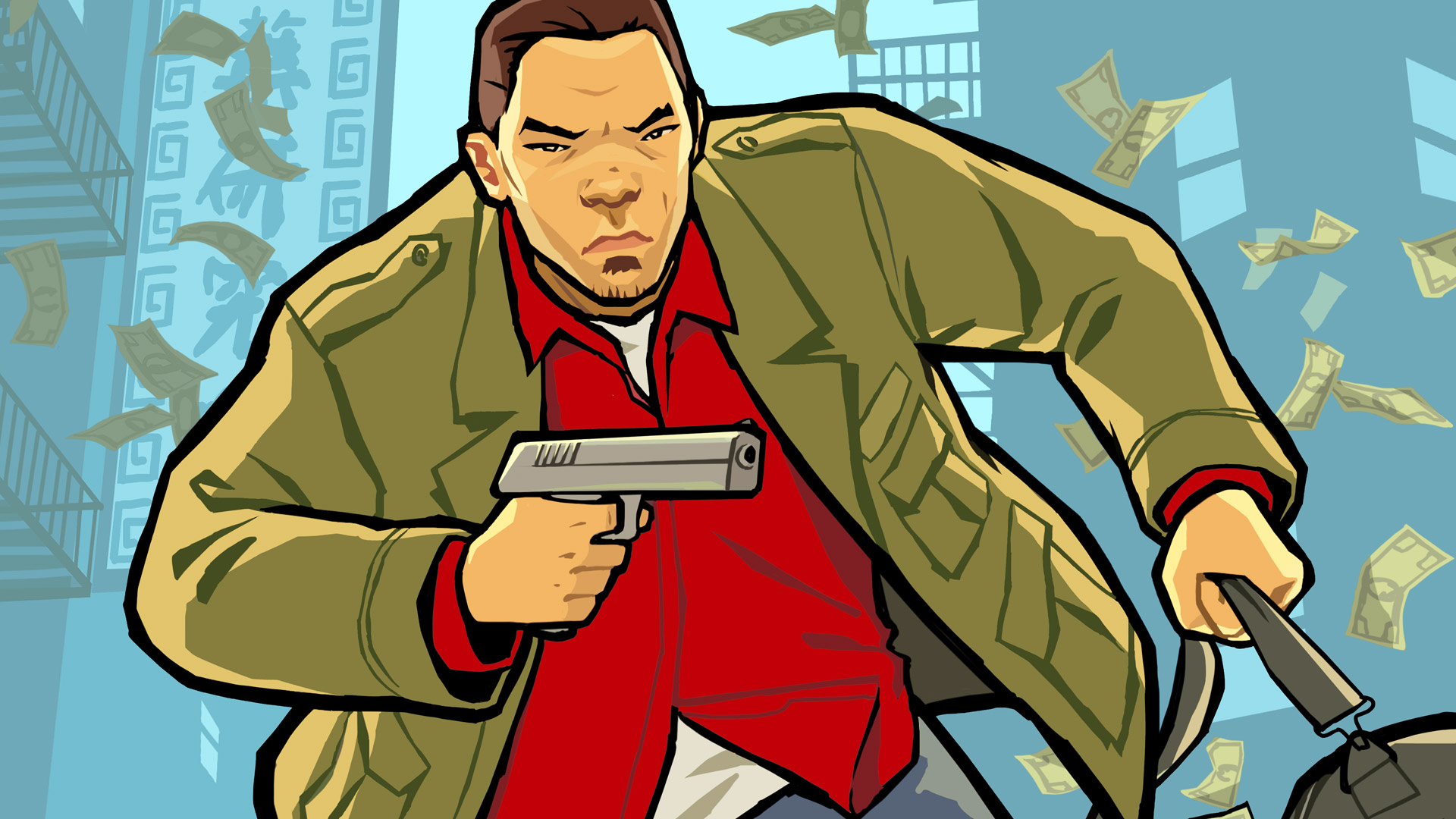
Grand Theft Auto: Chinatown Wars
LumiScore
Wachstum
46/100
Wachstumswert
- Räumliches Denken
- Hand-Augen-Koordination
- Problemlösung
Risiko
GERING
Nutzungsmuster
Minimaler Druck, Geld auszugeben oder übermäßig zu spielen.
Achtung
Eltern-Profi-Tipp
Parents should be aware of the game's mature content and thematic elements before allowing play. It's advisable to engage in discussions about the game's narrative and ethical implications to help children distinguish between fiction and reality, and to set clear play time limits.
Top-Fähigkeiten, die entwickelt werden
Entwicklungsbereiche
Repräsentation?Wie vielfältig die Charaktere des Spiels in Bezug auf Geschlecht und Ethnizität sind. Höher = authentischere Darstellung. Nur zur Anzeige – beeinflusst die Zeit-Empfehlung nicht.
Bechdel-Test?Der Bechdel-Test prüft, ob ein Spiel mindestens zwei benannte weibliche Figuren hat, die miteinander über etwas anderes als einen Mann sprechen. Ein einfaches Maß für Repräsentation.— Besteht den Test nicht
The game has named female characters such as Lian Chu and Ling Shan, but they do not have direct interactions with each other within the game's narrative.
Was dein Kind entwickelt
Grand Theft Auto: Chinatown Wars offers players opportunities to develop spatial awareness through navigating its urban environment and refine hand-eye coordination and reaction time in its action sequences. The game also provides challenges that encourage problem-solving and strategic thinking, particularly during mission planning and execution.
⚖️So wurde dieser Score diskutiert und geprüftTranskript anzeigen
Zwei KI-Modelle haben diese Bewertung in 2 Runden debattiert: ein Befürworter, der für die höchstmöglichen Punktzahlen argumentierte, und ein Kritiker, der für die niedrigsten argumentierte. Die endgültige Punktzahl ist der Durchschnitt ihrer Positionen in Runde 2.
=== Round 1 === ADVOCATE (arguing HIGH): B1: problemSolving=5, spatialAwareness=4, strategicThinking=5, criticalThinking=5, memoryAttention=4, creativity=4, readingLanguage=5, mathSystems=2, learningTransfer=5, adaptiveChallenge=5 B2: teamwork=0, communication=0, empathy=2, emotionalRegulation=3, ethicalReasoning=4, positiveSocial=1 B3: handEyeCoord=4, fineMotor=4, reactionTime=4, physicalActivity=0 R1: variableRewards=1, streakMechanics=1, lossAversion=2, fomoEvents=0, stoppingBarriers=1, notifications=0, nearMiss=2, infinitePlay=2, escalatingCommitment=2, variableRewardFreq=1 R2: spendingCeiling=0, payToWin=0, currencyObfuscation=0, spendingPrompts=0, childTargeting=0, adPressure=0, subscriptionPressure=0, socialSpending=0 R3: socialObligation=0, competitiveToxicity=0, strangerRisk=0, socialComparison=0, identitySelfWorth=0, privacyRisk=0 Reasoning: Grand Theft Auto: Chinatown Wars offers profound cognitive benefits, demanding high problem-solving, strategic thinking, and critical analysis to navigate its complex, morally ambiguous open world. Players develop strong learning transfer as they master diverse mechanics and adapt to ever-changing challenges, while the narrative also fosters ethical reasoning. The action-oriented gameplay significantly hones motor skills including hand-eye coordination, fine motor control, and reaction time across various platforms. Crucially, the complete absence of microtransactions, loot boxes, or any multiplayer social interaction means the game carries zero monetization or social risks. This delivers a rich, challenging experience focused purely on skill development and narrative engagement. CRITIC (arguing LOW): B1: problemSolving=3, spatialAwareness=4, strategicThinking=3, criticalThinking=2, memoryAttention=3, creativity=1, readingLanguage=3, mathSystems=1, learningTransfer=3, adaptiveChallenge=3 B2: teamwork=0, communication=0, empathy=0, emotionalRegulation=1, ethicalReasoning=0, positiveSocial=0 B3: handEyeCoord=4, fineMotor=3, reactionTime=3, physicalActivity=0 R1: variableRewards=2, streakMechanics=1, lossAversion=2, fomoEvents=0, stoppingBarriers=2, notifications=0, nearMiss=2, infinitePlay=2, escalatingCommitment=2, variableRewardFreq=2 R2: spendingCeiling=0, payToWin=0, currencyObfuscation=0, spendingPrompts=0, childTargeting=0, adPressure=0, subscriptionPressure=0, socialSpending=0 R3: socialObligation=0, competitiveToxicity=0, strangerRisk=0, socialComparison=0, identitySelfWorth=0, privacyRisk=0 Reasoning: My scores reflect Grand Theft Auto: Chinatown Wars' nature as a single-player experience with a morally ambiguous, criminal narrative. The complete absence of co-op or multiplayer functionality necessitates a score of zero for teamwork, communication, and positive social interaction. Furthermore, the game's focus on revenge, illegal activities, and a "morally bankrupt city" actively undermines any potential for developing empathy, emotional regulation, or ethical reasoning in a positive developmental context for children. The Metacritic score, while high, does not correlate with developmental benefits, especially given the game's themes. === Round 2 === ADVOCATE (arguing HIGH): B1: problemSolving=4, spatialAwareness=5, strategicThinking=4, criticalThinking=3, memoryAttention=4, creativity=2, readingLanguage=3, mathSystems=1, learningTransfer=4, adaptiveChallenge=4 B2: teamwork=0, communication=0, empathy=1, emotionalRegulation=1, ethicalReasoning=0, positiveSocial=0 B3: handEyeCoord=5, fineMotor=3, reactionTime=4, physicalActivity=0 R1: variableRewards=2, streakMechanics=1, lossAversion=2, fomoEvents=0, stoppingBarriers=3, notifications=0, nearMiss=2, infinitePlay=3, escalatingCommitment=3, variableRewardFreq=2 R2: spendingCeiling=0, payToWin=0, currencyObfuscation=0, spendingPrompts=0, childTargeting=0, adPressure=0, subscriptionPressure=0, socialSpending=0 R3: socialObligation=0, competitiveToxicity=0, strangerRisk=0, socialComparison=0, identitySelfWorth=0, privacyRisk=0 Reasoning: The critic unfairly discounts the cognitive and motor benefits of Grand Theft Auto: Chinatown Wars due to its narrative themes. This game, despite its mature content, actively cultivates high-level problem-solving, spatial awareness, and strategic thinking through complex missions and open-world navigation. Its fast-paced action also demands superior hand-eye coordination and reaction time. While social-emotional benefits are limited by its single-player nature, engagement with its rich, albeit dark, narrative can still stimulate a degree of narrative empathy. The game exhibits moderate dopamine hooks typical of open-world design, yet entirely avoids monetization and social risks, making it far more developmentally beneficial than the critic suggests, especially on cognitive and motor fronts. CRITIC (arguing LOW): B1: problemSolving=4, spatialAwareness=4, strategicThinking=4, criticalThinking=2, memoryAttention=4, creativity=2, readingLanguage=2, mathSystems=2, learningTransfer=3, adaptiveChallenge=3 B2: teamwork=0, communication=0, empathy=1, emotionalRegulation=1, ethicalReasoning=1, positiveSocial=1 B3: handEyeCoord=4, fineMotor=4, reactionTime=4, physicalActivity=0 R1: variableRewards=2, streakMechanics=2, lossAversion=2, fomoEvents=0, stoppingBarriers=2, notifications=0, nearMiss=2, infinitePlay=2, escalatingCommitment=2, variableRewardFreq=2 R2: spendingCeiling=0, payToWin=0, currencyObfuscation=0, spendingPrompts=0, childTargeting=0, adPressure=0, subscriptionPressure=0, socialSpending=0 R3: socialObligation=0, competitiveToxicity=0, strangerRisk=0, socialComparison=0, identitySelfWorth=0, privacyRisk=0 Reasoning: The advocate overstates cognitive benefits for critical thinking, creativity, and reading, as this open-world title, while complex, does not actively develop these skills to the claimed degree. Social-emotional scores for empathy, emotional regulation, and ethical reasoning are inflated; as a single-player experience without interactive social mechanics, it cannot foster these areas beyond mere narrative exposure. While commendably free of monetization and most social risks, its open-world design inherently incorporates moderate variable rewards and strong engagement loops, justifying higher R1 scores for stopping barriers and variable reward frequency. These revised scores reflect a strict adherence to the rubric's demand for strong, specific evidence of active development, rather than potential benefits or general engagement. === Final (weighted 40% advocate / 60% critic, Round 2) === B1: problemSolving=4, spatialAwareness=4, strategicThinking=4, criticalThinking=2, memoryAttention=4, creativity=2, readingLanguage=2, mathSystems=2, learningTransfer=3, adaptiveChallenge=3 B2: teamwork=0, communication=0, empathy=1, emotionalRegulation=1, ethicalReasoning=1, positiveSocial=1 B3: handEyeCoord=4, fineMotor=4, reactionTime=4, physicalActivity=0 R1: variableRewards=2, streakMechanics=2, lossAversion=2, fomoEvents=0, stoppingBarriers=2, notifications=0, nearMiss=2, infinitePlay=2, escalatingCommitment=2, variableRewardFreq=2 R2: spendingCeiling=0, payToWin=0, currencyObfuscation=0, spendingPrompts=0, childTargeting=0, adPressure=0, subscriptionPressure=0, socialSpending=0 R3: socialObligation=0, competitiveToxicity=0, strangerRisk=0, socialComparison=0, identitySelfWorth=0, privacyRisk=0 Curascore: 57 BDS: 0.460 RIS: 0.240
Rechtliche Vorgaben
Tippe auf ein Symbol für Details. Grau = noch nicht bewertet.
Über dieses Spiel
Left For Dead In The Worst Place In America Following his father’s murder, Huang Lee has a simple mission: deliver an ancient sword to his Uncle Kenny to ensure his family retains control of the Triad gangs of Liberty City. Huang is a spoiled rich kid who expects everything to run smoothly, but his trip does not go exactly as planned.