Review · Action · PlayStation 3 · PlayStation 4 · PC
GUNS UP!
Reviewed: 20 May 2026
PlayStation 3 · PlayStation 4 · PC
Sony Interactive Entertainment · 2015
Ludograph rating
Growth (BDS)
53
Risk (RIS)
55
Daily limit
30min
Age guidance
13+
Developmental benefits
| B1 | Cognitive | 0.72 | |
| B2 | Social-emotional | 0.27 | |
| B3 | Motor | 0.45 | |
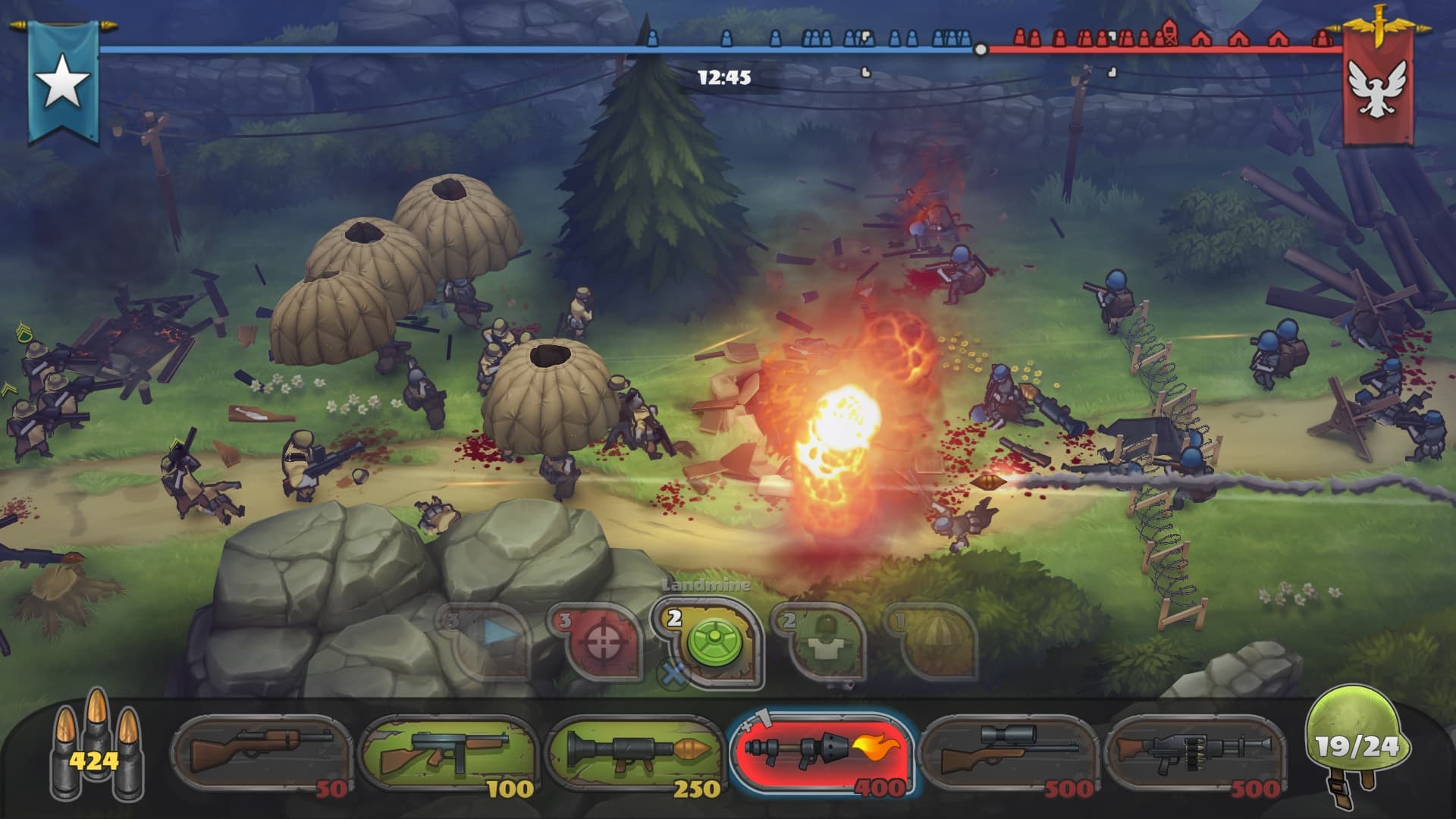
GUNS UP! offers strong cognitive benefits through its blend of real-time strategy and tower defense mechanics, requiring players to engage in problem-solving, strategic thinking, and spatial awareness for base building and troop deployment. Alliance competitions also provide opportunities for teamwork and positive social interaction.
Design risks
| R1 | Compulsion-loop pressure | 0.60 | |
| R2 | Monetization | 0.42 | |
| R3 | Social risk | 0.61 | |
The game presents notable risks related to compulsion-loop design and monetization. Its asynchronous PvP, variable rewards, and seasonal alliance competitions are designed to encourage continuous engagement and potential escalating commitment. Microtransactions, combined with unit upgrades and permanent stat boosts, suggest a pay-to-win dynamic that could pressure players to spend. The competitive nature of PvP and leaderboards may also foster social comparison and competitive toxicity.
Content (not in risk score)
| R4.1 | Violence Level | 0.67 | |
| R4.2 | Sexual Content | 0.00 | |
| R4.3 | Language | 0.00 | |
| R4.4 | Substance References | 0.00 | |
| R4.5 | Fear / Horror | 0.00 | |
Content risk is displayed separately and does not affect the time recommendation.
Heads up
- Monthly spendTypical real-money spend by engaged players: $0 – $50/mo.
Regulatory design checks · DSA — Assessed: concerns noted·GDPR-K — Not yet assessed·ODDS — Assessed: meets criteria
- DSA:What Ludograph checks: whether the game's design gives minors the transparency the EU Digital Services Act expects: plain terms, honest defaults, and clear reporting routes.: Estimated from review data. Likely violations: virtual currency that obscures real-money prices.
- GDPR-K:What Ludograph checks: whether age assurance and consent flows are designed for under-16s, in the spirit of GDPR Article 8.
- ODDS:What Ludograph checks: whether paid random-reward drop rates are disclosed, as required in China, Japan and South Korea.: Estimated from review data. No paid random-reward mechanics found, so drop-rate disclosure requirements do not apply.
These reflect Ludograph's assessment of the game's design practices against each framework's criteria, not a legal compliance determination.