Review · Strategy · PC
Pokertown: Cheater's Paradise
Reviewed: 18 Jun 2026
PC
Matthies Games · 2025
Ludograph rating
Growth (BDS)
45
Risk (RIS)
0
Daily limit
120min
Age guidance
7+
Developmental benefits
| B1 | Cognitive | 0.72 | |
| B2 | Social-emotional | 0.20 | |
| B3 | Motor | 0.15 | |
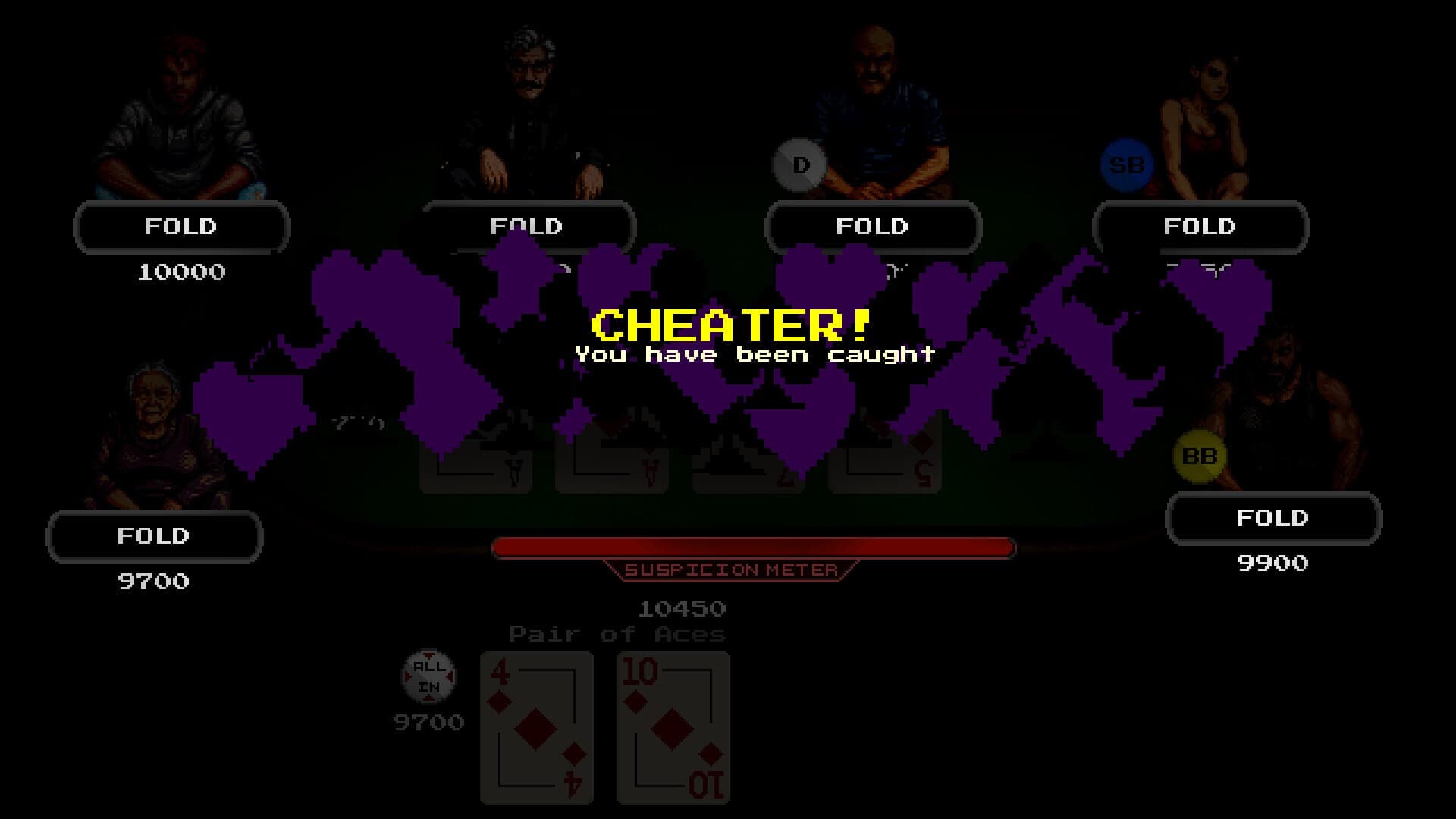
Pokertown: Cheater's Paradise offers significant cognitive benefits by engaging players in complex strategic thinking, critical analysis of opponents, and problem-solving through the application of various cheating methods. The game fosters learning transfer by teaching 'real-world' cheating techniques within a simulated environment, and provides adaptive challenges as players progress through increasingly difficult tournaments. Memory and attention are also exercised through card tracking and opponent observation.
Design risks
| R1 | Compulsion-loop pressure | 0.00 | |
| R2 | Monetization | 0.00 | |
| R3 | Social risk | 0.00 | |
The primary risk of Pokertown: Cheater's Paradise lies in its core mechanic of teaching and rewarding cheating. While presented as a strategic challenge, it could potentially normalize or desensitize players to unethical behavior. Content risks are mild, including implied danger from 'gangster-run tournaments' and 'loan sharks', and potential mild language and substance references associated with the poker theme. However, it lacks compulsion-loop design, monetization pressures, or social risks due to its single-player, no-microtransaction design.
Content (not in risk score)
| R4.1 | Violence Level | 0.33 | |
| R4.2 | Sexual Content | 0.00 | |
| R4.3 | Language | 0.33 | |
| R4.4 | Substance References | 0.33 | |
| R4.5 | Fear / Horror | 0.33 | |
Content risk is displayed separately and does not affect the time recommendation.
Regulatory design checks · DSA — Assessed: meets criteria·GDPR-K — Assessed: meets criteria·ODDS — Assessed: meets criteria
- DSA:What Ludograph checks: whether the game's design gives minors the transparency the EU Digital Services Act expects: plain terms, honest defaults, and clear reporting routes.: Estimated from review data. No dark pattern or child-targeting concerns found.
- GDPR-K:What Ludograph checks: whether age assurance and consent flows are designed for under-16s, in the spirit of GDPR Article 8.: Estimated from review data. No privacy or child-targeting concerns found.
- ODDS:What Ludograph checks: whether paid random-reward drop rates are disclosed, as required in China, Japan and South Korea.: Estimated from review data. No paid random-reward mechanics found, so drop-rate disclosure requirements do not apply.
These reflect Ludograph's assessment of the game's design practices against each framework's criteria, not a legal compliance determination.