Review · Strategy · PC
Sins of a Solar Empire: Trinity
Reviewed: 09 Apr 2026
PC
Stardock Entertainment · 2010
Ludograph rating
A
Recommended
68 /100
Sins of a Solar Empire: Trinity is a strategy game that develops problem solving, strategic thinking, and math and systems understanding in space.
Growth (BDS)
57
Risk (RIS)
16
Daily limit
90min
Age guidance
–
Developmental benefits
| B1 | Cognitive | 0.76 | |
| B2 | Social-emotional | 0.40 | |
| B3 | Motor | 0.35 | |
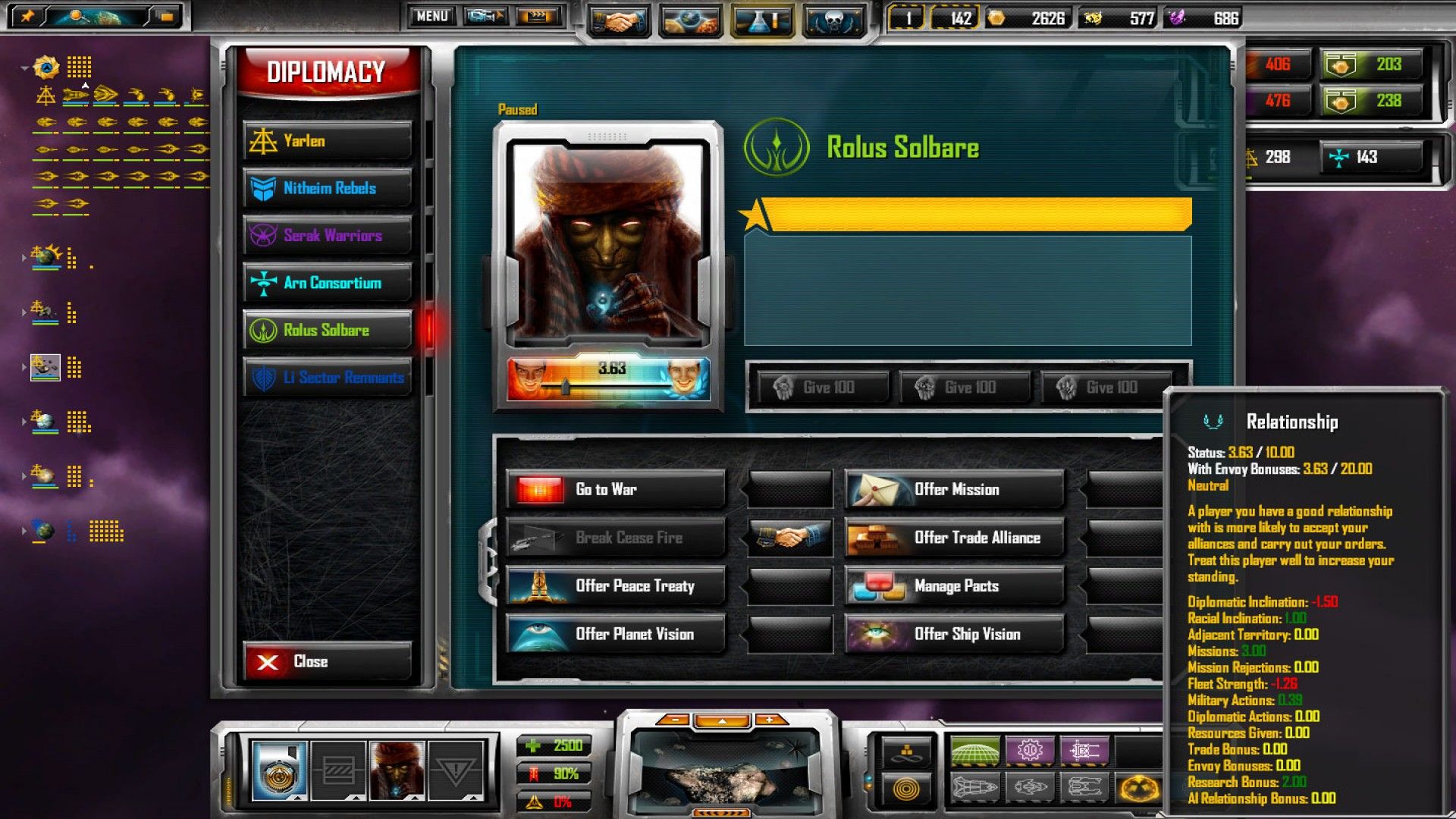
Sins of a Solar Empire: Trinity offers a rich and complex strategy experience that can significantly enhance a child's cognitive abilities, particularly in problem-solving, strategic thinking, and critical analysis. The game's blend of 4X and real-time strategy elements encourages players to manage resources, plan long-term campaigns, and adapt to dynamic battlefield situations. The grand scale of the galactic empire management and fleet command provides ample opportunities for developing spatial awareness and mathematical systems thinking. While primarily a single-player or cooperative experience, the diplomatic aspects can foster an understanding of negotiation and alliances.
Design risks
| R1 | Compulsion-loop pressure | 0.20 | |
| R2 | Monetization | 0.00 | |
| R3 | Social risk | 0.28 | |
The primary risks in Sins of a Solar Empire: Trinity stem from its potential for extended play sessions and social interactions. As an 'infinite play' game with long match durations, it can be difficult for children to disengage, potentially leading to 'escalating commitment' as they invest more time and effort into their empires. While direct monetization is absent, the game's design can still lead to prolonged engagement. Online multiplayer, while optional, introduces potential social risks such as competitive toxicity and interactions with strangers, which could expose children to inappropriate language or behavior. The game's narrative of galactic warfare, though stylized, involves strategic violence and the extermination of foes, which parents should be aware of. Lastly, the lack of strong natural stopping points and potential penalties for leaving matches early could create pressure on children to continue playing beyond healthy limits.
Content (not in risk score)
| R4.1 | Violence Level | 0.00 | |
| R4.2 | Sexual Content | 0.00 | |
| R4.3 | Language | 0.00 | |
| R4.4 | Substance References | 0.00 | |
| R4.5 | Fear / Horror | 0.00 | |
Content risk is displayed separately and does not affect the time recommendation.
Regulatory design checks · DSA — Assessed: meets criteria·GDPR-K — Not yet assessed·ODDS — Assessed: meets criteria
- DSA:What Ludograph checks: whether the game's design gives minors the transparency the EU Digital Services Act expects: plain terms, honest defaults, and clear reporting routes.: Estimated from review data. No dark pattern or child-targeting concerns found.
- GDPR-K:What Ludograph checks: whether age assurance and consent flows are designed for under-16s, in the spirit of GDPR Article 8.
- ODDS:What Ludograph checks: whether paid random-reward drop rates are disclosed, as required in China, Japan and South Korea.: Estimated from review data. No paid random-reward mechanics found, so drop-rate disclosure requirements do not apply.
These reflect Ludograph's assessment of the game's design practices against each framework's criteria, not a legal compliance determination.