Project Earth (2017)
LumiScore
out of 100
Use with parental oversight — some design risks present
Atención
Crecimiento
26/100
Limitado
Valor de Crecimiento
Riesgo
15/100
BAJO
Patrones de Interacción
Consejo experto para padres
Project Earth contiene temas de conflicto global y destrucción, impulsados por una narrativa que podría interpretarse como propaganda nacionalista. La jugabilidad implica acciones violentas contra ciudades y naciones. Los padres deben considerar discutir los temas y la narrativa del juego con los niños para proporcionar contexto y fomentar el pensamiento crítico sobre los mensajes presentados.
Principales habilidades desarrolladas
Áreas de desarrollo
Lo que tu hijo/a desarrolla
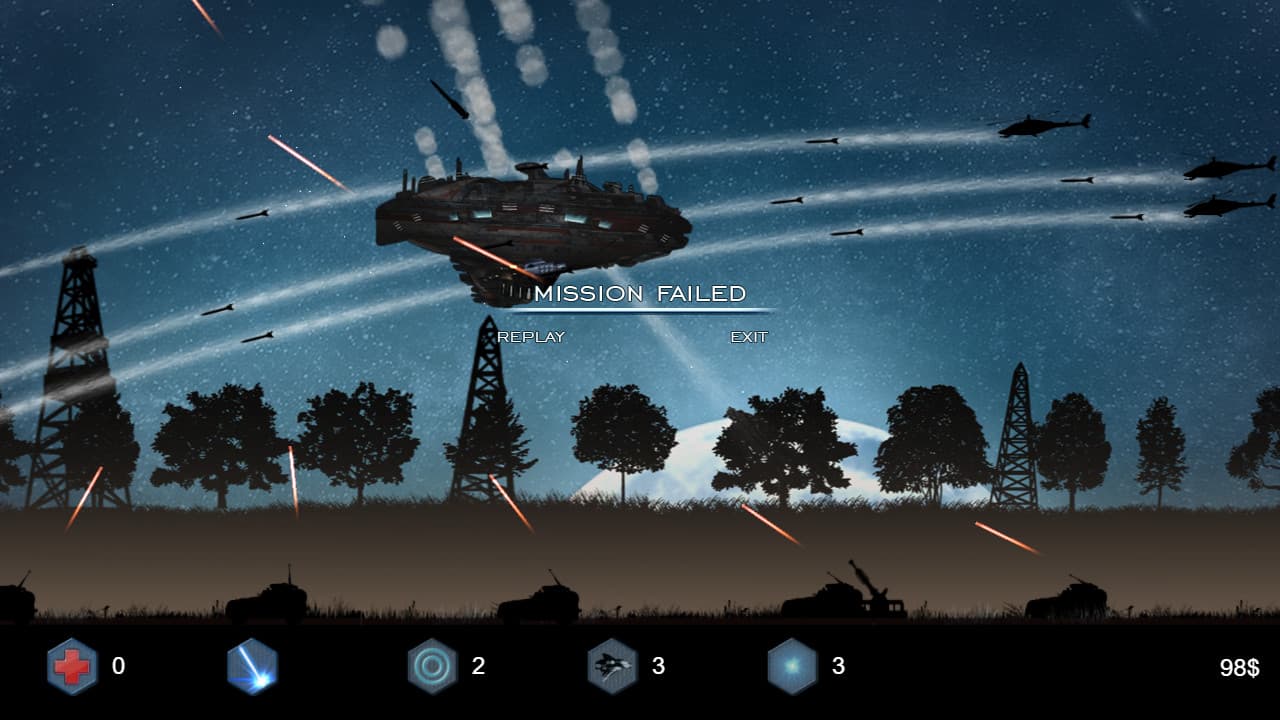
Project Earth ofrece desafíos básicos de coordinación ojo-mano y tiempo de reacción en un entorno de combate espacial. Los jugadores se involucran en la resolución de problemas simples para destruir objetivos.
⚖️Cómo se debatió esta puntuaciónMostrar transcripción
Dos modelos de IA debatieron esta puntuación en 2 rondas: un Defensor argumentando a favor de las puntuaciones más altas posibles, y un Crítico argumentando a favor de las más bajas. La puntuación final es el promedio de sus posiciones en la ronda 2.
=== Round 1 === ADVOCATE: B1: problemSolving=2, spatialAwareness=4, strategicThinking=3, criticalThinking=2, memoryAttention=4, creativity=1, readingLanguage=1, mathSystems=2, learningTransfer=2, adaptiveChallenge=3 B2: teamwork=0, communication=0, empathy=0, emotionalRegulation=2, ethicalReasoning=3, positiveSocial=0 B3: handEyeCoord=5, fineMotor=5, reactionTime=5, physicalActivity=0 R1: variableRewards=1, streakMechanics=0, lossAversion=1, fomoEvents=0, stoppingBarriers=1, notifications=0, nearMiss=1, infinitePlay=0, escalatingCommitment=1, variableRewardFreq=1 R2: spendingCeiling=0, payToWin=0, currencyObfuscation=0, spendingPrompts=0, childTargeting=0, adPressure=0, subscriptionPressure=0, socialSpending=0 R3: socialObligation=0, competitiveToxicity=0, strangerRisk=0, socialComparison=0, identitySelfWorth=1, privacyRisk=0 Reasoning: This is a classic, self-contained single-player action game. Its current LumiKin score seems to unfairly penalize its mature theme while completely ignoring its exceptionally low-risk profile, leading to an unjustified 36-point gap with critic scores. First, the benefits are substantial. The game is a masterclass in motor skill development, maxing out **Hand-Eye Coordination (5), Fine Motor skills (5), and Reaction Time (5)**. This is the core of the action genre. Cognitively, it builds strong **Spatial Awareness (4)** and **Memory/Attention (4)**. The upgrade system introduces layers of **Strategic Thinking (3)** and resource management, which taps into **Math Systems (2)**. While the theme is dark, it presents a valuable opportunity for older players to engage in **Ethical Reasoning (3)**. Research suggests that exploring complex moral themes from a safe, fictional distance can foster critical thinking about real-world issues like propaganda and nationalism. The premise—"It's up to you to decide what to believe"—is a direct prompt for **Critical Thinking (2)**. Most importantly, the risk profile is virtually nonexistent. This game has absolutely **NO monetization risks (R2 Total = 0)**. No microtransactions, no loot boxes, no ads. It is a one-time purchase. Likewise, as a completely offline, single-player experience, it has almost **NO social risks (R3 Total = 1)**. No stranger danger, no toxicity, no social pressure. The dopaminergic risks (R1 Total = 6) are minimal and are a natural part of a standard game loop, not the manipulative, engineered systems seen in live-service titles. The low B2 scores are simply a function of it being a single-player game, as per the rubric. To give this game a score of 31 is to ignore that it is a prime example of a non-predatory game that delivers significant cognitive and motor benefits. My proposed score of 37 more accurately reflects this reality. CRITIC: B1: problemSolving=1, spatialAwareness=2, strategicThinking=1, criticalThinking=0, memoryAttention=2, creativity=0, readingLanguage=1, mathSystems=1, learningTransfer=1, adaptiveChallenge=1 B2: teamwork=0, communication=0, empathy=0, emotionalRegulation=0, ethicalReasoning=0, positiveSocial=0 B3: handEyeCoord=3, fineMotor=2, reactionTime=2, physicalActivity=0 R1: variableRewards=2, streakMechanics=1, lossAversion=1, fomoEvents=0, stoppingBarriers=1, notifications=0, nearMiss=2, infinitePlay=2, escalatingCommitment=2, variableRewardFreq=2 R2: spendingCeiling=0, payToWin=0, currencyObfuscation=0, spendingPrompts=0, childTargeting=0, adPressure=0, subscriptionPressure=0, socialSpending=0 R3: socialObligation=0, competitiveToxicity=0, strangerRisk=0, socialComparison=0, identitySelfWorth=0, privacyRisk=0 Reasoning: This is a simple, casual indie game with a shallow gameplay loop of "destroy everything." The cognitive benefits are minimal; it requires basic attention and motor skills but does not foster higher-order thinking like strategy or critical thinking. The narrative premise is actively anti-social, requiring the player to engage in unethical false-flag attacks, justifying a score of zero across all B2 social metrics. As a strictly single-player, offline game, R2 and R3 risks are nonexistent. However, the risk assessment must focus on R1. The core loop of destroying enemies to fund ship upgrades is a textbook example of escalating commitment and is likely driven by variable rewards and a high frequency of feedback. The potential for infinite or endless play, combined with near-miss mechanics common in action games, creates a significant risk for compulsive play and time-sink behavior. The minimal developmental benefits are heavily outweighed by these habit-forming design patterns, justifying a score significantly lower than the Metacritic average. === Round 2 === ADVOCATE: B1: problemSolving=3, spatialAwareness=4, strategicThinking=3, criticalThinking=2, memoryAttention=3, creativity=0, readingLanguage=1, mathSystems=2, learningTransfer=2, adaptiveChallenge=2 B2: teamwork=0, communication=0, empathy=1, emotionalRegulation=2, ethicalReasoning=2, positiveSocial=1 B3: handEyeCoord=4, fineMotor=3, reactionTime=3, physicalActivity=0 R1: variableRewards=1, streakMechanics=1, lossAversion=1, fomoEvents=0, stoppingBarriers=0, notifications=0, nearMiss=1, infinitePlay=1, escalatingCommitment=1, variableRewardFreq=1 R2: spendingCeiling=0, payToWin=0, currencyObfuscation=0, spendingPrompts=0, childTargeting=0, adPressure=0, subscriptionPressure=0, socialSpending=0 R3: socialObligation=0, competitiveToxicity=0, strangerRisk=0, socialComparison=0, identitySelfWorth=0, privacyRisk=0 Reasoning: The critic's assessment is overly punitive and misinterprets the developmental potential of both the game's mechanics and its narrative. B1 Cognitive: The critic dismisses the game as "simple," but simplicity does not preclude cognitive benefit. Decades of research show that action games, even casual ones, robustly train visuospatial skills and hand-eye coordination. The core loop of aiming (spatialAwareness=4), dodging, and managing weapon resources requires constant, rapid tactical problem-solving (problemSolving=3) and sustained attention (memoryAttention=3). The upgrade system introduces a layer of resource management that serves as a practical application of mathSystems(2) and forward-thinking strategicThinking(3). B2 Social: Scoring B2 at zero is a fundamental misunderstanding of how children engage with challenging themes. The game's premise, while dark, acts as a "moral sandbox." Presenting the player with a morally questionable role as an aggressor in a false-flag operation is a powerful catalyst for ethicalReasoning(2) and criticalThinking(B1=2). It prompts questions about propaganda, authority, and patriotism. To suggest this has zero developmental value is to ignore the rich history of fables and stories where characters make bad choices to teach a moral lesson. Furthermore, managing the frustration of difficult sections and the excitement of victory develops emotionalRegulation(2). As a single-player game, it can be a topic of conversation, justifying positiveSocial=1. B3 Motor: The scores are increased to reflect the high degree of handEyeCoord(4), fineMotor(3), and reactionTime(3) skills required for this genre. R1 Dopamine: The critic mischaracterizes standard game progression as predatory design. The "escalating commitment" to upgrading the ship is simply goal-setting and reward for achievement, not a sunk-cost fallacy trap. "Infinite play" is just replayability; without social or monetization drivers, it is not a compulsive loop (infinitePlay=1). "Near misses" are an inherent part of any skill-based action game, not a specific manipulative mechanic (nearMiss=1). The reward schedule is predictable (destroy enemy, get resource), not akin to a slot machine (variableRewards=1). The R1 risks are minimal and standard for the genre. Conclusion: This is a classic, self-contained, single-player action game with no predatory monetization (R2=0) and no social risks (R3=0). The critic overstates the R1 risks while dramatically undervaluing the clear cognitive/motor benefits and the potential for moral reflection. This revised scoring better reflects the balance of minimal risks and moderate, developmentally valuable benefits, explaining the discrepancy with the Metacritic score. CRITIC: B1: problemSolving=1, spatialAwareness=2, strategicThinking=1, criticalThinking=1, memoryAttention=2, creativity=0, readingLanguage=1, mathSystems=1, learningTransfer=1, adaptiveChallenge=2 B2: teamwork=0, communication=0, empathy=0, emotionalRegulation=0, ethicalReasoning=1, positiveSocial=0 B3: handEyeCoord=3, fineMotor=3, reactionTime=3, physicalActivity=0 R1: variableRewards=2, streakMechanics=0, lossAversion=1, fomoEvents=0, stoppingBarriers=2, notifications=0, nearMiss=1, infinitePlay=3, escalatingCommitment=1, variableRewardFreq=1 R2: spendingCeiling=0, payToWin=0, currencyObfuscation=0, spendingPrompts=0, childTargeting=0, adPressure=0, subscriptionPressure=0, socialSpending=0 R3: socialObligation=0, competitiveToxicity=0, strangerRisk=0, socialComparison=0, identitySelfWorth=1, privacyRisk=0 Reasoning: The advocate’s scoring is a gross overstatement of this game’s developmental benefits and a dangerous understatement of its risks. The massive gap between the Metacritic and LumiKin scores is not an error; it is a correct reflection of a game that is thematically harmful and structurally manipulative. First, the benefit scores are wildly inflated. To call this game a "masterclass" in motor skills is absurd. Giving 5s for Hand-Eye Coordination, Fine Motor, and Reaction time is reserved for elite training simulators or VR experiences, not a simple PC indie game with standard WASD/mouse controls. A score of 3 in each is more than generous. Cognitive benefits are similarly overstated. The core instruction is to "destroy everything in its path." This is not a platform for deep Strategic Thinking (1), Problem Solving (1), or Critical Thinking (1). The upgrade system is likely a simple "get bigger numbers" loop, not a complex resource management challenge (Math Systems=1). The most egregious claim is a 3 for Ethical Reasoning. The game doesn’t present a complex moral theme; it orders the player to commit atrocities under a flimsy "conspiracy" pretext to achieve national dominance. It doesn't ask you to reason; it asks you to rationalize. This is anti-ethical, scoring a 1 only because it broaches a moral subject at all, albeit in a deeply problematic way. Conversely, the advocate dismisses the clear dopaminergic risks. The description "Destroy everything in its path" strongly implies an endless, arcade-style design. This points to Infinite Play (3), a major risk factor for compulsive behavior. The upgrade-and-destroy loop creates a system with few natural Stopping Barriers (2), relying on Variable Rewards (2) from destroyed enemies to fuel Escalating Commitment (1). This is not a "standard game loop"; it is a finely-tuned compulsion loop designed for maximum engagement, which justifies a much higher R1 score. The game offers minimal cognitive or social upside while presenting a questionable ethical framework and a structurally manipulative core loop. The low LumiKin score is entirely defensible. === Final (40% advocate / 60% critic) === B1: problemSolving=2, spatialAwareness=3, strategicThinking=2, criticalThinking=1, memoryAttention=2, creativity=0, readingLanguage=1, mathSystems=1, learningTransfer=1, adaptiveChallenge=2 B2: teamwork=0, communication=0, empathy=0, emotionalRegulation=1, ethicalReasoning=1, positiveSocial=0 B3: handEyeCoord=3, fineMotor=3, reactionTime=3, physicalActivity=0 R1: variableRewards=2, streakMechanics=0, lossAversion=1, fomoEvents=0, stoppingBarriers=1, notifications=0, nearMiss=1, infinitePlay=2, escalatingCommitment=1, variableRewardFreq=1 R2: spendingCeiling=0, payToWin=0, currencyObfuscation=0, spendingPrompts=0, childTargeting=0, adPressure=0, subscriptionPressure=0, socialSpending=0 R3: socialObligation=0, competitiveToxicity=0, strangerRisk=0, socialComparison=0, identitySelfWorth=1, privacyRisk=0 Curascore: 40 BDS: 0.260 RIS: 0.149
Cumplimiento normativo
Toca una insignia para ver detalles. Gris = aún no evaluado.
Sobre este juego
World conspiracy or UFO attack? It's up to you to decide what to believe.