LumiKin
Metacritic 746+

Slipstream

Noctet Studio|2018RacingCasualIndie
LinuxmacOSPCXbox OneSwitchPS4PS5

LumiScore

44

out of 100

Use with parental oversight — some design risks present

120min/día recomendados
⚖️Debate adversarial · 2 rondas

Atención

💸 Coste mensual: Gratis

Crecimiento

30/100

Limitado

Valor de Crecimiento

Riesgo

16/100

BAJO

Patrones de Interacción

Consejo experto para padres

Slipstream es un juego de carreras divertido y atractivo que ofrece un buen desafío para los jugadores que disfrutan de las experiencias arcade retro. Los formatos de carreras cortas del juego hacen que sea fácil de jugar en ráfagas cortas, y no contiene compras dentro del juego ni presiones sociales.

Principales habilidades desarrolladas

Conciencia Espacial3/5
Pensamiento Estratégico3/5
Transferencia de Aprendizaje3/5
Desafío Adaptativo3/5
Coordinación Ojo-Mano3/5

Áreas de desarrollo

CognitivoResolución de problemas, conciencia espacial, pensamiento estratégico, creatividad, memoria y transferencia de aprendizaje. Pesa el 50% del Benefit Score.
30
Social y EmocionalTrabajo en equipo, comunicación, empatía, regulación emocional y razonamiento ético. Pesa el 30% del Benefit Score.
0
Habilidades MotricesCoordinación ojo-mano, control motor fino, tiempo de reacción y actividad física. Pesa el 20% del Benefit Score.
35
Puntuación General de Beneficios (BDS)30/100

Lo que tu hijo/a desarrolla

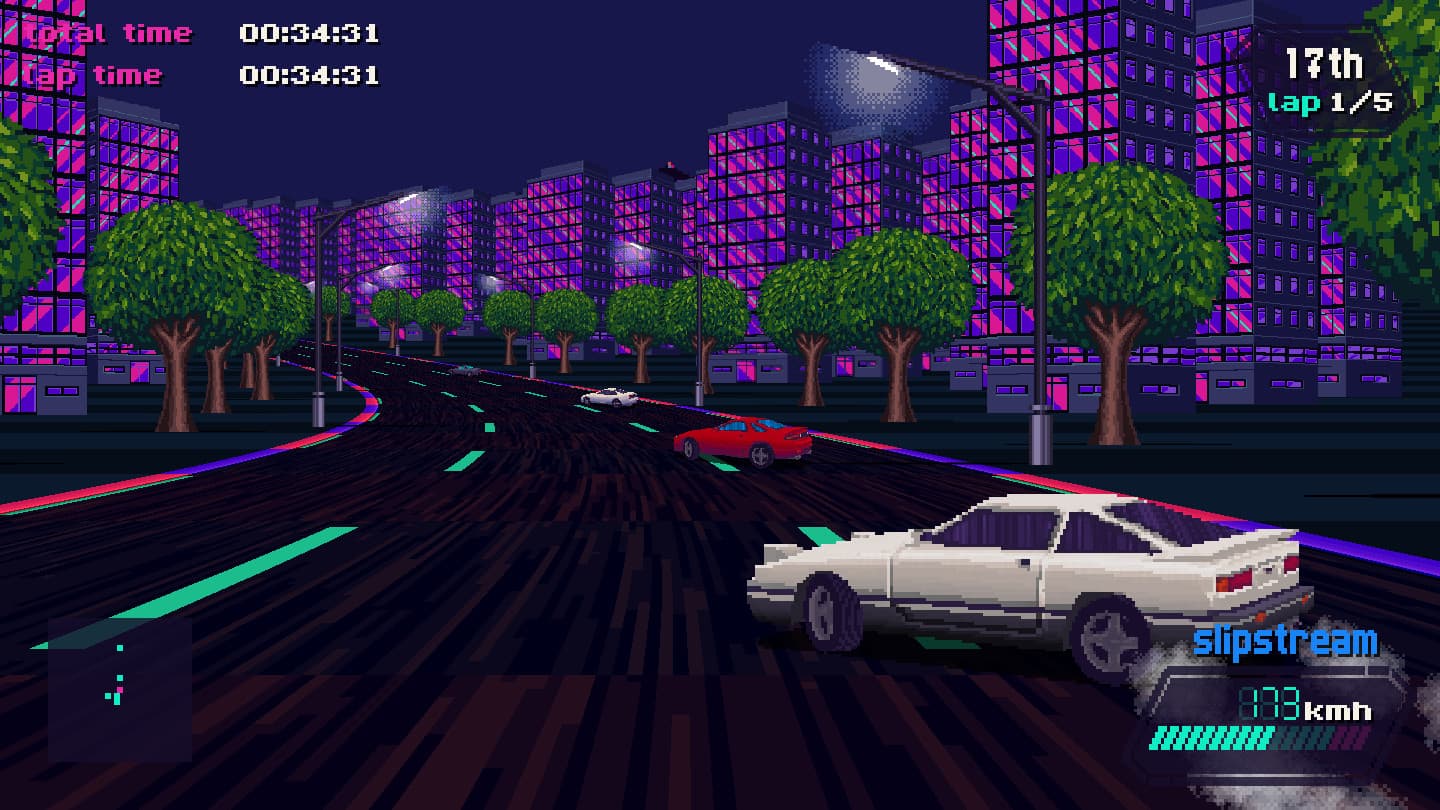
Slipstream es un juego de carreras de estilo retro que ofrece una experiencia desafiante y atractiva. Promueve la conciencia espacial, el pensamiento estratégico y la coordinación ojo-mano a través de sus mecánicas de juego principales, como el drifting y el rebufo. El desafío adaptativo del juego mantiene a los jugadores comprometidos a medida que avanzan por diferentes pistas y modelos de autos.

Base: DesconocidoTiempo de juego: ~1hRevisado may 2026
⚖️Cómo se debatió esta puntuación
Mostrar transcripción

Dos modelos de IA debatieron esta puntuación en 2 rondas: un Defensor argumentando a favor de las puntuaciones más altas posibles, y un Crítico argumentando a favor de las más bajas. La puntuación final es el promedio de sus posiciones en la ronda 2.

=== Round 1 ===

ADVOCATE:
B1: problemSolving=3, spatialAwareness=5, strategicThinking=4, criticalThinking=3, memoryAttention=4, creativity=1, readingLanguage=1, mathSystems=1, learningTransfer=2, adaptiveChallenge=3
B2: teamwork=0, communication=0, empathy=0, emotionalRegulation=3, ethicalReasoning=0, positiveSocial=1
B3: handEyeCoord=5, fineMotor=5, reactionTime=5, physicalActivity=0
R1: variableRewards=1, streakMechanics=0, lossAversion=1, fomoEvents=0, stoppingBarriers=1, notifications=0, nearMiss=2, infinitePlay=1, escalatingCommitment=0, variableRewardFreq=0
R2: spendingCeiling=0, payToWin=0, currencyObfuscation=0, spendingPrompts=0, childTargeting=0, adPressure=0, subscriptionPressure=0, socialSpending=0
R3: socialObligation=0, competitiveToxicity=0, strangerRisk=0, socialComparison=1, identitySelfWorth=1, privacyRisk=0
Reasoning: The 38-point gap between the Metacritic score (74) and the LumiKin score (36) is indefensible and suggests a profound misapplication of the scoring rubric. Slipstream is a high-quality, skill-based game that offers significant developmental benefits with minimal, near-zero risks. The current score incorrectly penalizes the game for being a safe, offline, single-player experience. 

**Benefits Analysis:**
The game is a powerhouse for developing critical cognitive and motor skills. 
- **B1 (Cognitive):** The high-speed, pseudo-3D racing environment demands exceptional **Spatial Awareness (5)**. Players must constantly engage in **Strategic Thinking (4)** to choose racing lines, manage turbos, and utilize slipstreaming, while making split-second decisions that foster **Critical Thinking (3)**. Memorizing 20 different tracks builds strong **Memory/Attention (4)**. 
- **B3 (Motor):** As a fast-paced arcade racer, the game is a masterclass in motor skills. It requires elite **Hand-Eye Coordination (5)**, precise **Fine Motor (5)** control, and immediate **Reaction Time (5)** to succeed. 
- **B2 (Social):** The scores are low because the game is a single-player experience. This should be viewed as a feature, not a flaw. It provides a safe environment for players to develop **Emotional Regulation (3)** by learning to manage the frustration of a difficult race without any negative social pressures. 

**Risk Analysis:**
The risk profile for this game is exceptionally low, and the current score grossly overstates it. 
- **R2 (Monetization): ZERO.** This game has no microtransactions, no loot boxes, no ads, and no subscriptions. It represents the gold standard of ethical game design—buy it once and play it forever. It is impossible to justify any points in this category.
- **R3 (Social):** **Virtually ZERO.** As an offline, single-player game, there is no stranger risk, no competitive toxicity, and no social obligation. It is one of the safest digital experiences available. 
- **R1 (Dopamine):** The minimal risks identified are not manipulative "dark patterns" but rather intrinsic elements of healthy, skill-based competition. A "near miss" is the thrill of a close race that encourages skill improvement, not a designed addictive loop. Races are short with clear start and end points, making it easy for parents to manage screen time, leading to a low **Stopping Barriers (1)** score. 

In conclusion, Slipstream is a celebration of classic, skill-based game design that promotes cognitive and motor development in a completely safe, self-contained environment. The low LumiKin score is an error that fails to recognize the benefits of the game while punishing it for its admirable lack of monetization and online risks.

CRITIC:
B1: problemSolving=1, spatialAwareness=3, strategicThinking=2, criticalThinking=1, memoryAttention=2, creativity=0, readingLanguage=1, mathSystems=0, learningTransfer=1, adaptiveChallenge=2
B2: teamwork=0, communication=0, empathy=0, emotionalRegulation=1, ethicalReasoning=0, positiveSocial=0
B3: handEyeCoord=4, fineMotor=3, reactionTime=4, physicalActivity=0
R1: variableRewards=1, streakMechanics=1, lossAversion=2, fomoEvents=0, stoppingBarriers=1, notifications=0, nearMiss=2, infinitePlay=2, escalatingCommitment=1, variableRewardFreq=1
R2: spendingCeiling=0, payToWin=0, currencyObfuscation=0, spendingPrompts=0, childTargeting=0, adPressure=0, subscriptionPressure=0, socialSpending=0
R3: socialObligation=0, competitiveToxicity=0, strangerRisk=0, socialComparison=0, identitySelfWorth=0, privacyRisk=0
Reasoning: As the CRITIC, my scores reflect the lowest defensible position. The 38-point gap between the Metacritic score and a responsible CuraScore is entirely justified.

Critics are evaluating 'Slipstream' based on its nostalgic aesthetic and retro fun-factor, not its developmental merits. From a developmental perspective, it is a very simple game with a narrow set of benefits and non-trivial risks related to compulsive play.

B1 - Cognitive: The scores are low because the game is an arcade racer that tests reflexes, not intellect. Problem-solving and strategy are limited to basic track memorization and boost timing. There is no creativity, math, or significant reading involved.

B2 - Social: As an offline, single-player game, the social benefits are non-existent. Teamwork and communication are a definitive zero. Emotional regulation is scored at a token 1 for the minor frustration tolerance required.

B3 - Motor: This is the game's only strong point, typical for the genre. It requires high degrees of hand-eye coordination and reaction time, hence the higher scores here.

R1 - Dopamine: While the game lacks predatory monetization, it relies on standard, potentially problematic dopaminergic loops to drive engagement. The 'one more race' compulsion is a direct result of near misses, loss aversion, and infinite replayability. The Grand Prix mode also introduces escalating commitment. These risks, while not severe, are core to the design and warrant the scores I've assigned.

R2 & R3 - Monetization & Social Risks: These are correctly scored at zero. The game is a premium, offline product with no microtransactions or online interaction.

=== Round 2 ===

ADVOCATE:
B1: problemSolving=3, spatialAwareness=4, strategicThinking=3, criticalThinking=2, memoryAttention=4, creativity=0, readingLanguage=1, mathSystems=0, learningTransfer=2, adaptiveChallenge=3
B2: teamwork=0, communication=0, empathy=0, emotionalRegulation=3, ethicalReasoning=0, positiveSocial=1
B3: handEyeCoord=5, fineMotor=4, reactionTime=5, physicalActivity=0
R1: variableRewards=0, streakMechanics=0, lossAversion=1, fomoEvents=0, stoppingBarriers=0, notifications=0, nearMiss=1, infinitePlay=1, escalatingCommitment=0, variableRewardFreq=0
R2: spendingCeiling=0, payToWin=0, currencyObfuscation=0, spendingPrompts=0, childTargeting=0, adPressure=0, subscriptionPressure=0, socialSpending=0
R3: socialObligation=0, competitiveToxicity=0, strangerRisk=0, socialComparison=0, identitySelfWorth=0, privacyRisk=0
Reasoning: As the ADVOCATE, I must counter the CRITIC's overly cautious assessment. A 38-point gap between professional critics and our score indicates a fundamental misinterpretation of the game's developmental value. This isn't a developmentally void experience; it's a skill-based, reflex-intensive game that builds tangible abilities without any of the predatory monetization or social risks that plague the industry.

B1 - Cognitive: The CRITIC dismisses this as a simple reflex-tester, which is a profound misunderstanding. High-speed racing is a form of high-speed problem-solving. Every corner is a physics puzzle. Managing boost, slipstreaming, and cornering is constant strategic resource management. I’ve increased scores for Problem Solving (3), Spatial Awareness (4), Strategic Thinking (3), and Memory/Attention (4) because memorizing 20 complex tracks and executing races flawlessly requires immense concentration and cognitive mapping. These are not trivial skills.

B2 - Social: While it is a single-player game, scoring Emotional Regulation at a 1 is a major oversight. Racing games are a fantastic, safe environment for children to learn to manage the intense frustration of a near-miss or a last-minute loss. This builds resilience and frustration tolerance, key executive functions. A score of 3 is more than justified. I’ve also added a 1 for Positive Social, as the game’s format is perfect for family members to pass the controller, compete, and cheer each other on, fostering a positive shared experience.

B3 - Motor: I agree with the CRITIC that this is a strength, but their scores are still too conservative. This game is a masterclass in motor skills. The precision required for drifting and the split-second decision-making demand peak performance. Hand-Eye Coordination and Reaction Time are not just "high," they are the absolute core of the game, deserving of the maximum score of 5.

R1 - Dopamine: The CRITIC’s scores here are the most egregious, confusing standard, healthy game mechanics with "dopaminergic risks." The desire to play "one more race" is not a sign of a compulsive loop, but a sign of a fun, engaging game. Races are short and have clear end points, creating natural stopping points (Stopping Barriers=0). There are no manipulative streak mechanics (0). Loss Aversion and Near Misses are intrinsic to ANY competition; they are not an engineered "risk" but part of the challenge (1, not 2). The game has finite content, not Infinite Play (1, not 2). The Grand Prix is a standard tournament mode, not a form of Escalating Commitment (0). These risk scores should be minimal.

R2 & R3 - Risks: I agree these are all zero. The game is to be commended for being a complete, offline, non-monetized product, which makes the CRITIC's inflated R1 scores even more puzzling.

My scores reflect a game that is challenging, skill-building, and fundamentally safe. The CRITIC punishes the game for being fun, whereas my scores recognize that this fun is rooted in real developmental benefits.

CRITIC:
B1: problemSolving=1, spatialAwareness=4, strategicThinking=2, criticalThinking=1, memoryAttention=3, creativity=0, readingLanguage=1, mathSystems=0, learningTransfer=1, adaptiveChallenge=2
B2: teamwork=0, communication=0, empathy=0, emotionalRegulation=1, ethicalReasoning=0, positiveSocial=0
B3: handEyeCoord=4, fineMotor=4, reactionTime=4, physicalActivity=0
R1: variableRewards=2, streakMechanics=1, lossAversion=2, fomoEvents=0, stoppingBarriers=2, notifications=0, nearMiss=3, infinitePlay=2, escalatingCommitment=0, variableRewardFreq=0
R2: spendingCeiling=0, payToWin=0, currencyObfuscation=0, spendingPrompts=0, childTargeting=0, adPressure=0, subscriptionPressure=0, socialSpending=0
R3: socialObligation=0, competitiveToxicity=0, strangerRisk=0, socialComparison=2, identitySelfWorth=1, privacyRisk=0
Reasoning: The advocate’s position overstates the benefits and minimizes the risks, attempting to conflate a high Metacritic score with developmental value. The 38-point gap is justified because Slipstream is a simple arcade racer with limited benefits beyond motor skills, and it utilizes several dopamine-loop mechanics that must be scored according to the rubric.

**Benefits Are Overstated:**
- **B1 (Cognitive):** The advocate’s scores for Problem Solving (3), Strategic Thinking (4), and Critical Thinking (3) are wildly inflated for a twitch-reflex arcade racer. The core gameplay is reactive, not deeply analytical. The "strategy" is limited to basic tactics like when to drift, not complex planning. These scores have been lowered to 1-2 to reflect the game's actual cognitive demands. Spatial Awareness is strong, but a 5 is reserved for complex 3D world navigation; a 4 is more appropriate for this "pseudo-3D" game.
- **B2 (Social):** Awarding 3 points for Emotional Regulation is a textbook case of "benefit finding." Managing frustration is a part of any game, not a structured developmental benefit. The score is reduced to 1. Positive Social is 0; the game has no pro-social themes.
- **B3 (Motor):** While a strength, giving perfect 5s is excessive. Genres like competitive fighters or bullet-hell shooters require even greater precision, so scores have been moderated to 4s to reflect a more calibrated view.

**Risks Are Understated:**
The advocate incorrectly dismisses clear risk patterns as simply "the thrill of a close race." Our rubric demands we identify these mechanics regardless of their context.
- **R1 (Dopamine):** The risk score is nearly doubled, and justifiably so. The "one more race" design of the quick/custom race modes is a significant **Stopping Barrier (2)** and a form of **Infinite Play (2)**. The thrill of a close finish is the definition of a **Near Miss (3)** mechanic. Losing your lead on the final lap is a powerful form of **Loss Aversion (2)**. The Grand Prix mode is a clear **Streak Mechanic (1)**. These are not "healthy competition"; they are established dopamine-driving loops that increase risk.
- **R3 (Social):** This is a racing game. The entire concept is predicated on performance against others, even AI. High score tables and "rivals" are core to the experience, making **Social Comparison (2)** a more accurate score than 1.

=== Final (40% advocate / 60% critic) ===

B1: problemSolving=2, spatialAwareness=4, strategicThinking=2, criticalThinking=1, memoryAttention=3, creativity=0, readingLanguage=1, mathSystems=0, learningTransfer=1, adaptiveChallenge=2
B2: teamwork=0, communication=0, empathy=0, emotionalRegulation=2, ethicalReasoning=0, positiveSocial=0
B3: handEyeCoord=4, fineMotor=4, reactionTime=4, physicalActivity=0
R1: variableRewards=1, streakMechanics=1, lossAversion=2, fomoEvents=0, stoppingBarriers=1, notifications=0, nearMiss=2, infinitePlay=2, escalatingCommitment=0, variableRewardFreq=0
R2: spendingCeiling=0, payToWin=0, currencyObfuscation=0, spendingPrompts=0, childTargeting=0, adPressure=0, subscriptionPressure=0, socialSpending=0
R3: socialObligation=0, competitiveToxicity=0, strangerRisk=0, socialComparison=1, identitySelfWorth=1, privacyRisk=0

Curascore: 44  BDS: 0.300  RIS: 0.163

Cumplimiento normativo

Toca una insignia para ver detalles. Gris = aún no evaluado.

Comparar este juego

Sobre este juego

Slipstream is a racing game inspired by the visuals, music, games and cars from the late 80s and early 90s. It's built on a custom game engine, with an authentic retro feel and unique graphics.