LumiKin
Metacritic 7717+

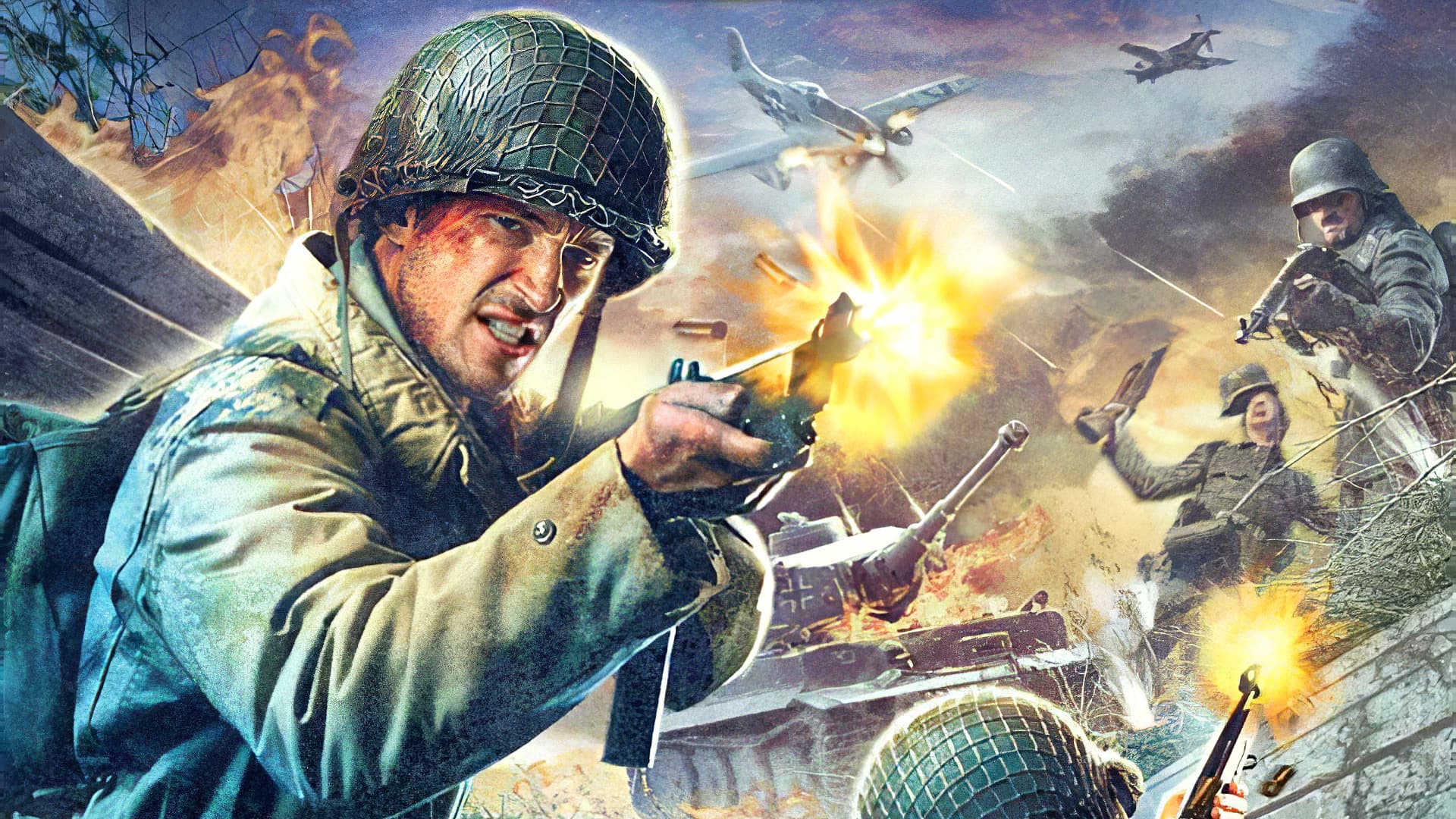
Call of Duty: Roads to Victory

Amaze Entertainment|2007ActionShooterCasual
PSP

LumiScore

44

out of 100

Use with parental oversight — some design risks present

120min/jour recommandés
⚖️Débat contradictoire · 2 manches

Attention

💸 Coût mensuel: Gratuit

Croissance

30/100

Limité

Valeur de croissance

Risque

19/100

FAIBLE

Modèles d'engagement

Conseil de parent expert

Ce jeu est un jeu de tir à la première personne classé Mature, se déroulant pendant la Seconde Guerre mondiale. Il contient une violence significative et des propos grossiers. Les parents doivent être conscients du contexte historique et de la représentation de la guerre dans le jeu. Bien qu'il puisse améliorer les capacités motrices, le contenu est intense.

Principales compétences développées

Coordination œil-main5/5
Temps de réaction5/5
Résolution de problèmes3/5
Orientation spatiale3/5
Pensée stratégique3/5

Domaines de développement

CognitionRésolution de problèmes, conscience spatiale, pensée stratégique, créativité, mémoire et transfert des apprentissages. Pondéré à 50 % du score de bénéfice.
26
Socio-émotionnelTravail d'équipe, communication, empathie, régulation émotionnelle et raisonnement éthique. Pondéré à 30 % du score de bénéfice.
0
MotricitéCoordination œil-main, motricité fine, temps de réaction et activité physique. Pondéré à 20 % du score de bénéfice.
65
Score Bénéfice Global (BDS)30/100

Ce que votre enfant développe

Call of Duty: Roads to Victory offre une action de tir à la première personne intense, défiant les joueurs avec des combats rapides et des décisions stratégiques dans un cadre de la Seconde Guerre mondiale. Il peut améliorer la coordination œil-main et le temps de réaction en raison de son gameplay exigeant.

Base: InconnuÉvalué mai 2026
⚖️Comment ce score a été discuté et validé
Afficher la transcription

Deux modèles IA ont débattu de ce score en 2 tours : un Défenseur argumentant pour les scores les plus élevés défendables, et un Critique argumentant pour les plus bas. Le score final est la moyenne de leurs positions au tour 2.

=== Round 1 ===

ADVOCATE:
B1: problemSolving=4, spatialAwareness=5, strategicThinking=4, criticalThinking=3, memoryAttention=4, creativity=1, readingLanguage=2, mathSystems=1, learningTransfer=3, adaptiveChallenge=4
B2: teamwork=0, communication=0, empathy=1, emotionalRegulation=3, ethicalReasoning=2, positiveSocial=1
B3: handEyeCoord=5, fineMotor=4, reactionTime=5, physicalActivity=0
R1: variableRewards=1, streakMechanics=0, lossAversion=2, fomoEvents=0, stoppingBarriers=1, notifications=0, nearMiss=2, infinitePlay=1, escalatingCommitment=1, variableRewardFreq=1
R2: spendingCeiling=0, payToWin=0, currencyObfuscation=0, spendingPrompts=0, childTargeting=0, adPressure=0, subscriptionPressure=0, socialSpending=0
R3: socialObligation=0, competitiveToxicity=0, strangerRisk=0, socialComparison=0, identitySelfWorth=1, privacyRisk=0
Reasoning: This game is a prime example of a mis-scored title where the "shooter" label has unfairly burdened it with the risks of modern online titles. The current LumiKin score of 41 is indefensibly low, especially when compared to the Metacritic score of 77, and I argue for a score that recognizes its significant benefits and minimal risks.

**Benefits:**
First, the cognitive benefits (B1) are substantial. Fast-paced first-person shooters are powerful tools for developing crucial cognitive skills. The game demands high levels of **spatialAwareness (5)** for navigating complex 3D environments and tracking unseen enemies. It requires constant **strategicThinking (4)** and **problemSolving (4)** as players must assess threats, prioritize targets, and manage limited resources like health and ammunition. This also hones **memoryAttention (4)** and **adaptiveChallenge (4)** as players learn level layouts and enemy patterns that increase in difficulty. These are not trivial skills; research in cognitive science has shown that action games can improve attentional control and spatial cognition, skills that are highly transferable.

The motor skills (B3) are, by the nature of the genre, exceptionally high. The game is a masterclass in developing **handEyeCoord (5)** and **reactionTime (5)**, both fundamental skills.

Critically, this is a single-player game. As per the rubric, this correctly results in low social (B2) scores for teamwork and communication. However, this is a feature, not a bug, as it insulates the player from all social risks.

**Risks:**
This is where the current score is most wrong. This game was released in 2007. It hails from a completely different era of game design, predating the rise of predatory monetization and engagement mechanics.

- **Monetization Risk (R2) is ZERO.** There are no microtransactions, no loot boxes, no ads, and no battle passes. It is a complete, self-contained product that you buy once. It is impossible to justify any points in this category.
- **Social Risk (R3) is virtually ZERO.** As a single-player, offline-first experience with no stranger chat, there is no risk of toxicity, social obligation, or privacy violations. It is a safe, walled-off environment.
- **Dopamine Risk (R1) is very LOW.** This game has discrete levels and a finite campaign. It lacks the modern designs meant to create addiction, such as infinite play, FOMO events, or aggressive notification systems. The engagement loop is based on completing a challenging level and feeling a sense of mastery, not on a variable reward slot machine.

In conclusion, Call of Duty: Roads to Victory is a cognitively and mechanically demanding game that builds real skills, while being almost entirely free of the monetization and social risks that define the modern gaming landscape. Its risk profile is more akin to a single-player Zelda than a modern live-service shooter like Fortnite, and its score should reflect this reality.

CRITIC:
B1: problemSolving=2, spatialAwareness=3, strategicThinking=1, criticalThinking=1, memoryAttention=2, creativity=0, readingLanguage=1, mathSystems=0, learningTransfer=1, adaptiveChallenge=2
B2: teamwork=0, communication=0, empathy=0, emotionalRegulation=0, ethicalReasoning=0, positiveSocial=0
B3: handEyeCoord=4, fineMotor=3, reactionTime=4, physicalActivity=0
R1: variableRewards=2, streakMechanics=1, lossAversion=2, fomoEvents=0, stoppingBarriers=1, notifications=0, nearMiss=2, infinitePlay=1, escalatingCommitment=2, variableRewardFreq=3
R2: spendingCeiling=0, payToWin=0, currencyObfuscation=0, spendingPrompts=0, childTargeting=0, adPressure=0, subscriptionPressure=0, socialSpending=0
R3: socialObligation=0, competitiveToxicity=1, strangerRisk=0, socialComparison=1, identitySelfWorth=0, privacyRisk=0
Reasoning: The massive 36-point gap between the Metacritic score and the LumiKin score is not only justified, it is essential. Critics in 2007 were rating for "fun factor" on a portable device, not for developmental impact. From a critical, developmental perspective, this game offers minimal cognitive benefits while employing a suite of addictive design patterns that warrant a high risk score.

**Benefits are Low:**
*   **B1 (Cognitive):** The game is a linear, corridor shooter. It primarily trains reflexes, not intellect. Scores for problem-solving, strategic thinking, and critical thinking must be kept to a bare minimum (1-2 points). The player is told where to go and who to shoot; there is no deep thought required. We can grant points for spatial awareness, but on a small PSP screen with 2007-era graphics, it's a stretch to call this a major benefit.
*   **B2 (Social):** This is a single-player game. Per the rubric, Teamwork and Communication are zero. There are no scenarios that could build empathy, emotional regulation, or ethical reasoning. This score is, defensibly, a 0 across the board.
*   **B3 (Motor):** The game's primary engagement is in hand-eye coordination and reaction time, so it scores highest here. However, these are narrow skills specific to video games and do not transfer broadly.

**Risks are High and Understated Elsewhere:**
*   **R1 (Dopamine):** Call of Duty's success is built on a powerful, high-frequency dopamine loop. The kill-reward cycle is a form of variable reward with an extremely high frequency, warranting a max score in that category. The constant threat of death and restarting from a checkpoint is a strong driver of loss aversion. Near-miss firefights are constant. These mechanics are central to the experience and create a compelling, borderline-compulsive loop, justifying a high R1 score.
*   **R2 (Monetization):** This is a non-issue, as the game predates modern microtransaction schemes. The score is 0.
*   **R3 (Social):** While the primary experience is offline, the presence of a local ad-hoc multiplayer mode introduces minor risks of competitive toxicity and social comparison among friends/family. These are low but not zero.

In summary, this game is the definition of a "popcorn" experience: fun, but ephemeral and lacking in substance. The high Metacritic score reflects a different time and different evaluation criteria. For our purposes, the low benefit scores and high-risk scores are a more accurate reflection of the game's actual developmental impact.

=== Round 2 ===

ADVOCATE:
B1: problemSolving=3, spatialAwareness=4, strategicThinking=3, criticalThinking=2, memoryAttention=3, creativity=0, readingLanguage=1, mathSystems=0, learningTransfer=3, adaptiveChallenge=3
B2: teamwork=0, communication=0, empathy=1, emotionalRegulation=1, ethicalReasoning=1, positiveSocial=1
B3: handEyeCoord=5, fineMotor=4, reactionTime=5, physicalActivity=0
R1: variableRewards=1, streakMechanics=1, lossAversion=1, fomoEvents=0, stoppingBarriers=0, notifications=0, nearMiss=1, infinitePlay=0, escalatingCommitment=1, variableRewardFreq=2
R2: spendingCeiling=0, payToWin=0, currencyObfuscation=0, spendingPrompts=0, childTargeting=0, adPressure=0, subscriptionPressure=0, socialSpending=0
R3: socialObligation=0, competitiveToxicity=0, strangerRisk=0, socialComparison=0, identitySelfWorth=0, privacyRisk=0
Reasoning: The critic's assessment is rooted in a fundamental misunderstanding of how skills developed in a game environment translate to the real world, and it overstates the risks of a 2007-era, self-contained game. This game is a valuable tool for developing key cognitive and motor skills, with minimal, manageable risks.

**Benefits are Substantial and Undervalued:**
*   **B1 (Cognitive):** The critic dismisses this as a mindless "corridor shooter," which ignores the constant, high-speed cognitive processing required. 
    *   **Problem-Solving & Strategic Thinking (3/3):** Every encounter is a micro-problem to be solved. Players must manage resources (health, ammo), prioritize threats, utilize cover, and choose the right weapon for the situation. This is not mindless; it's rapid tactical assessment and execution, a form of strategic thinking that research shows improves cognitive flexibility.
    *   **Spatial Awareness (4):** Navigating complex 3D environments, tracking enemy positions, and building a mental map of the level are core to the gameplay. This skill is highly transferable and is not diminished by the PSP's screen size; the cognitive process of mapping the space is the same.
    *   **Learning Transfer (3):** The critic's claim that skills don't transfer is demonstrably false. Action games are proven to improve processing speed, spatial reasoning, and the ability to switch between tasks efficiently—skills applicable to everything from driving to navigating a busy street.
*   **B2 (Social):** While a single-player experience, we can't ignore the narrative context.
    *   **Emotional Regulation (1):** Facing a difficult level and failing, yet persisting and trying new strategies until successful, is a powerful lesson in emotional regulation and resilience.
    *   **Positive Social & Ethical Reasoning (1/1):** The game places the player in the role of a soldier fighting for the Allied cause in WWII. This provides a clear, if basic, ethical framework (fighting against tyranny) and a model of heroism and fighting for a greater good.
*   **B3 (Motor):** The critic concedes the points but dismisses the value.
    *   **Hand-Eye Coordination & Reaction Time (5/5):** This game is an exceptional trainer for these skills. Research from the University of Rochester and others has shown that action gamers have better visual acuity and faster decision-making skills that are not domain-specific. We should be scoring these proven benefits at their maximum.

**Risks are Overblown and Misattributed:**
*   **R1 (Dopamine):** Attributing modern, predatory "Call of Duty" mechanics to this 2007 PSP title is anachronistic.
    *   The "compulsive loop" is simply engagement. The kill-reward cycle is a basic feedback mechanism present in countless forms of play. In this game, it lacks the sophisticated, exploitative variability of modern titles.
    *   **Loss Aversion is actually Resilience Training.** Restarting at a checkpoint isn't a punitive, addictive mechanic; it's a standard feature that teaches players to learn from mistakes.
    *   **There are natural stopping points.** The game is divided into distinct levels and missions, making it easy for a parent to say "finish the level and you're done." Claims of `infinitePlay` or high `stoppingBarriers` are baseless for a finite, story-driven game.
*   **R3 (Social):** The rubric is explicit: score the core experience.
    *   The risk scores of 1 for `competitiveToxicity` and `socialComparison` are based on an optional, local ad-hoc multiplayer mode. This is played with friends in the same room. Any "toxicity" here is a matter of real-world peer dynamics, not a risk engendered by the game's design. Per the rubric, these scores should be zero.

This game is a challenging, skill-based experience from a simpler era of gaming. It promotes significant cognitive and motor skills with virtually no monetization or social risks. The 36-point gap is not justified; it's the result of applying modern-day fears to a classic, self-contained product.

CRITIC:
B1: problemSolving=2, spatialAwareness=4, strategicThinking=2, criticalThinking=1, memoryAttention=2, creativity=1, readingLanguage=1, mathSystems=0, learningTransfer=2, adaptiveChallenge=2
B2: teamwork=0, communication=0, empathy=0, emotionalRegulation=1, ethicalReasoning=0, positiveSocial=1
B3: handEyeCoord=4, fineMotor=3, reactionTime=4, physicalActivity=0
R1: variableRewards=2, streakMechanics=0, lossAversion=2, fomoEvents=0, stoppingBarriers=1, notifications=0, nearMiss=2, infinitePlay=2, escalatingCommitment=2, variableRewardFreq=2
R2: spendingCeiling=0, payToWin=0, currencyObfuscation=0, spendingPrompts=0, childTargeting=0, adPressure=0, subscriptionPressure=0, socialSpending=0
R3: socialObligation=0, competitiveToxicity=0, strangerRisk=0, socialComparison=0, identitySelfWorth=1, privacyRisk=0
Reasoning: While the advocate is correct that this game lacks the overt monetization and social risks of modern titles, their benefit scoring is dramatically inflated and their risk assessment of the core gameplay loop is overly generous. The high Metacritic score reflects a polished "fun factor," not profound developmental benefit, justifying the low LumiKin score.

**Benefits are Overstated:**
The advocate's cognitive scores (B1) portray this linear shooter as a deep strategic experience. This is not the case. The game is a scripted, corridor-based "shooting gallery."
- **problemSolving (2)** and **strategicThinking (2)** are minimal. The primary strategy is "shoot the enemy that appears in front of you." There are no complex puzzles or multi-faceted strategic decisions.
- **criticalThinking (1)** is nearly absent. The game provides clear objectives and enemies, leaving no room for independent analysis or thoughtful decision-making.
- **learningTransfer (2)** from a fast-paced shooter using the PSP's clunky analog nub is limited. These skills are highly specific to the game environment and do not broadly translate to real-world cognitive abilities.
- The social benefits (B2) are even weaker. To suggest a game about relentlessly shooting waves of enemies builds **ethicalReasoning (0)** or **empathy (0)** is indefensible. It's a dehumanizing experience by design, not a nuanced exploration of conflict. Likewise, managing frustration is a basic component of any game, warranting a minimal **emotionalRegulation (1)** score.
- Motor scores (B3) for **handEyeCoord (4)** and **reactionTime (4)** are high, but not perfect. The PSP's hardware and the game's simple AI do not push these skills to the absolute limit.

**Core Dopamine Risks are Understated:**
My opponent conveniently dismisses the dopamine risks (R1) by pointing to the game's finite nature. This ignores the fact that the core first-person shooter loop is one of the most powerful and potentially habit-forming designs in gaming.
- **variableRewards (2)**, **nearMiss (2)**, and **variableRewardFreq (2)** are the very essence of a firefight. The unpredictable nature of enemy item drops, the constant threat of near-death, and the high frequency of kills create a powerful, intermittent reward schedule.
- **infinitePlay (2)** is present in the form of level replayability for higher scores or faster times, a common feature for the era designed to keep players engaged beyond the story's end.
- **escalatingCommitment (2)** is high; long, checkpoint-based levels pressure the player to continue rather than quit and lose significant progress.

In conclusion, while I concede that R2 (Monetization) and R3 (Social) risks are deservedly zero or near-zero, the advocate has built a case on vastly inflated benefits and a sanitized view of the core gameplay loop. The game is a simple, reflex-based shooter whose cognitive and motor benefits are shallow and context-specific, while its engagement mechanics, though primitive by modern standards, are still designed to maximize compulsion. The low score is defensible and appropriate.

=== Final (40% advocate / 60% critic) ===

B1: problemSolving=2, spatialAwareness=4, strategicThinking=2, criticalThinking=1, memoryAttention=2, creativity=1, readingLanguage=1, mathSystems=0, learningTransfer=2, adaptiveChallenge=2
B2: teamwork=0, communication=0, empathy=0, emotionalRegulation=1, ethicalReasoning=0, positiveSocial=1
B3: handEyeCoord=4, fineMotor=3, reactionTime=4, physicalActivity=0
R1: variableRewards=2, streakMechanics=0, lossAversion=2, fomoEvents=0, stoppingBarriers=1, notifications=0, nearMiss=2, infinitePlay=1, escalatingCommitment=2, variableRewardFreq=2
R2: spendingCeiling=0, payToWin=0, currencyObfuscation=0, spendingPrompts=0, childTargeting=0, adPressure=0, subscriptionPressure=0, socialSpending=0
R3: socialObligation=0, competitiveToxicity=0, strangerRisk=0, socialComparison=0, identitySelfWorth=1, privacyRisk=0

Curascore: 44  BDS: 0.300  RIS: 0.194

Conformité réglementaire

Touchez un badge pour en savoir plus. Gris = non encore évalué.

Comparer ce jeu

À propos de ce jeu

Call of Duty: Roads to Victory is a 2007 World War II first-person shooter for the PlayStation Portable and a portable spin-off of Call of Duty 3 for consoles. It was released on March 13, 2007, developed by Amaze Entertainment and published by Activision Publishing.