Critique · Simulation · PC
Conway's Game of Life (Mikulus)
Évalué: 11 mai 2026
PC
Mikulus · 2023
Note Ludograph
Bénéfices (BDS)
44
Risque (RIS)
0
Limite quotidienne
120min
Âge recommandé
–
Bénéfices pour le développement
| B1 | Cognition | 0.84 | |
| B2 | Socio-émotionnel | 0.00 | |
| B3 | Motricité | 0.10 | |
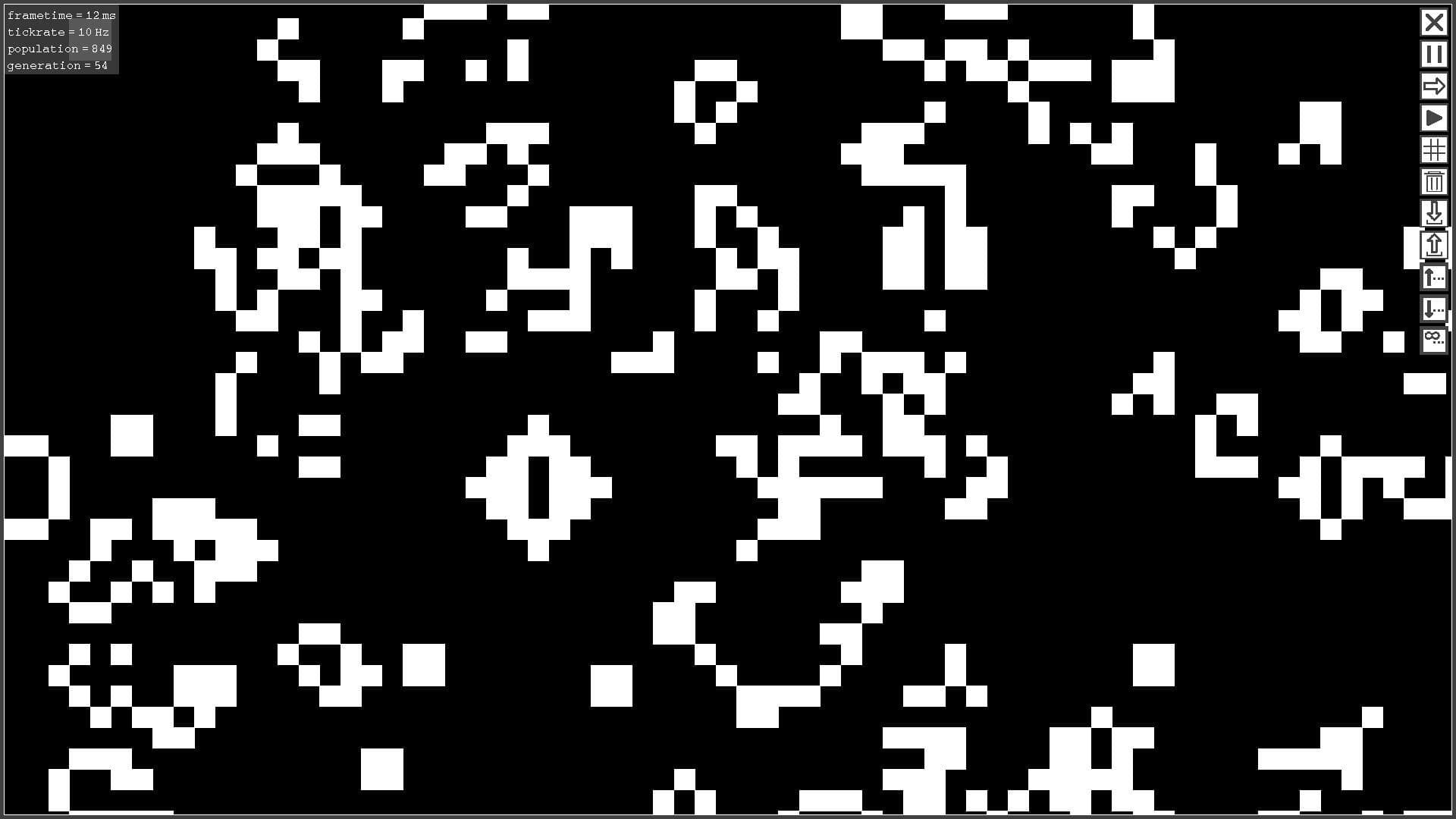
Conway's Game of Life est un excellent outil pédagogique qui favorise la pensée critique, la résolution de problèmes et la conscience spatiale par l'exploration des automates cellulaires. Il encourage la créativité dans la conception des conditions initiales et fournit une démonstration claire de systèmes complexes émergeant de règles simples, ce qui le rend très bénéfique pour la compréhension des concepts mathématiques et computationnels.
Risques de conception
| R1 | Pression des boucles de compulsion | 0.00 | |
| R2 | Monétisation | 0.00 | |
| R3 | Risque social | 0.00 | |
Ce jeu ne présente pratiquement aucun risque. Il ne comporte aucune conception manipulatrice, aucune pression de monétisation, aucun risque social ou contenu répréhensible. Sa nature abstraite et son accent sur la simulation mathématique garantissent une expérience sûre et simple.
Contenu (non inclus dans le score de risque)
| R4.1 | Niveau de violence | 0.00 | |
| R4.2 | Contenu à caractère sexuel | 0.00 | |
| R4.3 | Langage inapproprié | 0.00 | |
| R4.4 | Références à des substances | 0.00 | |
| R4.5 | Peur / Horreur | 0.00 | |
Le risque lié au contenu est affiché séparément et n'influence pas la recommandation de temps de jeu.
Vérifications de conception réglementaire · DSA — Évalué : répond aux critères·GDPR-K — Évalué : répond aux critères·ODDS — Évalué : répond aux critères
- DSA:Ce que Ludograph vérifie : si la conception du jeu offre aux mineurs la transparence attendue par le Règlement sur les services numériques de l'UE : conditions claires, réglages par défaut honnêtes et voies de signalement visibles.: Estimated from review data. No dark pattern or child-targeting concerns found.
- GDPR-K:Ce que Ludograph vérifie : si la vérification de l'âge et les parcours de consentement sont conçus pour les moins de 16 ans, dans l'esprit de l'article 8 du RGPD.: Estimated from review data. No privacy or child-targeting concerns found.
- ODDS:Ce que Ludograph vérifie : si les taux d'obtention des récompenses aléatoires payantes sont publiés, comme l'exigent la Chine, le Japon et la Corée du Sud.: Estimated from review data. No paid random-reward mechanics found, so drop-rate disclosure requirements do not apply.
Reflètent l'évaluation par Ludograph des pratiques de conception du jeu au regard des critères de chaque cadre, et non une décision juridique de conformité.