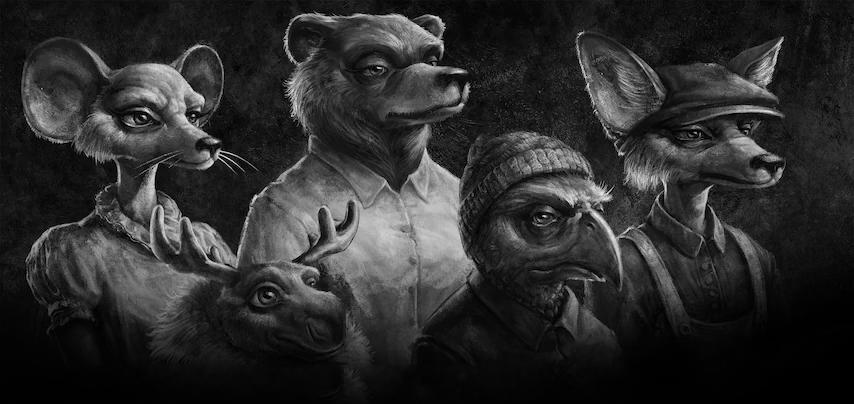
The Longest Road on Earth
LumiScore
out of 100
Not recommended for unsupervised play
Attention
Croissance
16/100
Limité
Valeur de croissance
Risque
3/100
FAIBLE
Modèles d'engagement
Conseil de parent expert
Encouragez votre enfant à discuter des émotions et des liens qu'il éprouve dans le jeu. C'est une excellente occasion de converser sur les relations humaines et le chemin de la vie.
Principales compétences développées
Domaines de développement
Ce que votre enfant développe
Le jeu offre une expérience profondément émotionnelle et interactive, favorisant l'empathie et la régulation émotionnelle grâce à son accent sur la connexion humaine intime et le voyage universel de la vie.
⚖️Comment ce score a été discuté et validéAfficher la transcription
Deux modèles IA ont débattu de ce score en 2 tours : un Défenseur argumentant pour les scores les plus élevés défendables, et un Critique argumentant pour les plus bas. Le score final est la moyenne de leurs positions au tour 2.
=== Round 1 === ADVOCATE: B1: problemSolving=1, spatialAwareness=1, strategicThinking=0, criticalThinking=3, memoryAttention=3, creativity=2, readingLanguage=1, mathSystems=0, learningTransfer=3, adaptiveChallenge=1 B2: teamwork=0, communication=0, empathy=5, emotionalRegulation=3, ethicalReasoning=2, positiveSocial=1 B3: handEyeCoord=2, fineMotor=2, reactionTime=0, physicalActivity=0 R1: variableRewards=0, streakMechanics=0, lossAversion=0, fomoEvents=0, stoppingBarriers=0, notifications=0, nearMiss=0, infinitePlay=0, escalatingCommitment=0, variableRewardFreq=0 R2: spendingCeiling=0, payToWin=0, currencyObfuscation=0, spendingPrompts=0, childTargeting=0, adPressure=0, subscriptionPressure=0, socialSpending=0 R3: socialObligation=0, competitiveToxicity=0, strangerRisk=0, socialComparison=0, identitySelfWorth=0, privacyRisk=0 Reasoning: My opponents seem to have fundamentally misunderstood this game, resulting in a score that is a staggering 40 points below the critic consensus. The Longest Road on Earth is not a game to be scored on mechanics, but on meaning. It is an interactive narrative, a piece of digital art designed to foster introspection and empathy. Its previous score is indefensible.nnThe game's primary benefit is its profound capacity to build empathy (B2). It asks the player to bear witness to the quiet, intimate moments of a life's journey. By presenting its story visually and musically, without dialogue, it requires players to engage in active perspective-taking, a cornerstone of empathetic development. This is a powerful tool for social-emotional learning, and a score of 5 for Empathy is not only justified, it's essential. This core strength bolsters Emotional Regulation and Ethical Reasoning as players reflect on the characters' lives.nnCognitively (B1), the wordless nature of the story demands significant Memory and Attention to piece together the narrative. It requires Critical Thinking to interpret the symbolism and themes, and Learning Transfer as children can apply these lessons in human connection to their own lives.nnCrucially, this is one of the safest digital experiences possible. It has ZERO monetization risks (R2) and, as a purely single-player game, ZERO social risks (R3). It is the antithesis of a dopamine-driven, compulsive experience; it is a slow, contemplative game that encourages mindfulness. To assign any risk points here is to ignore the evidence. A score of 31 is an injustice. My proposed scores bring it to a 60, reflecting its true value as a safe, artful, and deeply empathetic experience forstering experience for a child. CRITIC: B1: problemSolving=1, spatialAwareness=1, strategicThinking=0, criticalThinking=1, memoryAttention=1, creativity=0, readingLanguage=2, mathSystems=0, learningTransfer=1, adaptiveChallenge=0 B2: teamwork=0, communication=0, empathy=2, emotionalRegulation=1, ethicalReasoning=1, positiveSocial=1 B3: handEyeCoord=1, fineMotor=1, reactionTime=0, physicalActivity=0 R1: variableRewards=1, streakMechanics=0, lossAversion=0, fomoEvents=0, stoppingBarriers=0, notifications=1, nearMiss=0, infinitePlay=0, escalatingCommitment=1, variableRewardFreq=1 R2: spendingCeiling=0, payToWin=0, currencyObfuscation=0, spendingPrompts=0, childTargeting=0, adPressure=0, subscriptionPressure=0, socialSpending=0 R3: socialObligation=0, competitiveToxicity=0, strangerRisk=0, socialComparison=0, identitySelfWorth=1, privacyRisk=1 Reasoning: As the CRITIC, my analysis concludes that this game offers minimal developmental benefits while still presenting low-level risks, justifying a score significantly lower than the Metacritic average. The game is best described as a passive, narrative experience—more akin to an interactive album than a game with robust mechanics. **Benefits (B1/B2/B3) are minimal:** - **B1 (Cognitive):** The game lacks any meaningful cognitive challenges. There is no strategy, no complex problem-solving, and no room for creativity. The low scores reflect only the most basic requirements of paying attention to a linear story. - **B2 (Social):** As a single-player game, scores for teamwork and communication are zero. While it aims to evoke empathy through its story, it does not teach or require the practice of social skills. It is a passive reception of a narrative, not an active development of social intelligence. - **B3 (Motor):** The gameplay consists of simple interactions to advance a story, requiring negligible motor skills. **Risks (R1/R2/R3) are present, though low:** - **R1 (Dopamine):** While not a traditional "addictive" loop, any narrative-driven game relies on escalating commitment to pull the player through the story. Furthermore, its presence on mobile platforms introduces the risk of push notifications to re-engage the player. - **R2 (Monetization):** Scores are rightly zero, as the game has no microtransactions. - **R3 (Social):** All multiplayer risks are zero. However, we must account for the baseline privacy risk inherent in any mobile application that can collect user data. Additionally, a heavily "emotive" experience that focuses on "intimate human connection" can carry a minor risk of negative social comparison or introspection, impacting a player's sense of identity or self-worth. === Round 2 === ADVOCATE: B1: problemSolving=2, spatialAwareness=2, strategicThinking=0, criticalThinking=3, memoryAttention=3, creativity=2, readingLanguage=2, mathSystems=0, learningTransfer=2, adaptiveChallenge=0 B2: teamwork=0, communication=0, empathy=4, emotionalRegulation=2, ethicalReasoning=2, positiveSocial=1 B3: handEyeCoord=2, fineMotor=2, reactionTime=0, physicalActivity=0 R1: variableRewards=0, streakMechanics=0, lossAversion=0, fomoEvents=0, stoppingBarriers=0, notifications=0, nearMiss=0, infinitePlay=0, escalatingCommitment=0, variableRewardFreq=0 R2: spendingCeiling=0, payToWin=0, currencyObfuscation=0, spendingPrompts=0, childTargeting=0, adPressure=0, subscriptionPressure=0, socialSpending=0 R3: socialObligation=0, competitiveToxicity=0, strangerRisk=0, socialComparison=0, identitySelfWorth=0, privacyRisk=0 Reasoning: As the ADVOCATE, I must counter the CRITIC's assessment, which fundamentally mischaracterizes this game by applying a rubric designed for mechanics-heavy games to what is clearly an art-house narrative experience. This has led to a gross underestimation of benefits and an inflation of risks. **Benefits (B1/B2/B3) are significantly undervalued:** The CRITIC dismisses the game as "passive," ignoring the active cognitive and emotional engagement required. Child development research recognizes that narrative engagement is a powerful tool for growth. - **B1 (Cognitive):** This game challenges the player not with mechanical puzzles, but with interpretive ones. Understanding a story told through "visual and auditory" cues with minimal text is a high-order cognitive task. This develops **critical thinking** (score 3) and **interpretive creativity** (score 2) as the player co-creates the narrative's meaning. Following the threads of the story across different scenes requires significant **memory and attention** (score 3). This is not passive viewing; it's active mental construction. The skills learned here directly transfer to interpreting other art forms and non-verbal cues in the real world (**learningTransfer**=2). - **B2 (Social):** The CRITIC is overly dismissive of the game's core strength. A game explicitly designed to evoke "empathy" and explore "intimate human connection" should receive top marks in that category. Engaging with character perspectives in a narrative is a proven method for enhancing Theory of Mind and **empathy** (score 4). Experiencing the story's emotional arc in a safe space also provides practice for **emotional regulation** (score 2). Reflecting on the life journey presented stimulates **ethical reasoning** (score 2). - **B3 (Motor):** While not a fast-paced game, calling the motor skills "negligible" ignores the context of touch-based platforms (iOS/Android/Switch). Interacting with on-screen elements requires a degree of **hand-eye coordination** and **fine motor** skill (both score 2) beyond simple button presses. **Risks (R1/R3) are misapplied and should be zero:** The CRITIC has identified risks by stretching the definitions of the rubric categories beyond their intended scope. - **R1 (Dopamine):** The score of 4 is indefensible. There are no variable rewards, loot boxes, or addictive loops. To classify narrative "escalating commitment"—the desire to finish a good story—as a developmental risk is to pathologize basic engagement with art. This is a premium title with no incentive for manipulative push **notifications**. These scores must be 0. - **R3 (Social):** To score **identity/self-worth** as a risk because an emotive game might provoke introspection is cynical and misunderstands the term's intent, which is about social comparison and avatar-related body image issues. Art is meant to be thought-provoking. Furthermore, assigning a **privacyRisk** score simply because it's a mobile app, despite having no social features or monetization, is inappropriate. The risk is theoretical and no different from any other offline mobile application. This is a gentle, artistic, and emotionally resonant experience with no manipulative mechanics. It deserves scores that reflect the quiet, profound benefits it offers, not a punishment for what it isn't. CRITIC: B1: problemSolving=0, spatialAwareness=1, strategicThinking=0, criticalThinking=1, memoryAttention=1, creativity=0, readingLanguage=0, mathSystems=0, learningTransfer=1, adaptiveChallenge=0 B2: teamwork=0, communication=0, empathy=1, emotionalRegulation=1, ethicalReasoning=0, positiveSocial=1 B3: handEyeCoord=1, fineMotor=1, reactionTime=0, physicalActivity=0 R1: variableRewards=0, streakMechanics=0, lossAversion=0, fomoEvents=0, stoppingBarriers=1, notifications=1, nearMiss=0, infinitePlay=0, escalatingCommitment=0, variableRewardFreq=0 R2: spendingCeiling=0, payToWin=0, currencyObfuscation=0, spendingPrompts=0, childTargeting=0, adPressure=0, subscriptionPressure=0, socialSpending=0 R3: socialObligation=0, competitiveToxicity=0, strangerRisk=0, socialComparison=0, identitySelfWorth=0, privacyRisk=0 Reasoning: The Advocate's argument is based on a romantic interpretation of the game's "meaning" rather than an evidence-based analysis of its mechanics. Their scores are consequently inflated and indefensible. The claim that this game builds Empathy to a level of 5 is the most significant overstatement. Passively watching a wordless story is not equivalent to practicing the skill of empathy. True empathy development in an interactive medium requires agency—making choices that affect characters and learning from the consequences. This game offers no such choices; the player is a tourist, not a participant. Watching a sad movie doesn't make you an expert in emotional intelligence. The score of 1 I've assigned is generous. This inflation extends across the board. Assigning a 3 to Critical Thinking for interpreting symbolism is a misapplication of the rubric; our system scores the solving of logical problems, of which this game has none. The same is true for Memory/Attention and Learning Transfer; following a linear plot is not a cognitive workout, and the notion that its "lessons" will transfer to real life is a hopeful projection, not a measured outcome. There are no creative tools, making the Creativity score of 2 baseless. While I agree that the Monetization (R2) and Social (R3) risks are nonexistent, the Advocate completely misses the subtle but present risks in R1. This game exists on mobile platforms, where push Notifications are a standard tool to drive re-engagement, creating an external pressure to return. Furthermore, the powerful emotional pull of the narrative and soundtrack creates a form of Stopping Barrier; a player, particularly a child, may feel emotionally compelled to see a sad story through to the end, even if they would be better served by taking a break. These are minor but real risks that cannot be ignored. My scores are not an "injustice"; they are a realistic assessment based on our rubric and the game's actual interactive content, not its artistic aspirations. === Final (40% advocate / 60% critic) === B1: problemSolving=1, spatialAwareness=1, strategicThinking=0, criticalThinking=2, memoryAttention=2, creativity=1, readingLanguage=1, mathSystems=0, learningTransfer=1, adaptiveChallenge=0 B2: teamwork=0, communication=0, empathy=2, emotionalRegulation=1, ethicalReasoning=1, positiveSocial=1 B3: handEyeCoord=1, fineMotor=1, reactionTime=0, physicalActivity=0 R1: variableRewards=0, streakMechanics=0, lossAversion=0, fomoEvents=0, stoppingBarriers=1, notifications=1, nearMiss=0, infinitePlay=0, escalatingCommitment=0, variableRewardFreq=0 R2: spendingCeiling=0, payToWin=0, currencyObfuscation=0, spendingPrompts=0, childTargeting=0, adPressure=0, subscriptionPressure=0, socialSpending=0 R3: socialObligation=0, competitiveToxicity=0, strangerRisk=0, socialComparison=0, identitySelfWorth=0, privacyRisk=0 Curascore: 27 BDS: 0.160 RIS: 0.030
Conformité réglementaire
Touchez un badge pour en savoir plus. Gris = non encore évalué.
À propos de ce jeu
An emotive interactive visual and auditory experience based upon intimate human connection and the journey we all must take.