Bundled online modes: why GTA V, RDR2, and Minecraft score the way they do
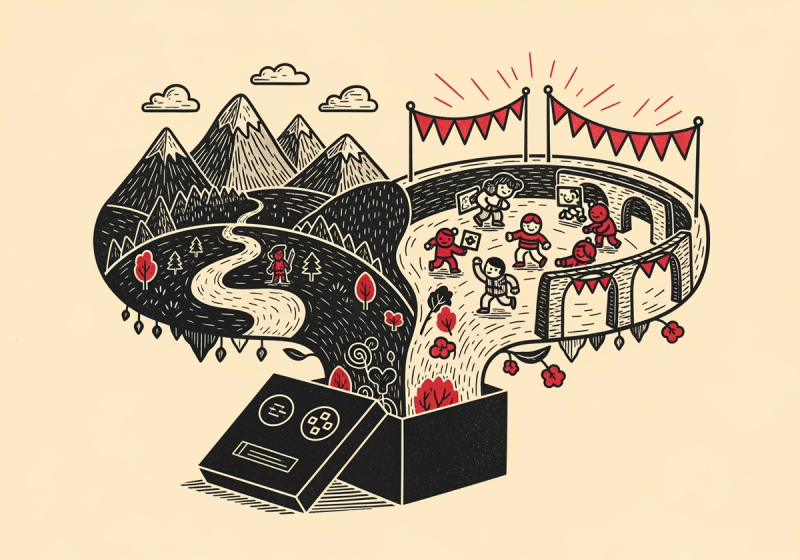
Three of the most celebrated games of the last fifteen years — Grand Theft Auto V, Red Dead Redemption 2, and Minecraft — ship with something parents rarely see in the store description: an online mode bundled into the same launcher as the single-player game. The single-player game is what gets reviewed, awarded, and remembered. The online mode is what most kids end up playing.
This is a guide to how Ludograph handles that gap, and what parents can actually do about it.
The policy, in one line
Ludograph rates the base game. The bundled online mode gets surfaced as a separate, prominent warning — not folded into the score. Two reasons for that choice, explained below.
What the scores actually say
Pulled live from our database:
- Red Dead Redemption 2 — Ludograph rating 72/100, BDS 0.56, RIS 0.00, recommended up to 120 min/day, age 17+. The base game is, by our rubric, almost a model of well-designed mature-content gaming.
- Minecraft — Ludograph rating 71/100, BDS 0.60, RIS 0.14, recommended up to 2 hours/day. One of the highest BDS scores in the catalogue for cognitive and creative benefits.
- Grand Theft Auto V — Ludograph rating 63/100, BDS 0.48, RIS 0.075. The lower BDS reflects content density that's geared at adults, not poor design. The very low RIS confirms the story mode itself uses almost none of the manipulation patterns that drive screen-time concerns.
Each of those scores is calibrated to the offline campaign or the offline sandbox — what a player gets if they never touch the online mode.
Why the bundled mode doesn't change the score
If we folded the online mode into the Ludograph rating, two things happen:
- The base games get punished for design they didn't ship. Red Dead Redemption 2's single-player campaign is one of the most carefully paced experiences in modern gaming. Red Dead Online is a separate product with separate design choices, separate monetization, and separate stranger-contact exposure. Treating them as one product hides which one your kid is actually playing.
- The parent loses the lever. If a 17-year-old is playing the GTA V story campaign, the time recommendation and risk profile look completely different from the same 17-year-old being matched into a GTA Online lobby. Collapsing them into one number means the score is wrong for either case.
So we score the offline game and surface the online mode as a warning. The warning is in the database; here are the exact notes the rubric attaches to each title.
The warnings, verbatim
GTA V. GTA Online ships in the same launcher and is the primary mode many children end up playing. It features Shark Card real-money currency, aggressive spending design, adult content, voice chat with strangers, and extreme competitive toxicity — far beyond the already mature single-player story. Parental controls and disabling online access are strongly recommended.
Red Dead Redemption 2. Red Dead Online is bundled in the same launcher and is accessible to any player. It adds real-money Gold Bars, aggressive spending prompts, competitive PvP with voice chat from strangers, and social pressure mechanics not present in the story campaign. Keep Red Dead Online inaccessible by not purchasing a PlayStation Plus / Xbox Game Pass subscription, or disable it in-game via Story Mode.
Minecraft. Minecraft's base game is offline and excellent. However Minecraft Realms, public servers (e.g. Hypixel), and the Marketplace add stranger interaction, in-game purchases, and community content that varies wildly in age-appropriateness. Keep multiplayer off or use a private family server to preserve the single-player experience.
If a future game ships with a similar split, it gets the same treatment: scored offline, warned online.
What parents can actually do
A short checklist, ordered by how much friction it removes:
- Don't pay for the platform subscription that gates the online mode. On PlayStation, that means no PlayStation Plus on the child's account; on Xbox, no Game Pass Core. Most bundled online modes require it.
- Use the console parental controls to block online play on a per-game basis. PS5 and Xbox Series have per-title online-play toggles; Switch has a similar control for first-party accounts.
- Boot into Story Mode explicitly on Red Dead Redemption 2. The game asks once per launch; pick Story.
- For Minecraft, stay on single-player worlds and the family Realm if you want shared play. Avoid the in-game Marketplace and public servers like Hypixel until you've vetted them.
- Have the conversation. Especially for older teens — the bundled online modes are designed to be fun. Explaining that the design is what you're objecting to, not the activity, lands better than "no".
What this means for the catalogue
Any game where an online mode shares a launcher with a substantively better offline experience gets this treatment. If you spot a game we should flag with a bundled-online warning that we haven't yet, the feedback link on the game page goes straight to the rubric review queue.
Read next
- Loot boxes, battle passes, and what the law says — covers what the online modes are actually monetising.
- Voice chat, party chat, and stranger contact — the social-risk surface that bundled online modes open up.
- How the Ludograph rating is calculated — the rubric that produces the numbers in this guide.