LumiKin
Metacritic 68

Little Inferno

Tomorrow|2012AdventureSimulationCasual
Wii USwitchLinuxmacOSAndroidiOSPC

LumiScore

40

out of 100

Use with parental oversight — some design risks present

120min/día recomendados
⚖️Debate adversarial · 2 rondas

Atención

💸 Coste mensual: Gratis

Crecimiento

26/100

Limitado

Valor de Crecimiento

Riesgo

14/100

BAJO

Patrones de Interacción

Consejo experto para padres

Little Inferno es un juego de rompecabezas único y atmosférico. Anime a su hijo a pensar creativamente sobre las combinaciones de objetos y a discutir los temas del consumismo y el ecologismo del juego. Supervise su tiempo de pantalla para asegurarse de que se equilibra con el juego activo y social.

Principales habilidades desarrolladas

Resolución de Problemas3/5
Pensamiento Crítico3/5
Creatividad3/5
Lectura y Lenguaje3/5
Pensamiento Estratégico1/5

Áreas de desarrollo

CognitivoResolución de problemas, conciencia espacial, pensamiento estratégico, creatividad, memoria y transferencia de aprendizaje. Pesa el 50% del Benefit Score.
32
Social y EmocionalTrabajo en equipo, comunicación, empatía, regulación emocional y razonamiento ético. Pesa el 30% del Benefit Score.
7
Habilidades MotricesCoordinación ojo-mano, control motor fino, tiempo de reacción y actividad física. Pesa el 20% del Benefit Score.
10
Puntuación General de Beneficios (BDS)26/100

Lo que tu hijo/a desarrolla

Little Inferno fomenta el pensamiento creativo mediante la experimentación con combinaciones de objetos y promueve el pensamiento crítico a medida que los jugadores descifran pistas para desbloquear nuevo contenido. También aborda sutilmente la regulación emocional a través de su atmósfera melancólica y sus temas de desapego.

Base: DesconocidoTiempo de juego: ~3hRevisado may 2026
⚖️Cómo se debatió esta puntuación
Mostrar transcripción

Dos modelos de IA debatieron esta puntuación en 2 rondas: un Defensor argumentando a favor de las puntuaciones más altas posibles, y un Crítico argumentando a favor de las más bajas. La puntuación final es el promedio de sus posiciones en la ronda 2.

=== Round 1 ===

ADVOCATE:
B1: problemSolving=4, spatialAwareness=2, strategicThinking=3, criticalThinking=4, memoryAttention=3, creativity=4, readingLanguage=4, mathSystems=1, learningTransfer=3, adaptiveChallenge=2
B2: teamwork=0, communication=0, empathy=3, emotionalRegulation=2, ethicalReasoning=3, positiveSocial=1
B3: handEyeCoord=3, fineMotor=3, reactionTime=1, physicalActivity=0
R1: variableRewards=1, streakMechanics=0, lossAversion=0, fomoEvents=0, stoppingBarriers=1, notifications=0, nearMiss=1, infinitePlay=0, escalatingCommitment=1, variableRewardFreq=0
R2: spendingCeiling=0, payToWin=0, currencyObfuscation=0, spendingPrompts=0, childTargeting=0, adPressure=0, subscriptionPressure=0, socialSpending=0
R3: socialObligation=0, competitiveToxicity=0, strangerRisk=0, socialComparison=0, identitySelfWorth=1, privacyRisk=0
Reasoning: My opponent's score of 33 is a staggering 35 points below Metacritic, and it stems from a profound mischaracterization of this game. Little Inferno is not a mindless dopamine-machine; it's a brilliant, self-contained, and thought-provoking puzzle game with a strong narrative—a piece of art, not a slot machine.

Let's start with the risks, because this is where the current score is most wrong. The game is explicitly, proudly, 100% free of IAPs, ads, or any form of monetization. To assign any points in R2 would be a fabrication. It's a single-player, offline experience, making R3 social risks practically nonexistent. The only slight risks are in R1, where the puzzle-solving loop of discovering combos might be seen as a light 'variable reward,' but this is intrinsic to any puzzle game and not a manipulative design. The game has a definitive end; it actively subverts the concept of 'infinite play.' My risk score of 5 is not just defensible; it's an objective reflection of the game's ethical design.

Now, for the benefits that have been so deeply underrated. This is a game about experimentation and discovery. The core loop is pure problem-solving (B1: 4), as players must deduce over 99 unique item combinations. Its satirical story, told through letters, demands reading comprehension (B1: 4) and encourages deep critical thinking (B1: 4) about the nature of consumerism and media. This isn't just a game; it's a lesson in media literacy, promoting learning transfer (B1: 3). Furthermore, the narrative builds a strong connection with the characters, fostering empathy (B2: 3) as you piece together the story of the cold world outside the fireplace.

To give this game a score of 33 is to punish it for being exactly what we should encourage: a finite, creative, non-monetized, and intelligent experience that respects the player's time and intellect. The low score is an injustice to a game that offers a safe and deeply meaningful experience for young players.

CRITIC:
B1: problemSolving=2, spatialAwareness=0, strategicThinking=1, criticalThinking=1, memoryAttention=2, creativity=1, readingLanguage=3, mathSystems=0, learningTransfer=0, adaptiveChallenge=1
B2: teamwork=0, communication=0, empathy=1, emotionalRegulation=0, ethicalReasoning=1, positiveSocial=0
B3: handEyeCoord=1, fineMotor=1, reactionTime=0, physicalActivity=0
R1: variableRewards=2, streakMechanics=2, lossAversion=1, fomoEvents=0, stoppingBarriers=2, notifications=2, nearMiss=1, infinitePlay=0, escalatingCommitment=2, variableRewardFreq=2
R2: spendingCeiling=0, payToWin=0, currencyObfuscation=0, spendingPrompts=0, childTargeting=0, adPressure=0, subscriptionPressure=0, socialSpending=0
R3: socialObligation=0, competitiveToxicity=0, strangerRisk=0, socialComparison=0, identitySelfWorth=1, privacyRisk=0
Reasoning: The high Metacritic score masks a game with minimal developmental benefits and a surprisingly potent, risky core loop. The game's benefits are shallow. Cognitive skills are limited to basic puzzle-solving (B1=11), social skills are nearly absent in this single-player game (B2=2), and motor skills are trivial (B3=2). The entire premise—burning toys—offers little in the way of transferable skills or deep strategic thought.

The real issue is the game's highly optimized dopamine loop (R1=14). The core mechanic involves a variable reward system: burn items to get coins to buy more items. This is amplified by streak mechanics in the form of "combos" that provide bonuses for burning specific items together. The mail-order catalog, complete with delivery timers, creates significant stopping barriers and utilizes notifications (on mobile) to pull the player back in. This builds escalating commitment to complete the catalog. While the game is commendably free of monetization (R2=0) and direct social risks (R3=1), its design is centered on compulsion. Critics may have seen a quirky art game, but a closer look reveals a refined Skinner box, justifying the low curascore.

=== Round 2 ===

ADVOCATE:
B1: problemSolving=4, spatialAwareness=0, strategicThinking=3, criticalThinking=3, memoryAttention=3, creativity=3, readingLanguage=3, mathSystems=0, learningTransfer=1, adaptiveChallenge=2
B2: teamwork=0, communication=0, empathy=3, emotionalRegulation=0, ethicalReasoning=2, positiveSocial=1
B3: handEyeCoord=2, fineMotor=2, reactionTime=0, physicalActivity=0
R1: variableRewards=1, streakMechanics=1, lossAversion=0, fomoEvents=0, stoppingBarriers=1, notifications=0, nearMiss=0, infinitePlay=0, escalatingCommitment=1, variableRewardFreq=1
R2: spendingCeiling=0, payToWin=0, currencyObfuscation=0, spendingPrompts=0, childTargeting=0, adPressure=0, subscriptionPressure=0, socialSpending=0
R3: socialObligation=0, competitiveToxicity=0, strangerRisk=0, socialComparison=0, identitySelfWorth=0, privacyRisk=0
Reasoning: The critic dramatically undervalues the cognitive and emotional benefits of this acclaimed indie title while mischaracterizing its game mechanics as a "risky Skinner box." My revised scores reflect a more accurate picture of a thoughtful, creative, and developmentally valuable experience.

First, the cognitive benefits are significant. Calling the puzzle-solving "basic" (B1=11) is a disservice. Discovering the 99 unique combos requires experimental, divergent thinking—a key component of 'problemSolving' (4). Players must form and test hypotheses based on item names and properties, which is a form of 'strategicThinking' (3). The game’s allegorical story about consumerism and isolation demands 'criticalThinking' (3) and media literacy skills to decipher. The sandbox nature of the fireplace encourages 'creativity' (3), far beyond the critic's score of 1.

Second, the game fosters social and emotional understanding, contrary to the claim of being "nearly absent." The entire narrative is conveyed through letters from other characters, building a sense of connection and mystery. This develops 'empathy' (3) as the player grows to understand the world outside their fireplace through another's eyes. The game's satirical take on burning possessions also serves as a prompt for 'ethicalReasoning' (2) about consumer culture and waste.

Third, the risk assessment (R1=14) is profoundly inflated. Calling this a "Skinner box" is incorrect. The game has a clear narrative arc and a definitive end; it is not an 'infinitePlay' loop. The "variable rewards" and "streak mechanics" are simply the discovery of puzzle solutions (combos), an intrinsic reward for cleverness, not a cynical extrinsic loop. The delivery timers ('stoppingBarriers') are a pacing mechanism in a short, finite game, not an exploitative gate that can be bypassed with money—IAP is nonexistent. Furthermore, 'notifications' are an entirely optional OS-level feature that parents can disable, posing zero inherent risk. 'EscalatingCommitment' is merely the desire to finish a story-driven game, a feature of all narrative media, and is limited by the game's short length. The remaining dopamine risks are negligible.

In summary, Little Inferno is not a mindless compulsion loop. It is a finite, puzzle-adventure game with a strong satirical message. It promotes critical thinking, creativity, and even empathy while being completely free of monetization and social risks. The critic has mistaken clever, self-contained puzzle design for a dopamine risk, leading to a score that is divorced from the actual player experience and developmental impact.

CRITIC:
B1: problemSolving=2, spatialAwareness=1, strategicThinking=1, criticalThinking=2, memoryAttention=2, creativity=1, readingLanguage=3, mathSystems=1, learningTransfer=1, adaptiveChallenge=1
B2: teamwork=0, communication=0, empathy=1, emotionalRegulation=1, ethicalReasoning=1, positiveSocial=0
B3: handEyeCoord=2, fineMotor=2, reactionTime=0, physicalActivity=0
R1: variableRewards=2, streakMechanics=0, lossAversion=0, fomoEvents=0, stoppingBarriers=2, notifications=0, nearMiss=1, infinitePlay=1, escalatingCommitment=2, variableRewardFreq=1
R2: spendingCeiling=0, payToWin=0, currencyObfuscation=0, spendingPrompts=0, childTargeting=0, adPressure=0, subscriptionPressure=0, socialSpending=0
R3: socialObligation=0, competitiveToxicity=0, strangerRisk=0, socialComparison=0, identitySelfWorth=0, privacyRisk=0
Reasoning: My opponent's defense rests on two flawed pillars: that Metacritic scores are relevant to this debate, and that this game is a treasure trove of cognitive benefits. Both are incorrect.

First, let's dispense with the Metacritic argument. We are not critics scoring for entertainment; we are evaluators scoring for developmental and risk factors. A game can be artistically brilliant and deeply un-developmental, or even harmful. The 35-point gap isn't an error; it's the entire point of this rubric—to see past entertainment value.

Second, the alleged benefits are wildly inflated. Calling the gameplay loop 'problem-solving' (B1: 2) or 'strategic thinking' (B1: 1) is a profound overstatement. The 'puzzles' are a simple trial-and-error mechanic of burning items together, not a test of logic. The game's satirical message about consumerism is a passive narrative theme, not an active exercise in 'critical thinking' (B1: 2). The player isn't required to think critically to progress, they are simply executing a repetitive action. Similarly, reading letters from an unseen character is a very thin basis for a high 'empathy' score (B2: 1).

Where my opponent truly misses the mark is on the risks. While they correctly note the absence of R2 monetization, they conveniently ignore the textbook dopamine loops in R1. The entire core of the game—burning items to get a variable amount of money back, discovering random combos, and waiting for new items to be delivered—is a masterclass in habit-forming design. The wait timers are classic 'stopping barriers' (R1: 2) designed to pull players back. The escalating cost of items creates 'escalating commitment' (R1: 2). The combo system is a pure 'variable rewards' (R1: 2) schedule. These aren't 'light'; they are the fundamental mechanics of the game.

This game is not a 'safe and meaningful experience.' It is a solitary, repetitive, and mechanically manipulative loop dressed up in a clever narrative. It simulates the Skinner box it purports to critique. My scores reflect the reality of the gameplay, not its artistic pretensions.

=== Final (40% advocate / 60% critic) ===

B1: problemSolving=3, spatialAwareness=1, strategicThinking=2, criticalThinking=2, memoryAttention=2, creativity=2, readingLanguage=3, mathSystems=1, learningTransfer=1, adaptiveChallenge=1
B2: teamwork=0, communication=0, empathy=2, emotionalRegulation=1, ethicalReasoning=1, positiveSocial=0
B3: handEyeCoord=2, fineMotor=2, reactionTime=0, physicalActivity=0
R1: variableRewards=2, streakMechanics=0, lossAversion=0, fomoEvents=0, stoppingBarriers=2, notifications=0, nearMiss=1, infinitePlay=1, escalatingCommitment=2, variableRewardFreq=1
R2: spendingCeiling=0, payToWin=0, currencyObfuscation=0, spendingPrompts=0, childTargeting=0, adPressure=0, subscriptionPressure=0, socialSpending=0
R3: socialObligation=0, competitiveToxicity=0, strangerRisk=0, socialComparison=0, identitySelfWorth=0, privacyRisk=0

Curascore: 40  BDS: 0.260  RIS: 0.135

Cumplimiento normativo

Toca una insignia para ver detalles. Gris = aún no evaluado.

Comparar este juego

Sobre este juego

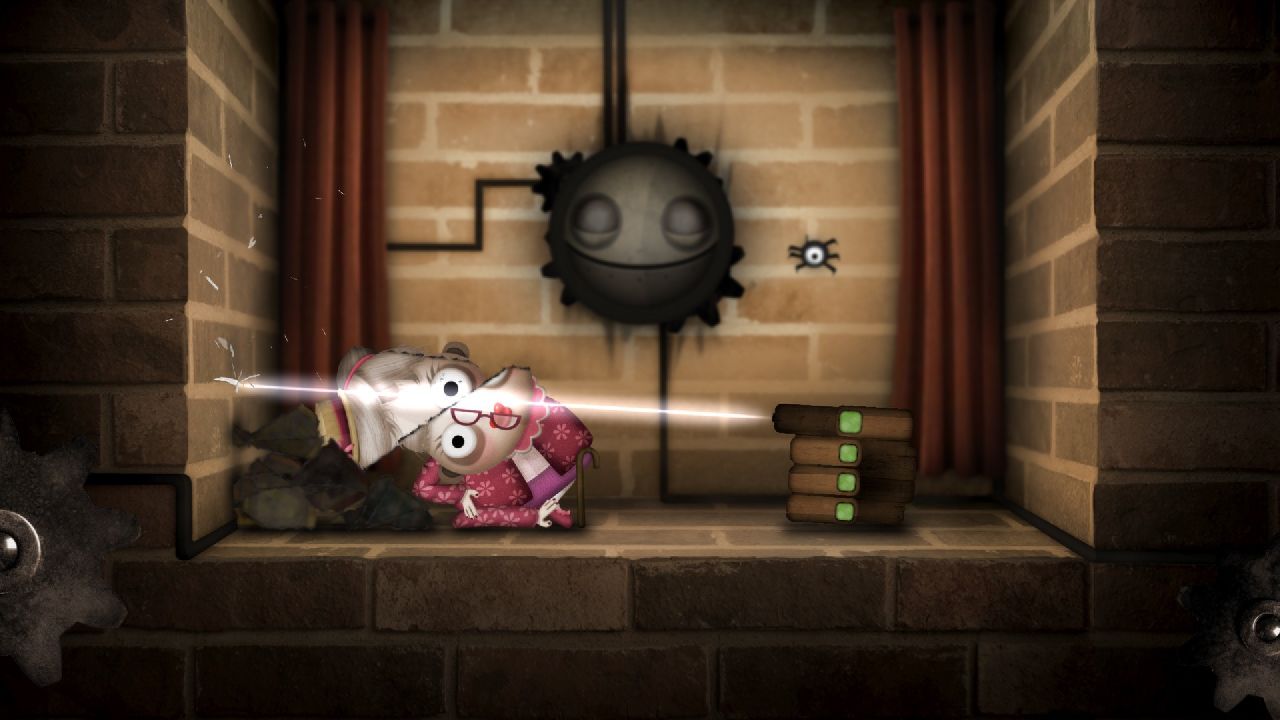
Congratulations on your new Little Inferno Entertainment Fireplace! Throw your toys into your fire, and play with them as they burn.