

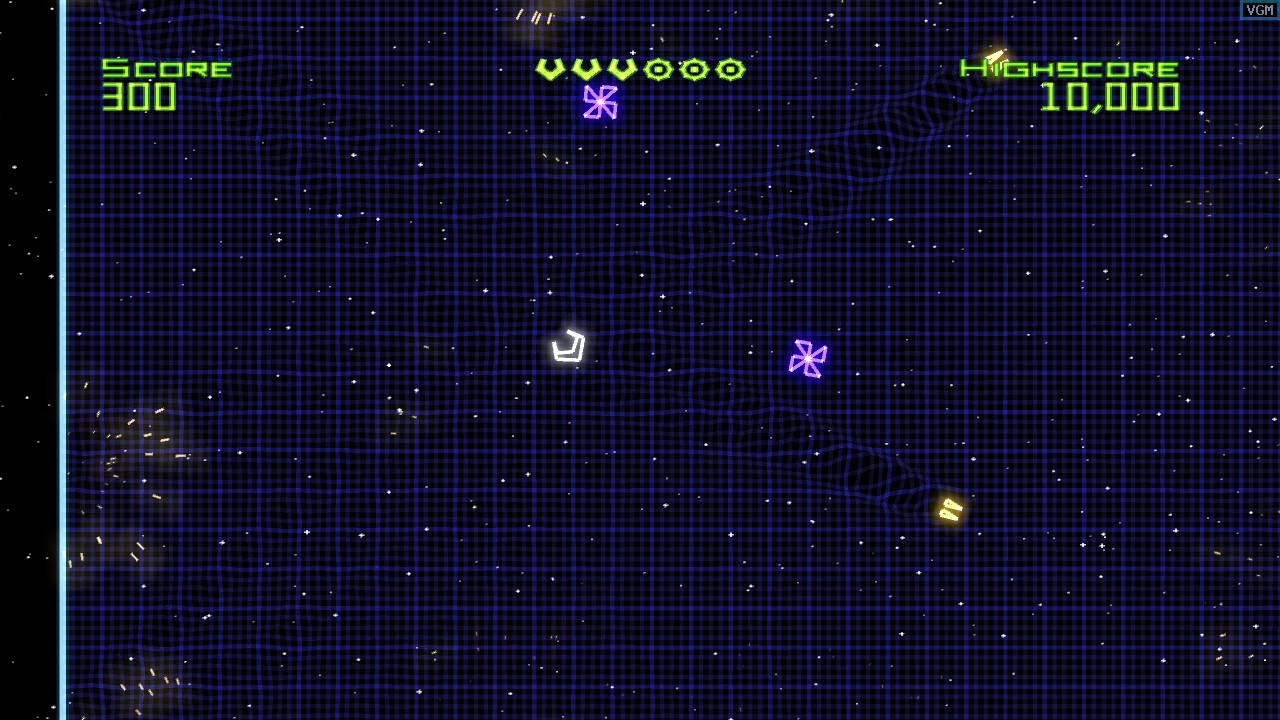
Geometry Wars: Retro Evolved
LumiScore
out of 100
Use with parental oversight — some design risks present
Obs
Utveckling
34/100
Begränsat
Utvecklingsvärde
Risk
37/100
MÅTTLIG
Engagemangsmönster
Föräldratips
Uppmuntra ditt barn att fokusera på att förbättra sina färdigheter och reaktionstid. Diskutera konceptet 'flow state' och hur spelet erbjuder en utmanande men givande upplevelse utan att förlita sig på manipulativa designelement.
Viktiga färdigheter som barnet utvecklar
Utvecklingsområden
Vad ditt barn utvecklar
Geometry Wars: Retro Evolved erbjuder utmärkt utveckling för rumsuppfattning, hand-öga-koordination och reaktionstid genom sitt snabba, twin-stick shooter-gameplay. Den adaptiva utmaningen med allt svårare vågor och jakten på höga poäng kan också främja strategiskt tänkande och uppmärksamhet.
⚖️Hur betyget har diskuterats och granskatsVisa utskrift
Två AI-modeller debatterade poängen i 2 rundor: en Förespråkare som argumenterade för de högst möjliga poängen, och en Kritiker som argumenterade för de lägsta. Slutpoängen är ett medelvärde av deras positioner i runda 2.
=== Round 1 ===

ADVOCATE:
B1: problemSolving=4, spatialAwareness=5, strategicThinking=3, criticalThinking=4, memoryAttention=5, creativity=1, readingLanguage=1, mathSystems=2, learningTransfer=3, adaptiveChallenge=4
B2: teamwork=0, communication=0, empathy=0, emotionalRegulation=3, ethicalReasoning=0, positiveSocial=1
B3: handEyeCoord=5, fineMotor=4, reactionTime=5, physicalActivity=0
R1: variableRewards=2, streakMechanics=2, lossAversion=2, fomoEvents=0, stoppingBarriers=1, notifications=0, nearMiss=2, infinitePlay=1, escalatingCommitment=1, variableRewardFreq=2
R2: spendingCeiling=0, payToWin=0, currencyObfuscation=0, spendingPrompts=0, childTargeting=0, adPressure=0, subscriptionPressure=0, socialSpending=0
R3: socialObligation=0, competitiveToxicity=1, strangerRisk=0, socialComparison=1, identitySelfWorth=1, privacyRisk=0
Reasoning: This is my opening statement. I will be arguing that Geometry Wars: Retro Evolved is an exceptional tool for cognitive and motor skill development, whose low LumiKin score is the result of misinterpreting classic, skill-based arcade design as modern problematic mechanics.

B1 - COGNITIVE: The game is a pure, high-speed cognitive workout. The chaotic, enemy-filled screen demands best-in-class Spatial Awareness (5/5) and sustained Memory & Attention (5/5). Players must engage in constant, real-time Problem Solving (4/5) and Critical Thinking (4/5) to navigate threats, prioritize targets, and manage limited bomb resources. The ever-increasing difficulty provides a fantastic Adaptive Challenge (4/5). The skills honed here are foundational cognitive abilities, justifying a high Learning Transfer score (3/5).

B2 - SOCIAL: As a single-player game, teamwork and communication are rightly scored at 0. However, the game offers a valuable lesson in Emotional Regulation (3/5). The core mechanic involves building a score multiplier, a high-stakes resource that is lost upon a single mistake. Managing the intense frustration of losing a hard-earned streak and finding the composure to try again is a powerful form of resilience training in a safe environment.

B3 - MOTOR: This game is a masterclass in motor skills. The dual-stick shooter design requires elite Hand-Eye Coordination (5/5), precise Fine Motor control (4/5) to aim and dodge simultaneously, and top-tier Reaction Time (5/5) to survive the bullet-hell environment. It is a "digital sport" for the thumbs.

R1 - DOPAMINE: The "addictive" loop critics mention is not a risk, but a healthy, skill-based engagement loop. The powerful Streak Mechanics (2/3) and resulting Loss Aversion (2/3) are tied directly to player mastery, not a slot machine. They motivate players to improve. Critically, Stopping Barriers are low (1/3); individual games last only minutes, providing natural break points. There are no FOMO Events or Notifications (0/3). The game’s "infinite play" is simply high replayability for score-chasers, a positive trait.

R2 - MONETIZATION: This section is a perfect zero. No microtransactions, no ads, no loot boxes, no predatory tactics whatsoever. This is a game you buy once. In the modern gaming landscape, this ethical design is exceedingly rare and should be heavily rewarded in the scoring.

R3 - SOCIAL RISKS: As a primarily offline, single-player game, social risks are virtually non-existent. There is no stranger chat (0/3 Stranger Risk) or social obligation (0/3). The only vector for social interaction is asynchronous leaderboards, which present a minimal risk of Social Comparison (1/3) and Competitive Toxicity (1/3), though any toxicity would have to occur outside the game itself.

In conclusion, Geometry Wars is a pure arcade experience that builds powerful cognitive and motor skills. Its engagement mechanics are rooted in skill and mastery, not manipulation. The complete absence of monetization and social risks makes it a model title. The current score of 47 is indefensibly low and fails to appreciate the profound benefits of this classic game.

CRITIC:
B1: problemSolving=1, spatialAwareness=4, strategicThinking=2, criticalThinking=1, memoryAttention=3, creativity=0, readingLanguage=0, mathSystems=1, learningTransfer=1, adaptiveChallenge=3
B2: teamwork=0, communication=0, empathy=0, emotionalRegulation=1, ethicalReasoning=0, positiveSocial=0
B3: handEyeCoord=5, fineMotor=4, reactionTime=5, physicalActivity=0
R1: variableRewards=1, streakMechanics=3, lossAversion=3, fomoEvents=0, stoppingBarriers=2, notifications=0, nearMiss=3, infinitePlay=3, escalatingCommitment=3, variableRewardFreq=3
R2: spendingCeiling=0, payToWin=0, currencyObfuscation=0, spendingPrompts=0, childTargeting=0, adPressure=0, subscriptionPressure=0, socialSpending=0
R3: socialObligation=0, competitiveToxicity=0, strangerRisk=0, socialComparison=2, identitySelfWorth=1, privacyRisk=0
Reasoning: While critics enjoyed this game, its high Metacritic score masks a shallow cognitive experience and a dangerously compulsive core loop. This is a classic case where the LumiKin score correctly diverges from critic consensus.

B1 (Cognitive): Benefits are minimal. The game is a pure reflex-based shooter. "Strategy" is limited to "don't die" and "use a bomb". There is no creativity, reading, or complex math. The primary cognitive skills are perceptual—high spatial awareness to navigate the chaos and attention to track threats. This is not a "thinking" game.

B2 (Social): As a single-player game, social benefits are non-existent. Teamwork and communication are 0. There is no narrative to foster empathy or ethical reasoning. I’ve scored emotional regulation a 1, as players must learn to cope with the frustration of losing a high multiplier, a key risk mechanic.

B3 (Motor): The game's strengths are here. It demands excellent hand-eye coordination, fine motor control, and reaction time, which I have scored highly.

R1 (Dopamine): This is where the game shows its true, risky colors. The entire experience is built around a powerful compulsive loop. The score multiplier is a textbook streak mechanic (3) that leverages intense loss aversion (3). The "just one more go" design is fueled by infinite play (3), escalating commitment (3) during a good run, and the constant thrill of the near miss (3). This is a masterclass in dopamine manipulation designed to maximize engagement at the cost of the player's time.

R2 (Monetization): The game is free of monetization, which is its main saving grace.

R3 (Social): While there are no direct social interactions, the entire point of the game is to "set a high score." This implicitly drives social comparison (2) through leaderboards, which can tie a player's identity and self-worth (1) to their performance and fuel the compulsive R1 loop.

In conclusion, the game is a dopamine slot machine dressed up in slick graphics. The high R1 score is more than justified and correctly identifies the risks that a simple Metacritic score completely misses.

=== Round 2 ===

ADVOCATE:
B1: problemSolving=3, spatialAwareness=4, strategicThinking=4, criticalThinking=3, memoryAttention=4, creativity=0, readingLanguage=0, mathSystems=2, learningTransfer=2, adaptiveChallenge=4
B2: teamwork=0, communication=0, empathy=0, emotionalRegulation=3, ethicalReasoning=0, positiveSocial=1
B3: handEyeCoord=5, fineMotor=4, reactionTime=5, physicalActivity=0
R1: variableRewards=1, streakMechanics=2, lossAversion=2, fomoEvents=0, stoppingBarriers=1, notifications=0, nearMiss=2, infinitePlay=2, escalatingCommitment=1, variableRewardFreq=2
R2: spendingCeiling=0, payToWin=0, currencyObfuscation=0, spendingPrompts=0, childTargeting=0, adPressure=0, subscriptionPressure=0, socialSpending=0
R3: socialObligation=0, competitiveToxicity=0, strangerRisk=0, socialComparison=1, identitySelfWorth=0, privacyRisk=0
Reasoning: The critic’s assessment is fundamentally flawed, mischaracterizing engaging game design as "manipulation" and dramatically undervaluing the game's significant cognitive benefits. This isn't a "dopamine slot machine"; it's a high-octane training ground for crucial cognitive and motor skills. The 29-point gap between the LumiKin score and Metacritic is a result of this misinterpretation.

B1 (Cognitive): The critic dismisses this as a "pure reflex" game, which is a gross oversimplification. The chaotic, high-speed environment demands constant, real-time problem-solving (3) and strategic thinking (4). Players must perform threat assessment, prioritize targets, manage limited resources (bombs), and control their position on the grid. This is not just "reacting"; it is rapid-fire decision-making. The game is a textbook example of inducing a "flow state," where the adaptive challenge (4) perfectly matches player skill, creating an optimal environment for learning. The math systems (2) are also underrated; internalizing the exponential growth of the multiplier is key to success.

B2 (Social): While it is a single-player game, scoring emotional regulation at 1 is far too low. The entire game loop of building up a multiplier and then losing it is a powerful, safe, and repeatable way for a child to practice managing frustration and disappointment, key life skills. I have scored this a 3. Furthermore, the mastery of a difficult skill and the achievement of a personal best builds self-confidence, a prerequisite for positive social functioning, justifying a positiveSocial score of 1.

B3 (Motor): I concur with the critic. The game is an exceptional tool for developing hand-eye coordination (5), fine motor skills (4), and reaction time (5).

R1 (Dopamine): The critic’s high-risk scores are based on a misunderstanding of the gameplay loop. The "streak mechanic" and "loss aversion" are not just manipulative tools; they are highly effective feedback mechanisms that teach the player the consequences of mistakes and reward careful, strategic play. They are integral to the learning process. The claim of "infinite play" (down to 2) and high "stopping barriers" (down to 1) is also incorrect. The game is structured around discrete, short rounds that end decisively. This provides natural and frequent stopping points, making it far less compulsive than the critic suggests. "Just one more go" is a sign of enjoyment and healthy engagement, not addiction.

R2 (Monetization): I agree this game is exemplary, with no monetization risks.

R3 (Social): Scoring social comparison at 2 is a major error that violates the core scoring principles. Leaderboards are an asynchronous, optional feature entirely external to the core gameplay loop. The primary experience is playing the game, not looking at a list of names. These risks are minimal (socialComparison reduced to 1) and have no direct bearing on the moment-to-moment experience. Attaching self-worth to a score is possible but not an intended or designed outcome, so I have scored it at 0.

In conclusion, this is a classic, well-designed arcade game that offers significant benefits with manageable, low-impact risks. My scores reflect a more accurate balance of its educational potential versus its supposed compulsive nature.

CRITIC:
B1: problemSolving=2, spatialAwareness=4, strategicThinking=1, criticalThinking=1, memoryAttention=4, creativity=1, readingLanguage=1, mathSystems=1, learningTransfer=1, adaptiveChallenge=3
B2: teamwork=0, communication=0, empathy=0, emotionalRegulation=1, ethicalReasoning=0, positiveSocial=0
B3: handEyeCoord=4, fineMotor=3, reactionTime=4, physicalActivity=0
R1: variableRewards=3, streakMechanics=3, lossAversion=3, fomoEvents=0, stoppingBarriers=2, notifications=0, nearMiss=3, infinitePlay=3, escalatingCommitment=2, variableRewardFreq=3
R2: spendingCeiling=0, payToWin=0, currencyObfuscation=0, spendingPrompts=0, childTargeting=0, adPressure=0, subscriptionPressure=0, socialSpending=0
R3: socialObligation=0, competitiveToxicity=2, strangerRisk=0, socialComparison=3, identitySelfWorth=2, privacyRisk=0
Reasoning: My opponent romanticizes this "classic" arcade game, confusing high-speed reactive twitching with deep cognitive benefit, and ignoring the powerful, well-documented compulsion loops that form the core of the design.

B1 - COGNITIVE: The advocate's scores for Problem Solving (4) and Critical Thinking (4) are indefensible. This is a pattern-recognition shooter, not a puzzle game. The player isn't reasoning, they are reacting. The "strategies" are shallow, immediate tactical choices, not deep strategic plans. Learning Transfer (3) is also vastly overstated; excelling in Geometry Wars does not translate to broad real-world cognitive skills. I've lowered these scores to reflect the game's narrow, reactive nature.

B2 - SOCIAL: The claim that this game teaches Emotional Regulation (3) is an extraordinary stretch. The game *induces* frustration with its punishing loss-aversion mechanic. It provides no tools to manage this frustration, instead creating a negative feedback loop that encourages rage-quitting or "just one more go" anger-playing. It provides the stimulus for dysregulation, not the tools for regulation. The score is, at best, a 1. I have also scored Positive Social at 0, as a competitive leaderboard is not a form of positive social interaction.

B3 - MOTOR: While I agree the game requires fast reflexes, 5/5 scores should be reserved for more complex tasks. This is a 2D, two-stick shooter. It is a strong motor workout, but not the pinnacle, justifying slightly tempered scores of 4/3/4.

R1 - DOPAMINE: The advocate dismisses these risks as a "healthy engagement loop." This is a naive view. The game is a masterclass in creating a compulsion loop. The Streak Mechanic (3/3), extreme Loss Aversion (3/3), and constant Near Misses (3/3) on high scores are not "skill-based motivation," they are textbook addictive design patterns designed to maximize time-on-device. The "short games" are not stopping points; they are the fuel for an Infinite Play (3/3) loop, creating high psychological Stopping Barriers (2/3). My scores reflect the significant dopaminergic risks this game presents.

R3 - SOCIAL RISKS: The advocate minimizes the impact of the leaderboard, but it's the entire long-term motivation of the game. This isn't a minor feature; it is the sole vector for social engagement, and it is entirely based on ranking players against each other. This warrants a maximum score for Social Comparison (3/3) and a higher score for the potential of that comparison to impact Identity/Self-Worth (2/3) and fuel out-of-game Competitive Toxicity (2/3).

In conclusion, the advocate is looking at this game through rose-tinted glasses. It's a beautifully executed, but highly addictive, compulsion loop with narrow cognitive benefits. The low LumiKin score is not only defensible, it is accurate.

=== Final (40% advocate / 60% critic) ===

B1: problemSolving=2, spatialAwareness=4, strategicThinking=2, criticalThinking=2, memoryAttention=4, creativity=1, readingLanguage=1, mathSystems=1, learningTransfer=1, adaptiveChallenge=3
B2: teamwork=0, communication=0, empathy=0, emotionalRegulation=2, ethicalReasoning=0, positiveSocial=0
B3: handEyeCoord=4, fineMotor=3, reactionTime=4, physicalActivity=0
R1: variableRewards=2, streakMechanics=3, lossAversion=3, fomoEvents=0, stoppingBarriers=2, notifications=0, nearMiss=3, infinitePlay=3, escalatingCommitment=2, variableRewardFreq=3
R2: spendingCeiling=0, payToWin=0, currencyObfuscation=0, spendingPrompts=0, childTargeting=0, adPressure=0, subscriptionPressure=0, socialSpending=0
R3: socialObligation=0, competitiveToxicity=1, strangerRisk=0, socialComparison=2, identitySelfWorth=1, privacyRisk=0

Curascore: 44  BDS: 0.340  RIS: 0.371
Regelefterlevnad
Klicka på en symbol för detaljer. Grå = ej utvärderad än.
Om spelet
Steam Big Picture About the GameGeometry Wars: Retro Evolved is a old school style shooter, but remixed for the 21st century with next generation graphics and deep, modern gameplay. Playing is simple: you are a geometric "ship" trapped in a grid world, facing off against waves of deadly wanderers, snakes, and repulsars.